
If you have ever pulled a frozen baked ziti out of the oven and found the noodles turned into baby food, you are not alone. Pasta casseroles are cozy, filling, and freezer-friendly, but noodles keep cooking long after you think they are done. The good news is this is fixable with a few small, boring-sounding choices that make a huge difference: undercook the pasta on purpose, loosen and slightly increase the sauce, and reheat in a way that warms the center without scorching the edges.
I have been living the 9x13 life for over twenty years, and I keep two emergency meals in my chest freezer at all times. Pasta bakes are in heavy rotation, but only because I freeze them the right way. Let’s keep your noodles al dente and your family convinced you cooked from scratch today.
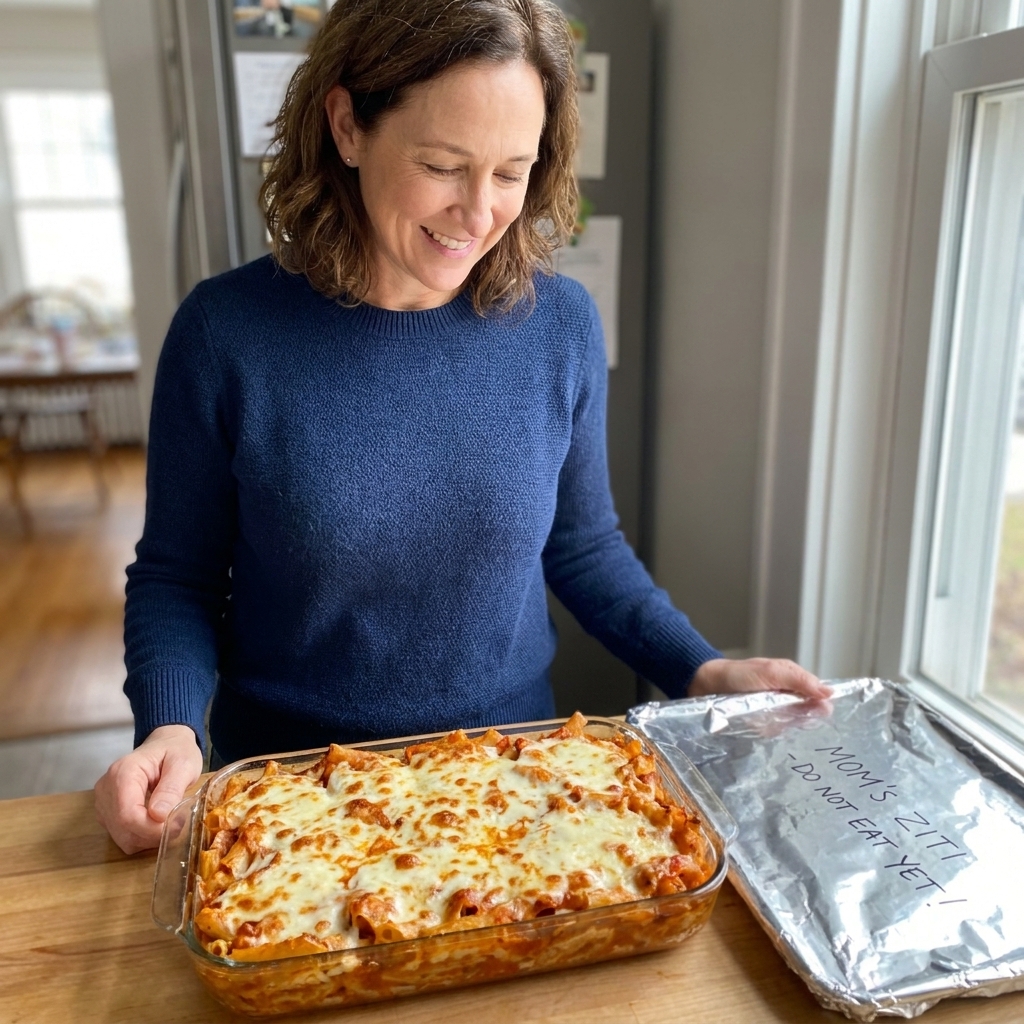
Why frozen pasta goes mushy
Mushy noodles usually come from a one-two punch:
- Overcooked pasta at the start. Pasta absorbs water as it boils. If it is fully cooked before it goes into the casserole, it will keep absorbing liquid from the sauce, then cook again in the oven, then get cooked a third time during reheating.
- Not enough sauce for the freeze and reheat. Freezing shifts moisture. Ice crystals and reheating both change texture. If your pasta is sitting in a tight, dry bake, it overcooks and dries out at the same time. That is when you get mush at the edges and chewy dryness in the middle.
- Reheating too hot, too fast. A very hot oven browns the top before the center is warm, so you keep baking and baking until the middle catches up, and the noodles surrender.
Undercook the pasta
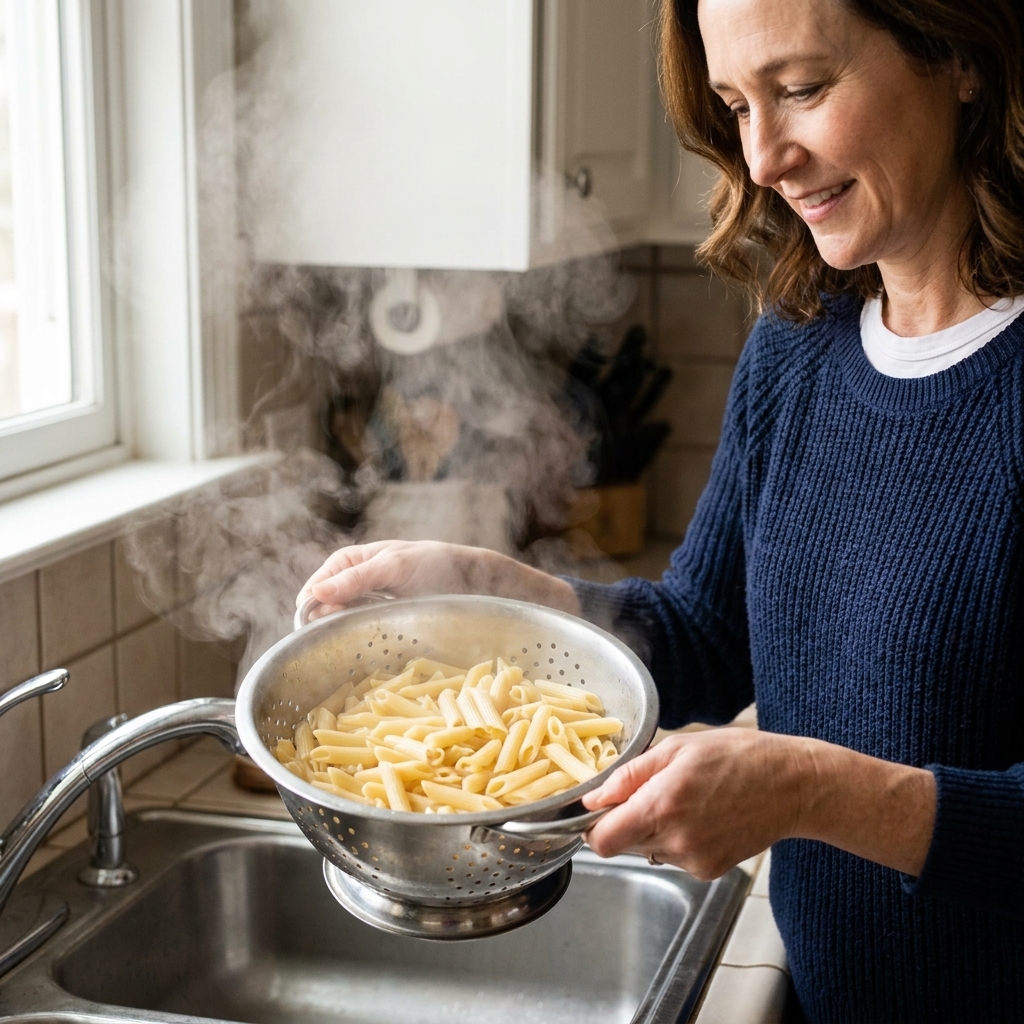
For freezer pasta casseroles, I aim for extra al dente. You want noodles that feel a little too firm when you taste them after boiling.
How much to undercook
- Ziti, penne, rigatoni: boil 2 to 3 minutes less than the box suggests for al dente.
- Elbow macaroni: boil 1 to 2 minutes less. Small shapes soften quickly.
- Lasagna noodles: if using regular boil noodles, cook until flexible but still quite firm, usually 2 minutes shy of the package time. If using no-boil noodles, see the lasagna section below because sauce thickness matters most.
Clara tip: The moment you drain pasta, it keeps cooking from residual heat. So when I say undercook, I really mean it. When in doubt, go a touch firmer.
Rinse or no rinse?
Most of the time, do not rinse. Starch helps sauce cling. But for freezer casseroles, there is one exception: if you cannot assemble right away and the pasta will sit for more than 10 minutes, give it a quick rinse with cool water, drain well, then toss with a teaspoon or two of olive oil. That stops carryover cooking and keeps it from gluing itself into one mega noodle.
Bake now or freeze?
This is where people get tripped up, so here is my simple decision guide.
- Best noodle texture: freeze unbaked, then bake later. You skip the extra full bake before the freezer, which means fewer chances for pasta to overcook.
- Most convenient: bake first, then freeze leftovers. Still totally workable, you just reheat gentler and keep it covered longer.
Either way, the same rules still apply: undercook the pasta, use enough sauce, and keep the top protected.
Fix the sauce ratio
This is the part most recipes do not say out loud: a pasta casserole for tonight and a pasta casserole for the freezer are not exactly the same build. Freezer casseroles need a bit more moisture and a slightly looser sauce to protect the noodles.
My simple sauce adjustment
- Add 1/2 to 3/4 cup extra sauce per 9x13 pan of baked ziti or pasta bake. This can be marinara, meat sauce, or even reserved pasta water stirred into the sauce.
- Loosen thick sauces with a splash of broth, milk, or pasta water. Aim for a sauce that looks just a little too saucy before baking.
- Keep the top protected. Dry, exposed noodles get leathery, then go mushy when you keep reheating. Make sure pasta is mostly tucked under sauce, then top with cheese.
For mac and cheese
Cheese sauces tighten as they cool, then tighten again after freezing. To keep mac and cheese creamy after reheating:
- Make the sauce slightly thinner than you would serve right away.
- Stir in 2 to 4 tablespoons cream cheese or 2 tablespoons sour cream per 9x13 pan. These help the sauce reheat smoothly.
- Use a mix of cheeses. All cheddar can get grainy. I like cheddar plus Monterey Jack, fontina, or a little cream cheese.
Cool fast and freeze well
Freezing safely and freezing well are the same goal here: get the casserole cold quickly, then wrap it like you mean it.
Cooling and safety
- Cool components before assembly when you can. Hot pasta plus hot sauce keeps cooking the noodles while you stand there. I like warm, not piping hot.
- Do not freeze a steaming hot pan. Let it cool at room temperature about 20 to 30 minutes, then refrigerate until cold, then freeze. For food safety, do not leave perishable foods out longer than 2 hours total (or 1 hour if your kitchen is very warm).
- Help it cool faster. Deep, tightly packed casseroles can hold heat for a long time. If you can, assemble in a standard depth 9x13, or split into two smaller pans. You will cool faster, freeze faster, and reheat more evenly, which is basically the holy trinity of not-mushy noodles.
- Why chill first helps texture. Chilling in the fridge first means the casserole hits the freezer already cold, so it can freeze faster and more evenly. That supports better texture and helps your freezer do its job.
Choose the right pan
- Foil pans: great for gifting and stacking. They can dry at the edges if your oven runs hot, so keep them covered longer while reheating.
- Glass pans: fine, but avoid temperature shock. Chill the assembled casserole in the fridge before freezing, and thaw in the fridge before baking when you can.
- Do not overstuff the pan. Very deep casseroles heat unevenly, which makes you overbake the edges while the center catches up.
Wrap it to prevent freezer burn
Freezer burn is not just flavor loss. It makes the top dry and tough, which tempts you to overheat it later. Here is my wrap routine:
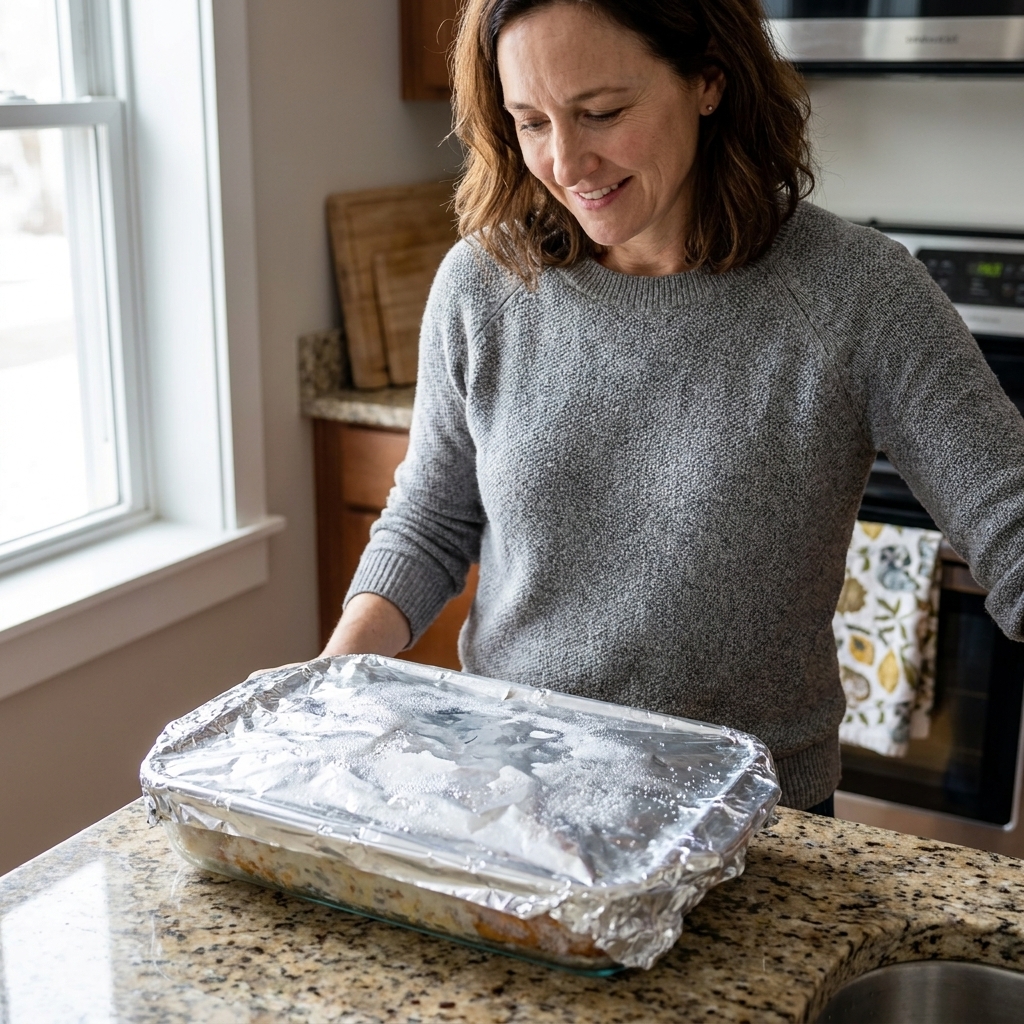
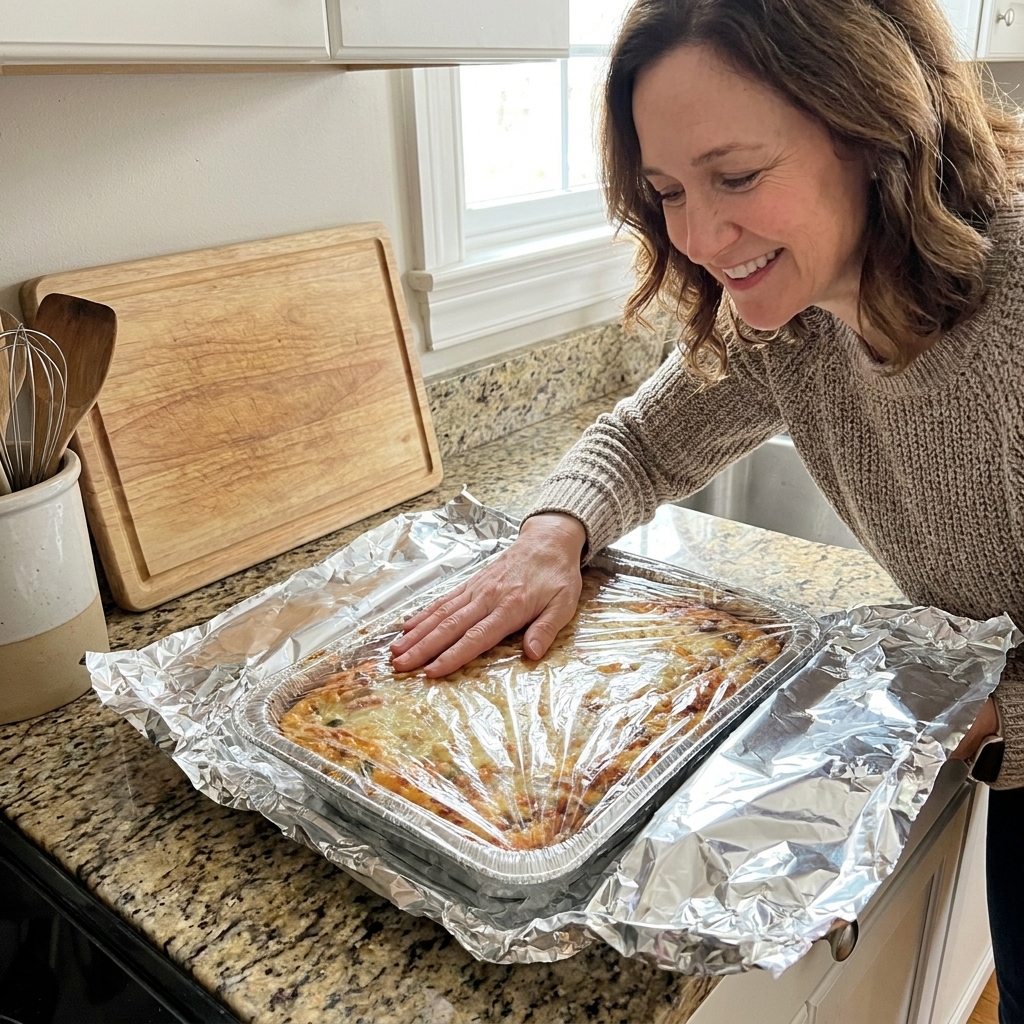
- Press a layer of plastic wrap directly against the surface (yes, right on the cheese).
- Cover tightly with heavy duty foil.
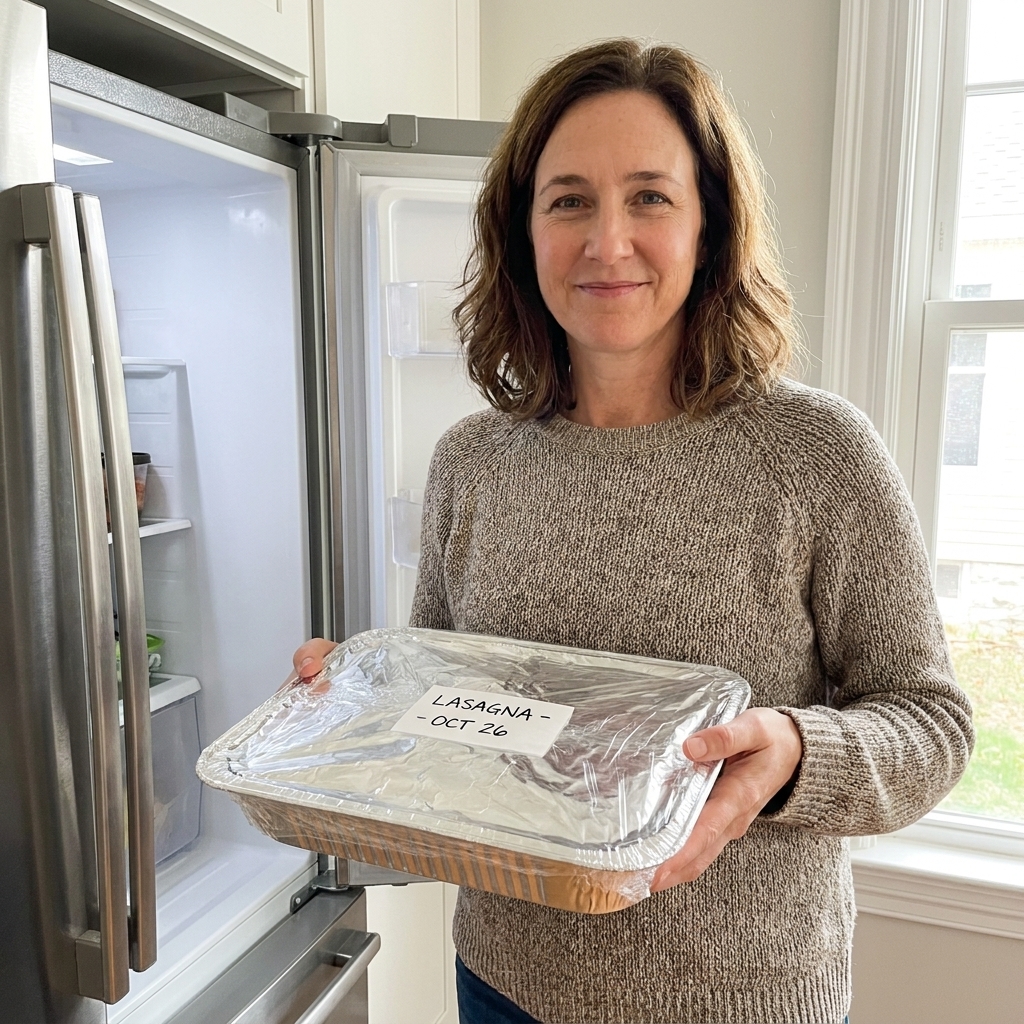
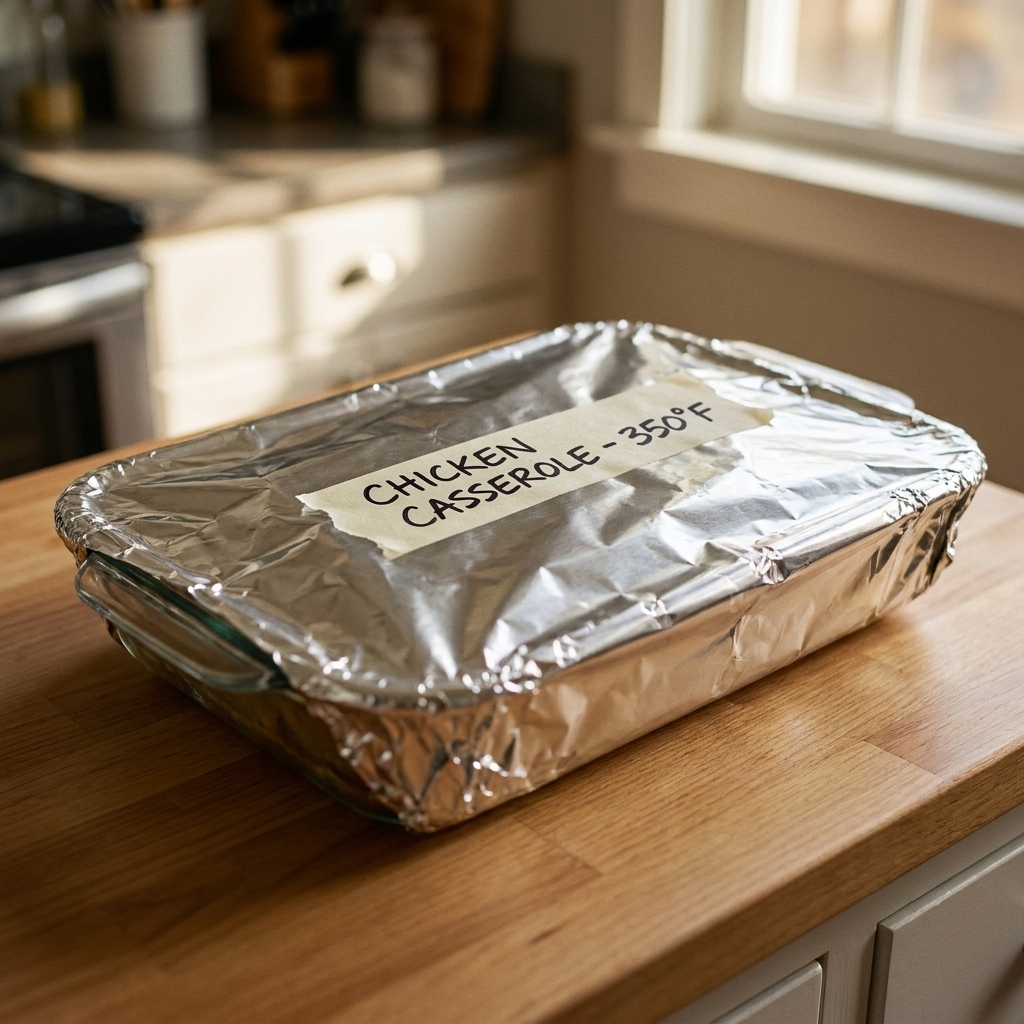
- Label with the name, date, and bake instructions.
If you prefer to avoid plastic wrap touching food, cover with parchment first, then foil, then add a second tight layer of foil. It is the air that ruins things.
Important: Plastic wrap is for freezing only. Remove all plastic before the casserole goes into the oven or microwave.
Thawing options
You can do either, but each one needs a different approach to protect the noodles.
Best option: thaw in the fridge
If you have time, thawing is gentler and gives the most even heating.
- Move the casserole from freezer to fridge 24 to 48 hours before baking.
- Keep it covered while it thaws to prevent the top from drying out.
Timing depends on the depth of the pan and how cold your fridge runs, so if it still feels icy in the middle, give it more time.
Baking from frozen works
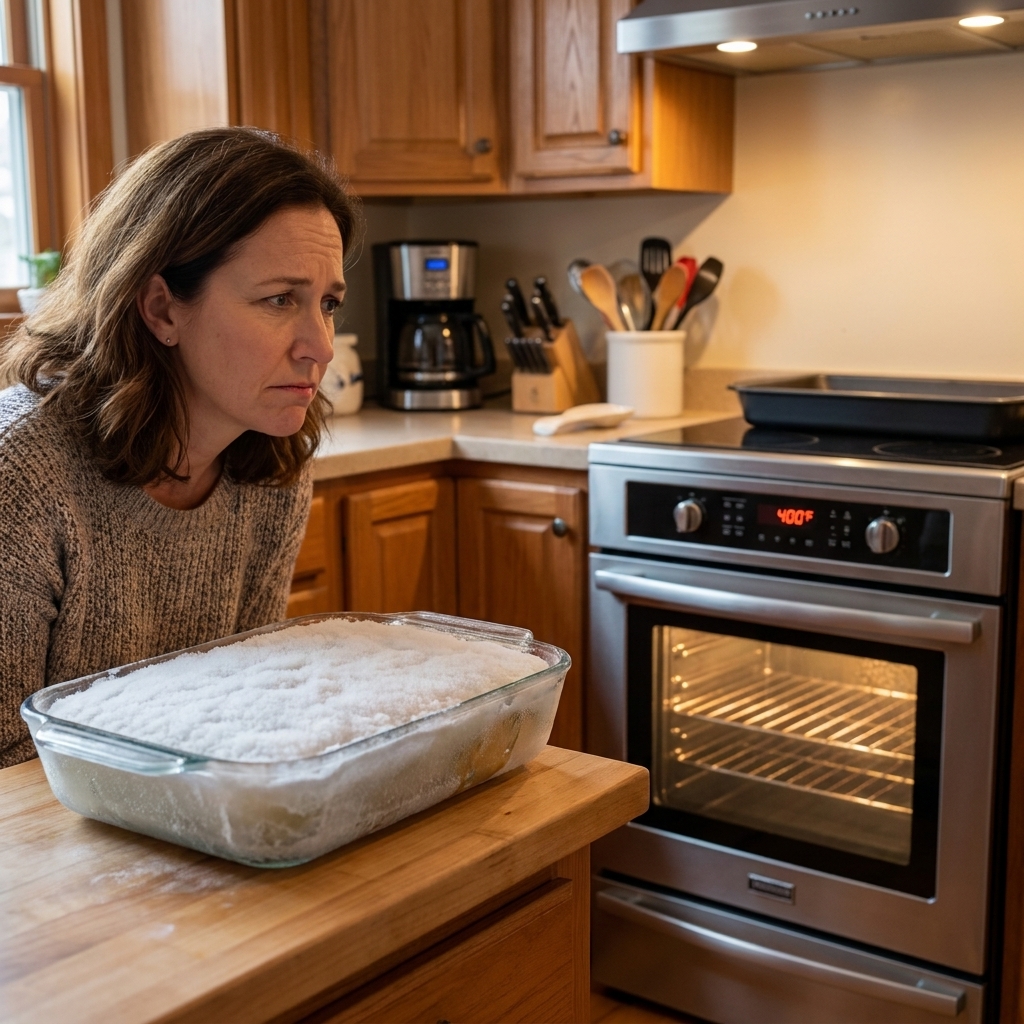
If it is 5:10 pm and you forgot, I have been there. Baking from frozen is totally doable, but you must keep it covered longer so the center warms without overcooking the edges.
- Plan on 50 to 90 extra minutes depending on depth, recipe density, and your pan.
- Use a moderate oven (I like 350°F) and keep it covered until the middle is hot.
Reheating without mush
There are two big goals during reheating: keep moisture in and warm the center gently. Covered time is your friend.
Oven (best for whole casseroles)
For thawed casseroles (first bake or reheat):
- Heat oven to 350°F.
- Keep casserole covered for most of the bake.
- Bake about 25 to 40 minutes, then uncover for 5 to 10 minutes to brown the top.
- Look for an internal temperature of 165°F in the center.
For frozen casseroles:
- Heat oven to 350°F.
- Remove all wrapping, especially any plastic. Re-cover tightly with foil.
- Bake 60 to 90 minutes covered. Check the center.
- Uncover for 10 to 15 minutes to brown once the center is hot.
My noodle-saving trick: If the edges are bubbling hard but the center is still cool, reduce the oven to 325°F and keep it covered. High heat is what pushes pasta into mush territory.
Note on timing: All bake times are ranges. Pan depth, starting temperature, sauce thickness, and how packed the casserole is will change the clock. Use the center temperature and how evenly it is bubbling as your real guide.
Microwave (best for portions)
Microwaves are convenient, but they punish pasta if you go full power. Do this instead:
- Reheat at 50 to 70 percent power.
- Add 1 to 2 tablespoons water, milk, or sauce over the portion before heating.
- Cover loosely and stop to stir or rearrange once.
Lower power takes a few minutes longer, but it keeps the noodles from exploding into softness around the edges. And again: no plastic wrap in the microwave unless it is specifically labeled microwave-safe.
By dish
Baked ziti and red-sauce bakes
- Undercook ziti 2 to 3 minutes.
- Use more sauce than you think. A freezer ziti should look a bit “too wet” before baking.
- Hold back some sauce. Spoon a thin layer on top under the cheese so no noodles peek out and dry.
If you are adding spinach, mushrooms, zucchini, or other watery veggies, cook them down first. Extra water makes sauce thin now, but oddly dry later because the pasta absorbs it, swells, and turns soft.
Mac and cheese
- Undercook elbows 1 to 2 minutes.
- Keep the sauce looser. It should coat a spoon, but still drip easily.
- Skip breadcrumb topping before freezing. Add breadcrumbs during the last 10 to 15 minutes of baking so they stay crisp.
For reheating, keep it covered for most of the time. Mac and cheese dries out fast, and dryness makes you overbake, which makes noodles mush.
Lasagna (including no-boil noodles)
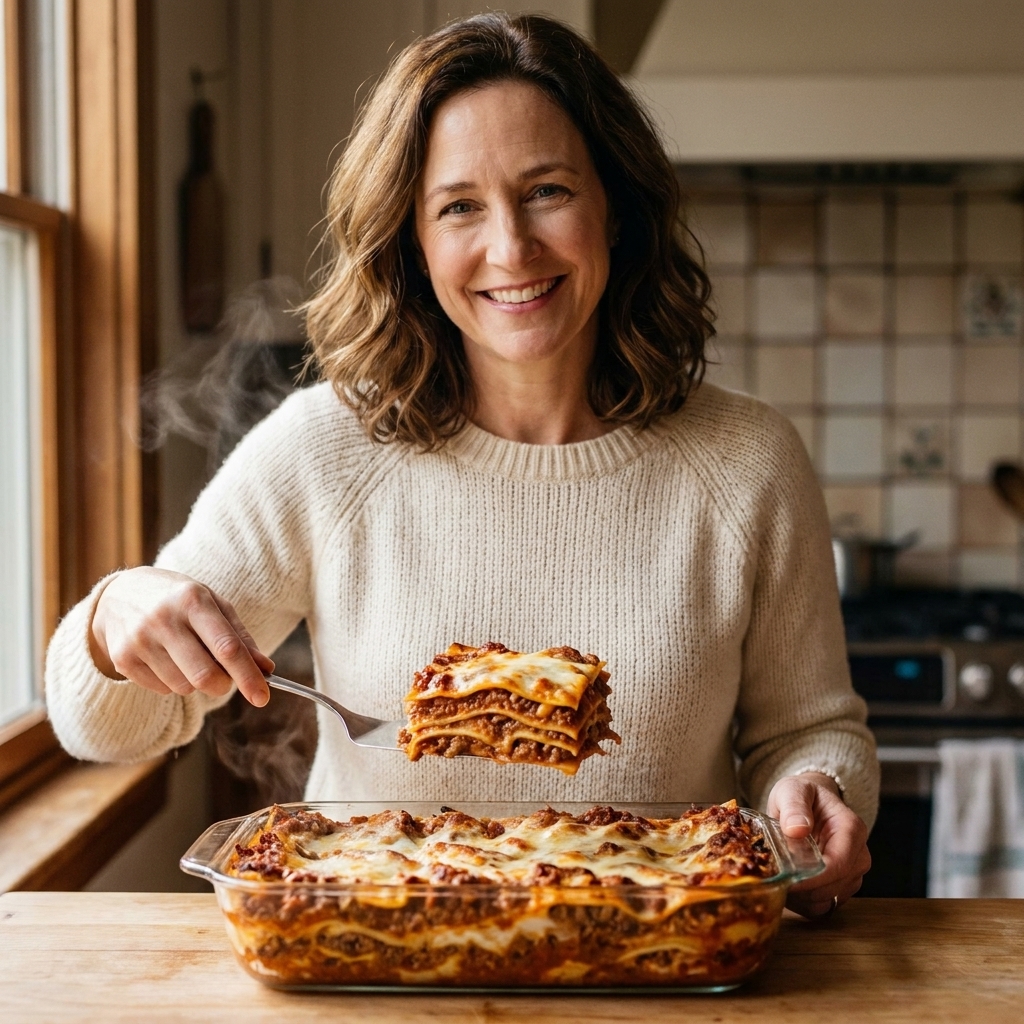
Lasagna is forgiving, but it has one big texture trap: the sauce. No-boil noodles need enough liquid to soften, but too much liquid turns layers gummy.
- If using no-boil noodles: use a looser sauce than normal, but do not make it watery. A good starting point is adding 1/4 to 1/2 cup water or broth to your marinara or meat sauce per 9x13 pan, then simmer 5 minutes so it is saucy but not thin. If your sauce already seems loose, start smaller.
- If using regular noodles: undercook slightly, then toss with a small splash of sauce before layering so they start protected.
- Let lasagna rest. After baking or reheating, rest 15 minutes. This prevents a soupy slice and keeps the noodles from feeling overworked.
Stop soggy bottoms
Soggy bottom happens when liquid pools under the casserole while the top looks perfect. A few fixes:
- Drain ricotta mixes well. If your ricotta seems wet, stir and let it sit in a fine mesh strainer for 10 minutes.
- Cool fillings before layering. Hot fillings release steam that condenses into water.
- Use thicker sauce at the bottom. For lasagna, I like sauce that is hearty and spoonable for the base layer, then slightly looser sauce between layers.
- Bake covered, then finish uncovered. Covered time warms evenly. Uncovered time evaporates surface moisture and firms the top.
Freezer timing
- Best quality window: 2 to 3 months for pasta casseroles.
- Still safe longer: yes, if kept consistently frozen, but texture will slowly decline.
- Label clearly: include “thaw overnight” or “bake from frozen” instructions so Future You does not guess at 6 pm.
Clara’s freezer habit: I freeze pasta casseroles flat and level whenever possible. A level freeze means even thickness, which means even reheating. It is a small thing that saves your noodles.
Troubleshooting
The pasta still came out soft
- Next time, undercook an extra minute.
- Reduce oven temp to 325°F and bake covered longer.
- Make sure noodles are not exposed on top or around edges.
The casserole is dry
- Before reheating, drizzle 1/4 to 1/2 cup sauce around the edges and a few spoonfuls over the center, then cover tightly.
- For mac and cheese, add a splash of milk and gently stir after it warms.
Center is cold, edges are bubbling
- Lower heat to 325°F and keep covered.
- If you are in a hurry, cut the casserole into a few large squares in the pan (through the foil if needed) to help heat reach the center faster.
Quick FAQ
Should I freeze it baked or unbaked?
Either works. For the best noodle texture, I prefer freezing unbaked because it avoids that extra full bake before freezing. If you are freezing leftovers that are already baked, just plan on gentler reheating at 325°F to 350°F and keep it covered for most of the time.
Can I freeze pasta casseroles in glass?
Yes, but be careful with temperature shock. Chill the assembled casserole in the fridge first, then freeze. When baking, do not put a frozen glass dish straight into a hot oven. I like to thaw in the fridge whenever I use glass.
Do I have to thaw first?
No. Baking from frozen is fine, just slower. Covered time is your friend.
What is the single biggest tip for not-mushy noodles?
Undercook the pasta. If you do nothing else, do that. The freezer and oven will finish the job.