
I keep two emergency meals in my chest freezer at all times, and casseroles are my go-to because they reheat like a warm hug. But here is the truth: not every casserole wants the same treatment before it hits the freezer. Some are happiest frozen raw and baked fresh later. Others do better fully cooked first, or you risk grainy sauce, rubbery pasta, or that dreaded soggy bottom.
This guide walks you through the decision, plus the little moisture-control tricks that make the difference between “future me is a genius” and “why is this watery?”
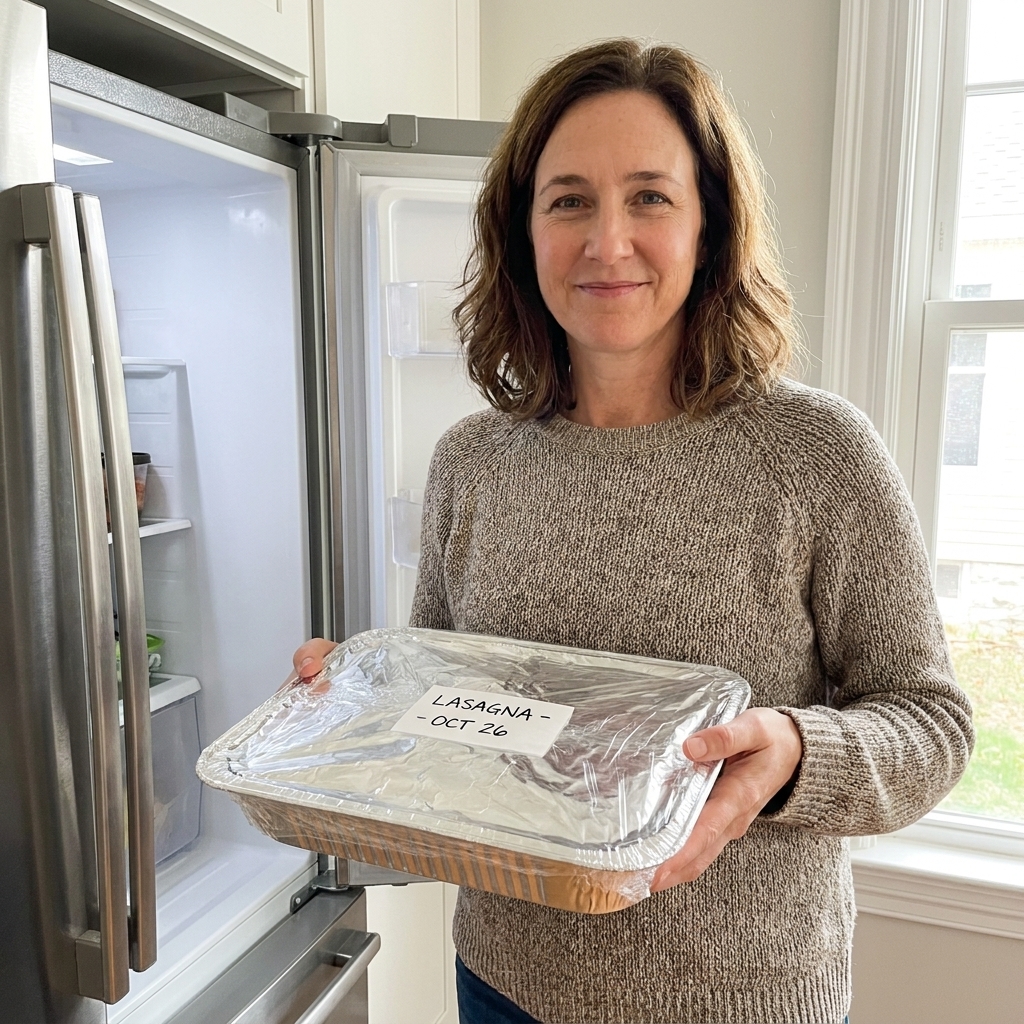
The big question: raw or baked?
When you freeze a casserole, you are freezing three things at once: the structure (pasta, rice, potatoes, tortillas), the moisture (sauces and vegetables), and the proteins (meat, beans, eggs). The best choice depends on which part is most likely to get weird in the freezer or during reheating.
- Freeze unbaked when the casserole benefits from being baked once, fresh, after thawing. This usually protects texture and keeps toppings crisp.
- Freeze baked when the casserole is more likely to separate, curdle, or get grainy if it goes through a long thaw-then-bake. It is also ideal when you want true “grab-and-reheat” convenience.
Quick nuance: Fully cooked pasta can go soft after freezing, so it helps to undercook it slightly if you plan to freeze unbaked. Raw sliced potatoes can discolor and release water, so many potato casseroles do better baked-first.
Best casseroles to freeze unbaked
These are the casseroles that almost always come back better if you assemble, freeze, then bake later. You get fresher texture and fewer overcooked edges from reheating.
1) Pasta casseroles with red sauce
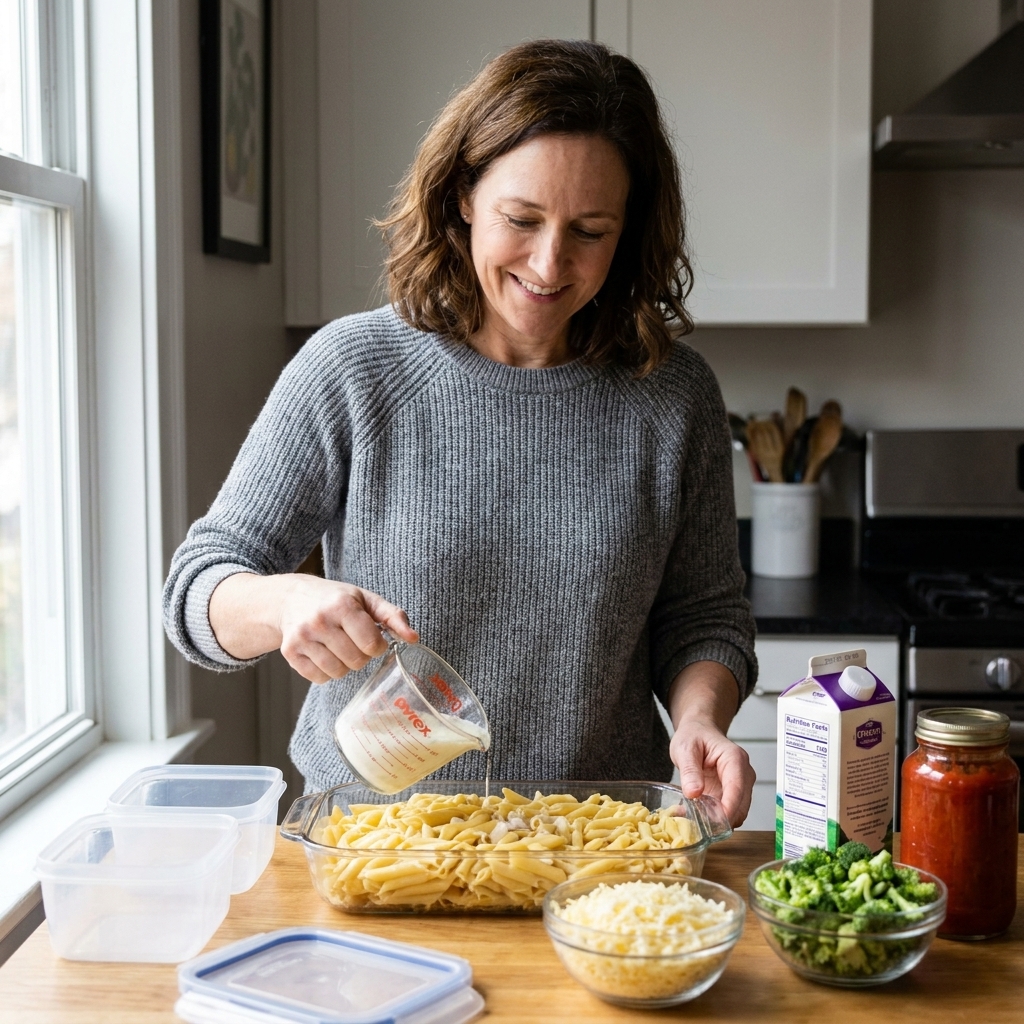
Think baked ziti, lasagna, stuffed-shell bakes, and most marinara-based pasta casseroles. Tomato sauce freezes beautifully, and baking once after thawing keeps the pasta from turning too soft.
- Tip: Undercook pasta by 2 minutes before assembling. Pasta keeps absorbing sauce as it thaws and bakes.
- Moisture control: Cool meat sauce completely before assembling to prevent extra condensation in the pan.
2) Enchilada and tortilla-layer casseroles
Tortillas do best when they are baked once, fresh, instead of baked then reheated. Freeze these unbaked for the best bite.
- Tip: Go easy on sauce. Use enough to coat, not drown. Extra liquid is the fastest route to mushy tortillas.
- Crunchy toppings: Freeze without chips, fried onions, or crushed crackers. Add those right before baking.
3) Rice casseroles (when the rice is not fully cooked)
If your recipe uses partially cooked rice or par-cooked grains designed to finish in the oven, freeze unbaked. Baking once after thawing helps the rice finish evenly.
- Tip: If the casserole uses fully cooked rice, you can still freeze unbaked, but be careful with added liquid. Cooked rice can get a little soft after freezing.
4) Casseroles topped with biscuits, puff pastry, or tater tots
Anything with a signature top tends to be best baked fresh so the topping stays crisp and golden.
- Best practice: Freeze the filling and topping separately when possible, then assemble just before baking.
- If you must assemble: Freeze quickly and bake from thawed so the topping has time to brown before the filling overcooks.
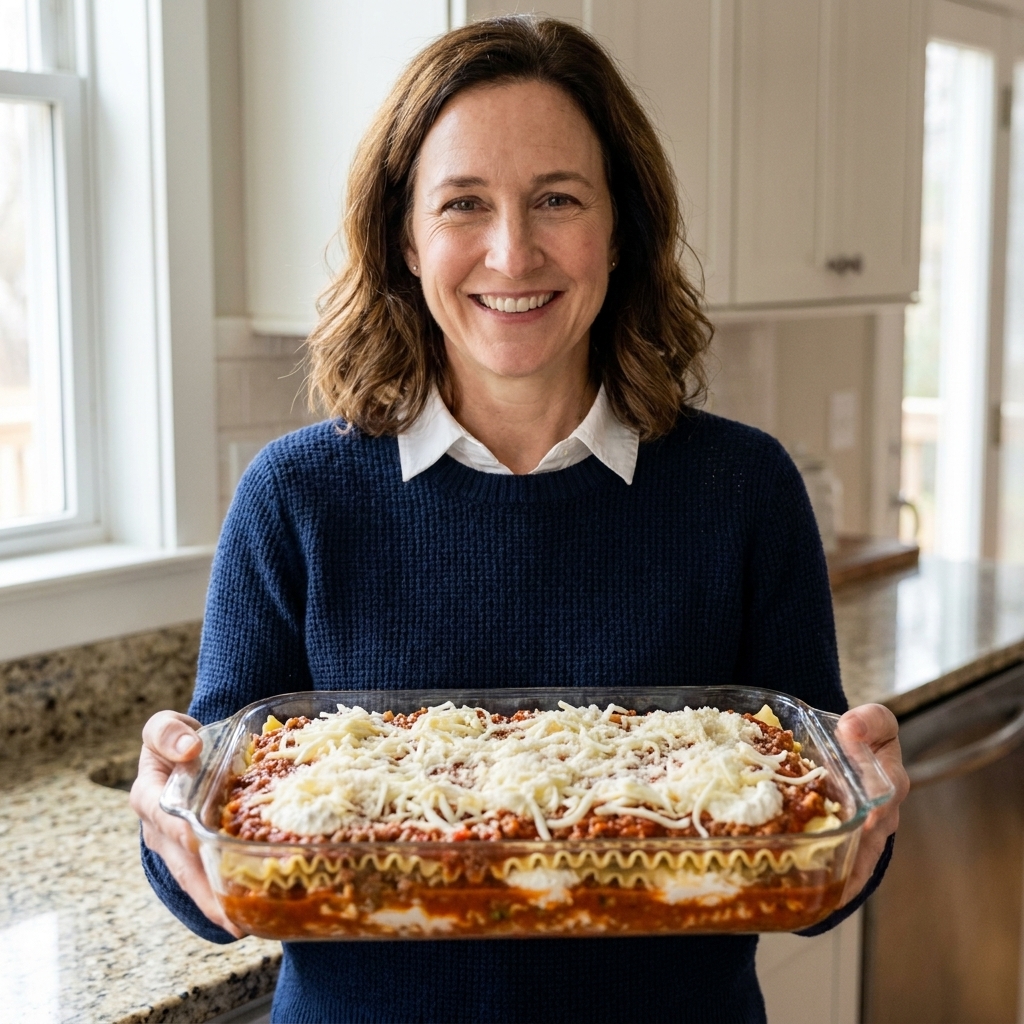
Best casseroles to freeze fully baked
These casseroles often behave better when they are already cooked and set. Freezing after baking can stabilize sauces and protect delicate ingredients, though a few will still benefit from gentle reheating and a little extra moisture.
1) Cream sauce casseroles
Creamy sauces can separate or turn grainy when frozen, especially if they are heavy on cheese or low on fat. Baking first often helps the sauce set into the pasta, potatoes, or chicken so it reheats more smoothly, but it is not a magic shield for every recipe.
- Tip: Cool completely before wrapping. Warm creamy casseroles create steam, and steam becomes ice crystals that turn into watery pockets later.
- Stability helper: Roux-thickened sauces (butter + flour + milk) tend to freeze better than ultra-cheesy sauces. On reheat, a splash of milk or cream stirred in near the end can bring back silkiness.
- Reheat gently: Cover with foil for most of reheating to avoid dried-out edges.
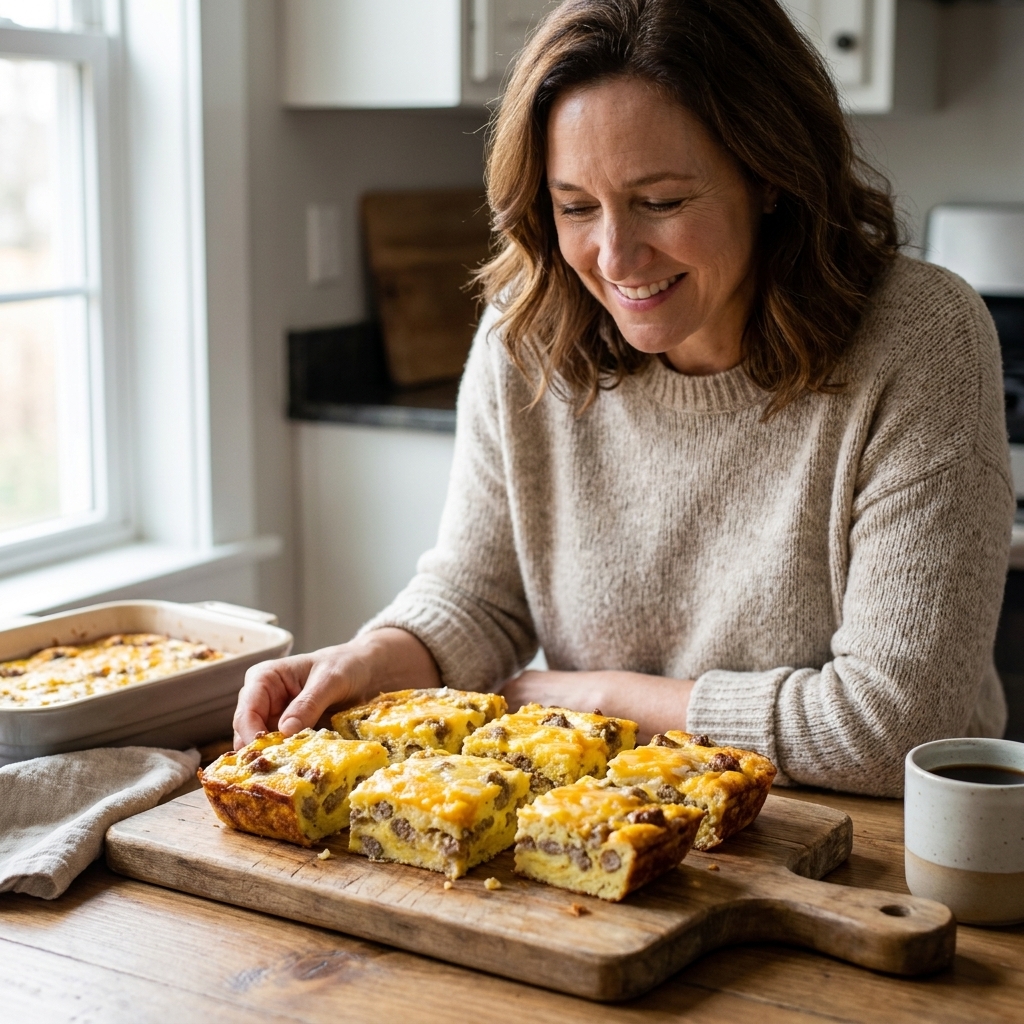
2) Egg-based breakfast casseroles
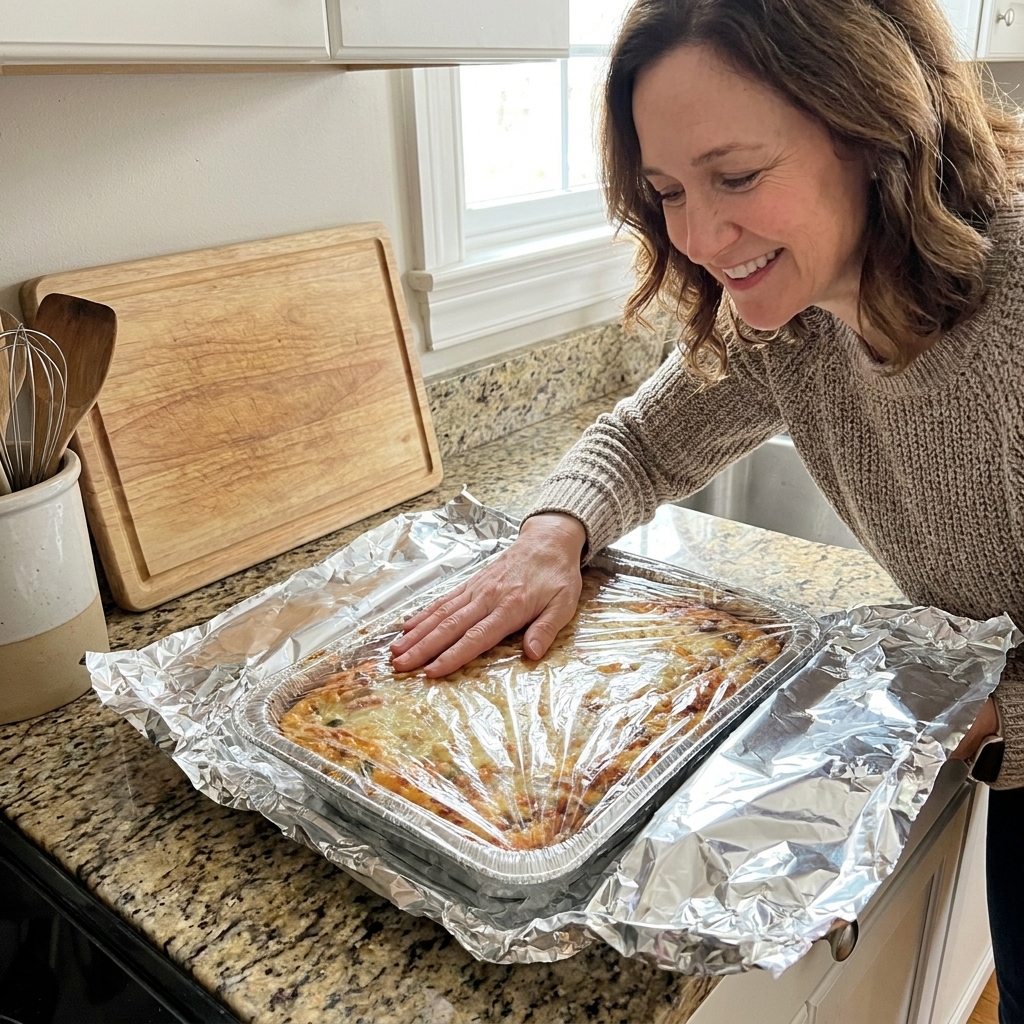
Stratas, French toast bakes, and breakfast casseroles are usually more reliable texture-wise when baked first. Eggs can weep water after freezing raw, which can lead to a spongy bite, even when the casserole is baked properly.
- Best method: Bake, cool, portion, then freeze. Reheat slices for easy weekday breakfasts.
- Texture saver: Use full-fat dairy when you can. Low-fat can separate more easily.
3) Seafood casseroles
Seafood is delicate. A raw seafood casserole that thaws and then bakes can end up overcooking by the time the center is hot. If you want to freeze seafood casseroles, bake first, cool, then freeze.
- Even better: Freeze the sauce and base, then add fresh seafood on bake day if that is an option for you.
4) Vegetable-forward casseroles with lots of water
Zucchini, mushrooms, spinach, and many frozen vegetables release water as they thaw. Baking first helps drive off excess moisture so you are not reheating a puddle.
- Tip: Sauté mushrooms and onions until their liquid is gone before assembling, whether you bake-first or freeze-raw.
A quick decision guide
| Casserole type | Freeze unbaked | Freeze baked | Why |
|---|---|---|---|
| Lasagna, baked ziti (red sauce) | Yes | Sometimes | Tomato sauces freeze well; baking once keeps pasta from turning too soft. |
| Chicken and rice casserole | Often | Sometimes | Depends on rice and sauce; par-cooked rice finishes best baked fresh. |
| Creamy pasta bakes (Alfredo, mac and cheese) | Sometimes | Often | Cream and cheese sauces can separate; baked-first is often smoother, especially with gentle reheating. |
| Enchilada casseroles | Yes | Sometimes | Tortillas keep better texture when baked once after thawing. |
| Breakfast egg casseroles | Sometimes | Often | Freezing raw can work, but baked-first tends to prevent egg weeping and sponginess. |
| Seafood casseroles | No (rarely) | Yes | Seafood easily overcooks during thaw-and-bake; baked-first is more forgiving. |
My no-soggy-bottom method
This is the routine I use for almost every 9x13 situation. It keeps flavors bright and texture intact.
Step 1: Cool fast and safe
- Cool cooked components (meat sauce, sautéed veggies) before assembling.
- Do not let food sit out too long. As a general rule, get hot casseroles into the fridge within 2 hours.
- To speed cooling, portion into smaller dishes, spread into a thinner layer, or set the (covered) dish on a rimmed sheet pan to increase airflow in the fridge.
- If the whole casserole is baked, cool it completely before wrapping. No warmth, no steam.
Step 2: Choose the right container
- Freezer-to-oven disposable foil pans: Great for gifting and saving your bakeware.
- Glass or ceramic: Fine for freezing, but avoid temperature shock. Thaw in the fridge before baking whenever you can.
- Metal 9x13: Great for quick freezing and even baking.
Step 3: Wrap like you mean it
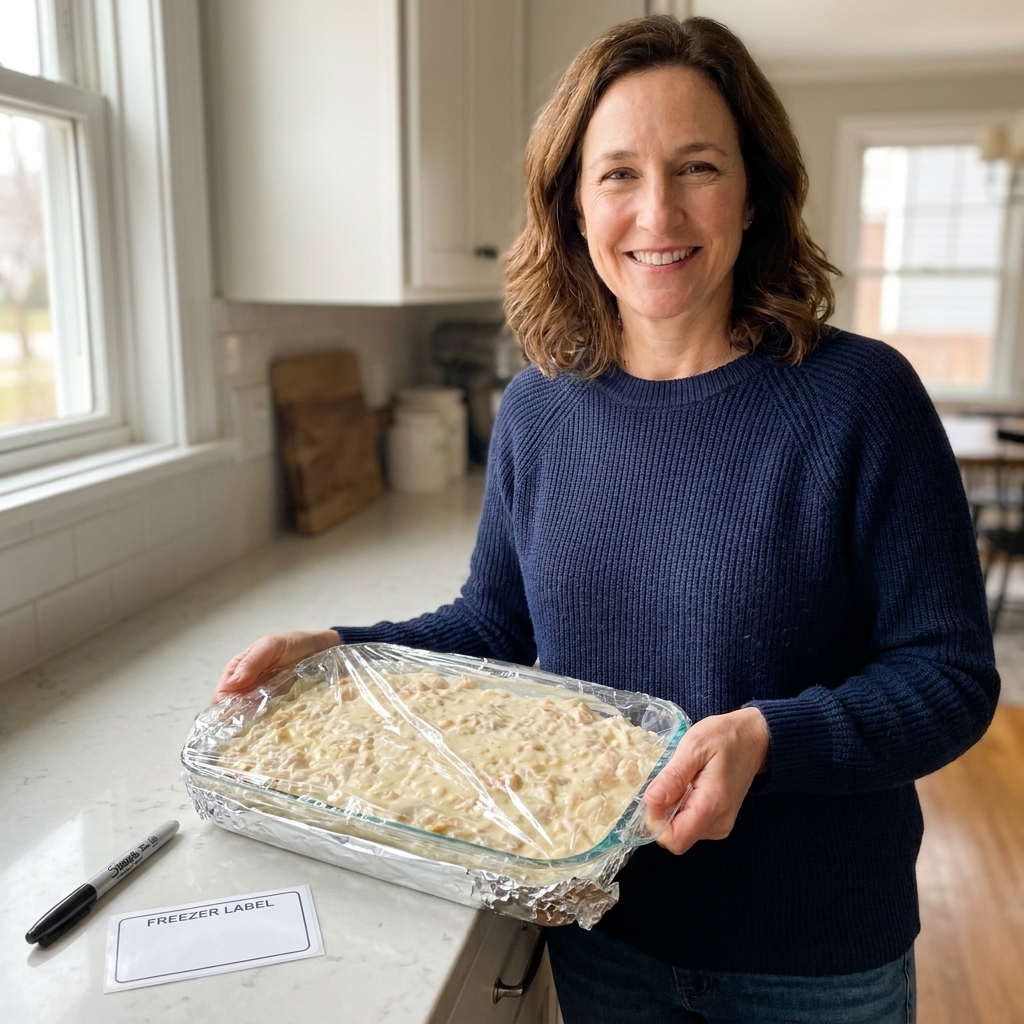
- Press plastic wrap directly onto the surface (especially creamy casseroles) to limit freezer burn.
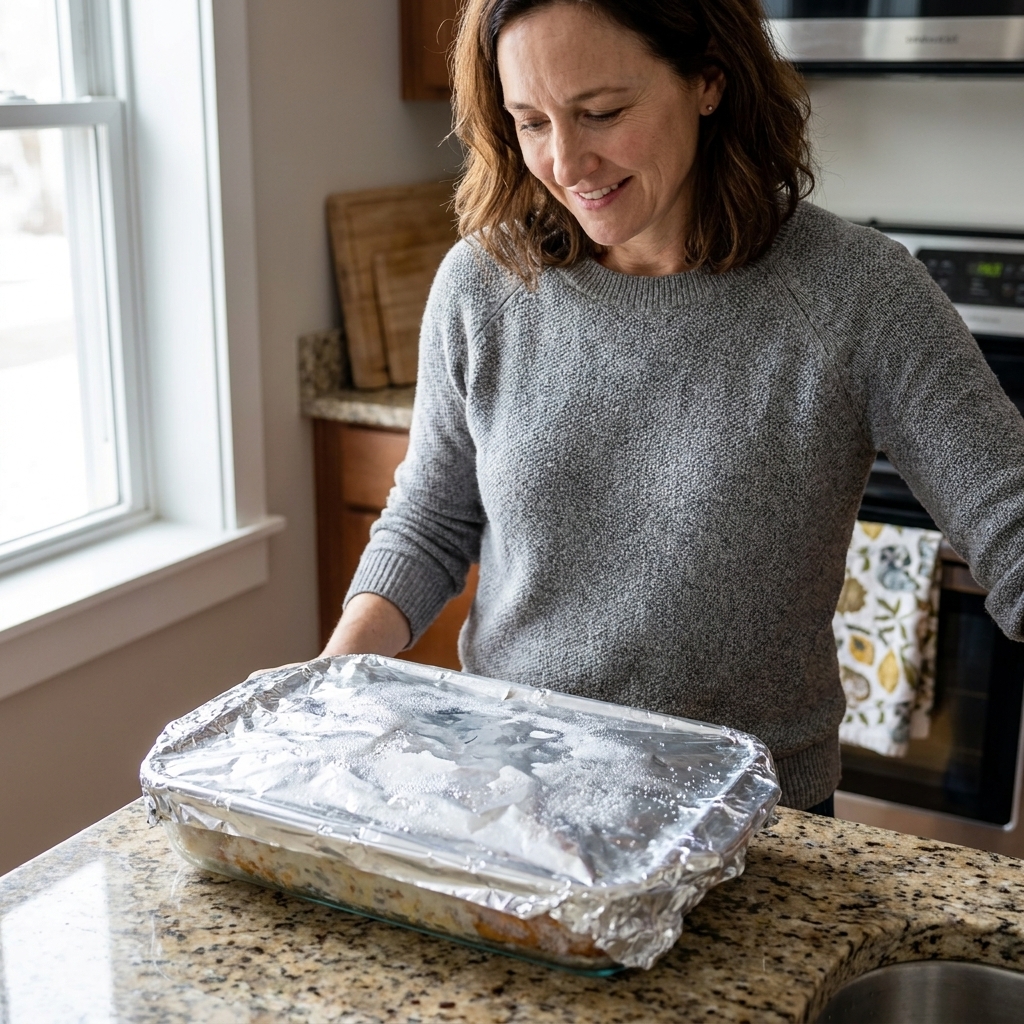
- Add a tight layer of foil on top.
- Label with the name, date, and baking instructions. Your future self deserves that kindness.
Step 4: Freeze fast
The faster it freezes, the smaller the ice crystals, and the better the texture later. Put the casserole on a flat, cold shelf. Avoid stacking anything on top until it is solid.
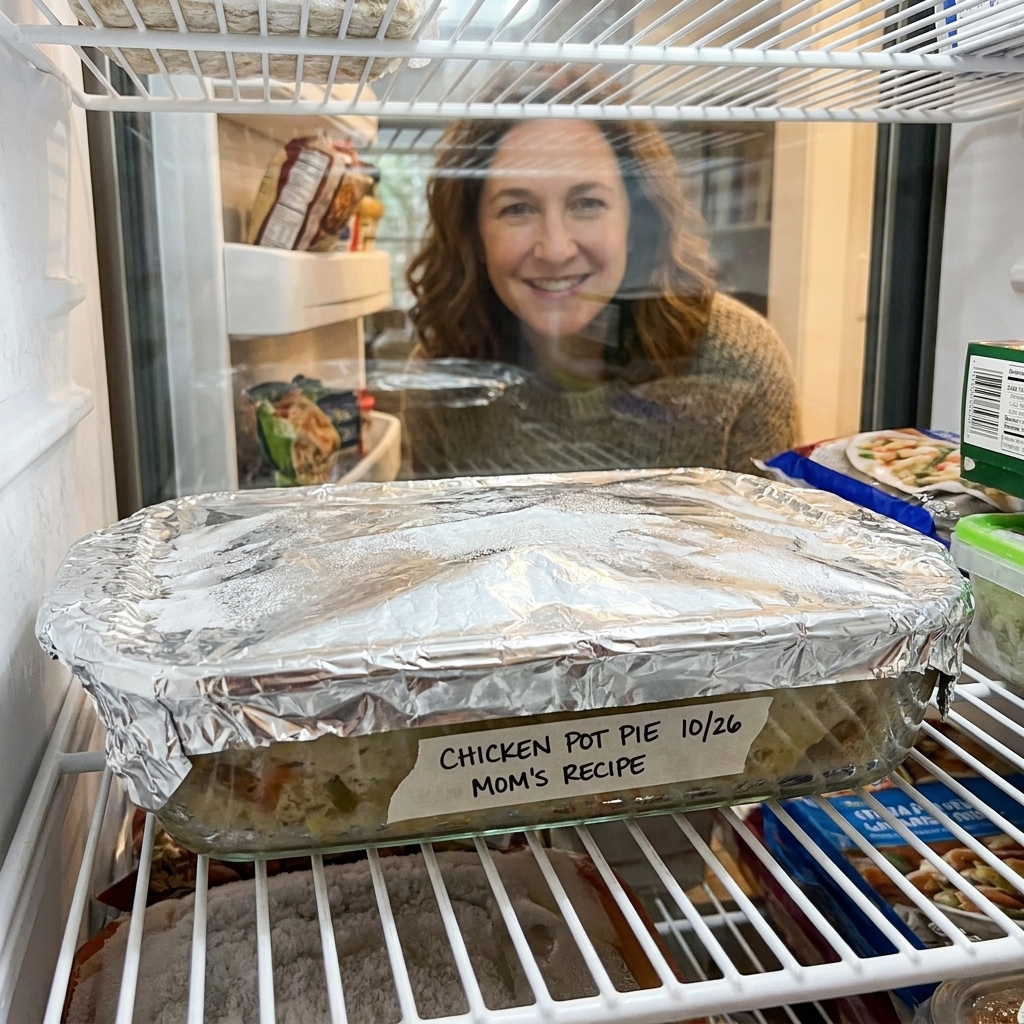
Thawing and baking
Best thaw option: fridge
Refrigerator thawing is the most even and safest. For a full 9x13, it typically takes 24 to 48 hours, depending on depth, container, and how cold your fridge runs. It is ready when the center is fully thawed and you do not feel any icy spots.
If you forgot to thaw
You can bake many casseroles from frozen, but it takes longer and the edges can overcook while the center heats through. If I bake from frozen, I always do this:
- Keep it covered with foil for most of the bake.
- Add 30 to 60 minutes to the bake time, depending on depth.
- Uncover at the end to brown cheese or crisp a topping.
Doneness targets
- Casseroles with meat or eggs: Heat to 165°F in the center.
- Vegetarian or cheese-forward casseroles: Heat until bubbling and steaming hot throughout. If you want a simple, across-the-board target, 165°F in the center is a solid benchmark.
Common freezer problems
“My casserole is watery after thawing.”
- Cause: High-water vegetables, sauce too thin, or warm casserole wrapped too soon.
- Fix next time: Cook off vegetable moisture, thicken sauce slightly, and cool completely before wrapping.
- Fix now: Bake uncovered for the last 10 to 20 minutes to evaporate extra liquid, and let it rest 10 minutes before serving.
“The sauce is grainy.”
- Cause: Some dairy and cheese sauces separate after freezing.
- Fix next time: Use a roux-thickened base, freeze baked if possible, use full-fat dairy, and avoid overbaking on reheat.
- Fix now: Warm gently, and stir in a small splash of warm milk or cream to help smooth it out.
“My topping is sad and soggy.”
- Cause: Crunchy toppings frozen on the casserole or covered too long at the end.
- Fix next time: Add crunchy toppings right before baking.
- Fix now: Sprinkle on fresh topping and broil briefly, watching closely.
“Freezer burn around the edges.”
- Cause: Air exposure.
- Fix next time: Plastic wrap pressed to the surface, then foil, and freeze quickly.
How long do casseroles keep?
They are safe longer than they taste great. For best texture and flavor:
- Most casseroles: 2 to 3 months for top quality.
- Very saucy, tomato-based casseroles: often still taste great closer to 3 months.
- Delicate creamy or egg casseroles: aim for 1 to 2 months for best texture.
If you are like me and stash emergency meals, rotate them. Eat one, replace one. Your freezer stays useful, not mysterious.
FAQ
Can I freeze a casserole in a glass 9x13 dish?
Yes, but treat glass gently. Let the casserole cool completely before freezing, and thaw in the fridge before baking when possible. Baking a frozen glass dish can risk cracking from temperature shock, and a cold-oven start is not a guarantee. When in doubt, follow the manufacturer’s guidance or transfer the casserole to a metal or foil pan for baking.
Should I freeze with cheese on top?
For most casseroles, yes, cheese freezes fine. For the prettiest browning, you can hold back a little cheese and add it near the end of baking.
Do I need to thaw before baking?
Thawing gives you the most even bake and the best texture. Baking from frozen works, but plan for extra time and keep it covered for most of the bake to prevent dry edges.
What about potatoes?
Potatoes can be tricky. Thin sliced potato casseroles usually freeze better baked-first, since raw potatoes can discolor and release water. Mashed potato toppings freeze well either way, but I like to bake-first if the filling underneath is creamy.