
Some nights, “What’s for dinner?” gets answered by the freezer. And honestly, that is one of my favorite kinds of cooking. If you freeze casseroles on purpose (or because life happened), you can often bake them straight from frozen without thawing first. The trick is simple: protect the top, give the center time to catch up, and use the right temperature so you end up with bubbling comfort food, not scorched edges and an icy middle.
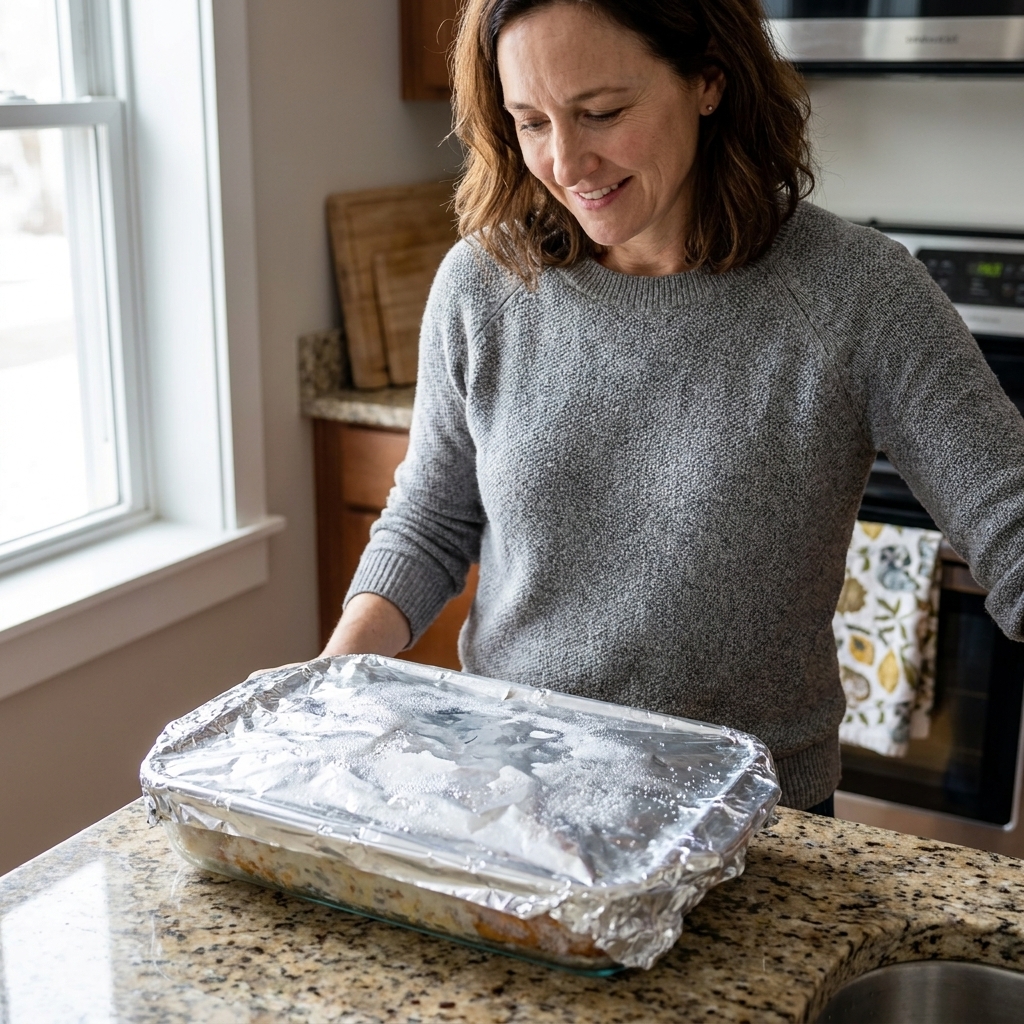
This guide works for most 9x13 style meals: lasagna, baked pasta, enchiladas, chicken and rice casseroles, breakfast bakes, shepherd’s pie, and veggie-packed “clean out the fridge” classics.
Quick reality check: Bake-from-frozen is easiest and most predictable when the casserole was assembled with cooked proteins (and cooled before freezing). If you built your casserole with raw meat or seafood, you can still cook it from frozen, but the timing gets trickier and a thermometer becomes non-negotiable.
First: use a freezer-to-oven pan
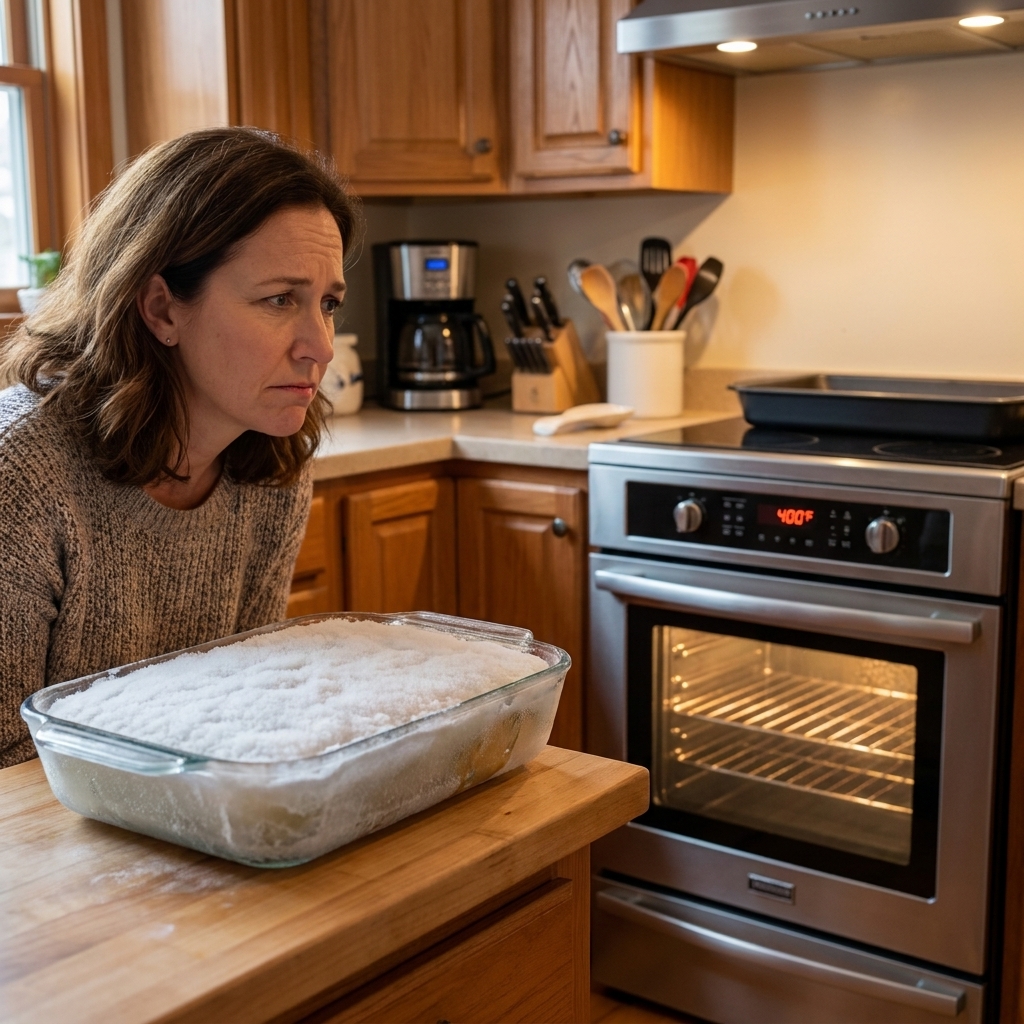
The biggest freezer-to-oven fail I see is not the recipe. It is the pan. Sudden temperature changes can crack certain dishes, especially glass.
Safest options
- Disposable foil pans (my weeknight hero). Set them on a baking sheet for stability.
- Metal baking pans (aluminum or stainless steel) are generally the most temperature-change friendly.
Using glass or ceramic
You can do it, but be careful. Many glass and ceramic pans can crack with thermal shock if they go from very cold to a hot oven.
- If your dish is glass or ceramic and you are not 100 percent sure it is freezer-to-oven safe, do not risk it. Transfer to a foil pan or thaw overnight in the fridge.
- Even if a pan is marketed as freezer-to-oven, check the manufacturer’s care instructions for your exact dish. Some brands still warn against extreme temperature swings.
- If you regularly freeze meals, consider freezing the casserole in foil and saving your glass for baking day.
My organized-mom workaround: I build casseroles in a foil pan, freeze, then on baking day I can place that foil pan inside my prettier 9x13 for serving after it is hot.
The method that works for most casseroles
This is my reliable “no thinking required” approach.
Step 1: Preheat to 350°F
For most casseroles, 350°F is the sweet spot from frozen. Hot enough to get the middle moving, gentle enough to keep the edges from drying out during the longer bake.
Step 2: Remove plastic, keep the foil
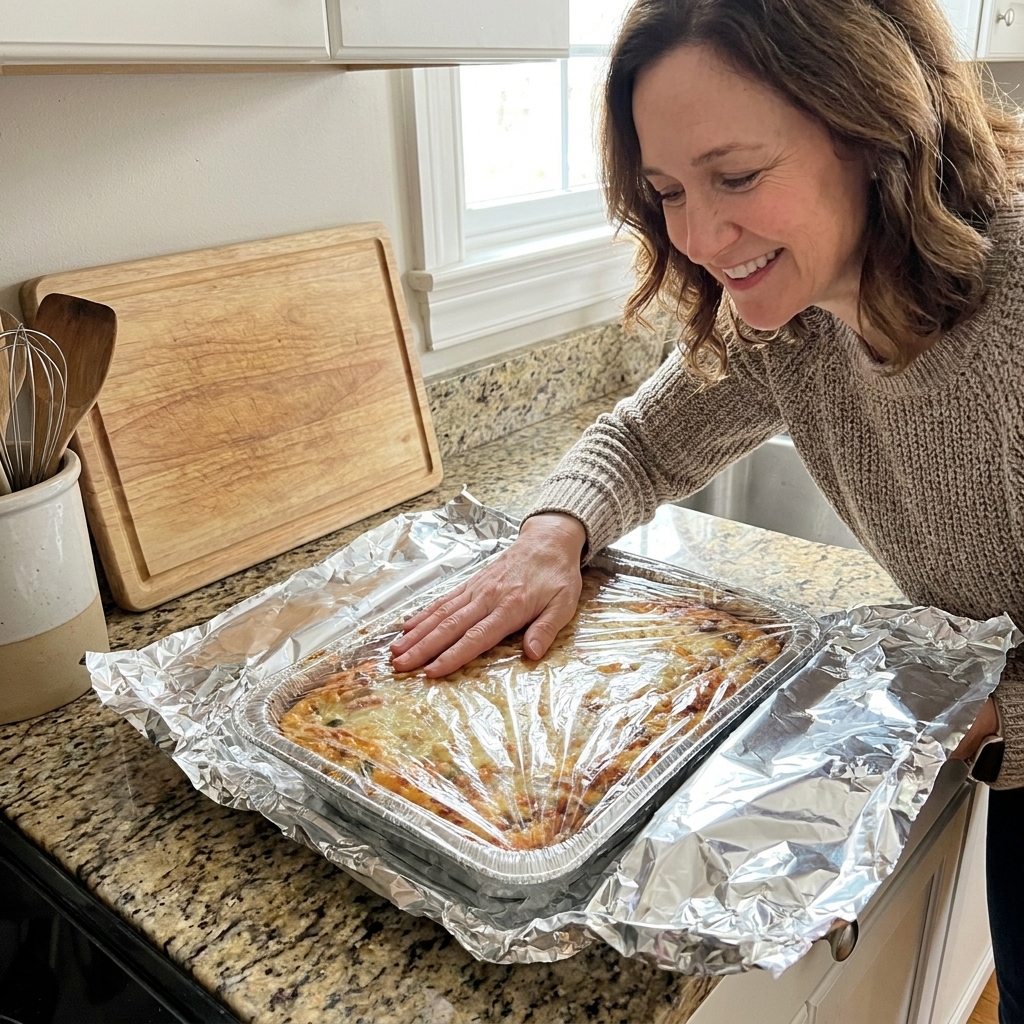
If your casserole is wrapped in plastic wrap plus foil, peel off the plastic completely. Then re-cover tightly with foil.
Step 3: Bake covered most of the time
Covered baking is what saves you from dry corners while the center thaws and heats. I cover for about two-thirds to three-quarters of the total bake time.
Step 4: Plan on extra time
From frozen, most casseroles take about 1.5 to 2 times longer than the original recipe states for a refrigerated or freshly assembled casserole. Use this as a starting point, not a promise, and let doneness (not the clock) be the boss.
- If a recipe says 35 to 45 minutes, expect 60 to 90 minutes from frozen.
- If a recipe says 50 to 60 minutes, expect 80 to 110 minutes from frozen.
Step 5: Uncover to brown
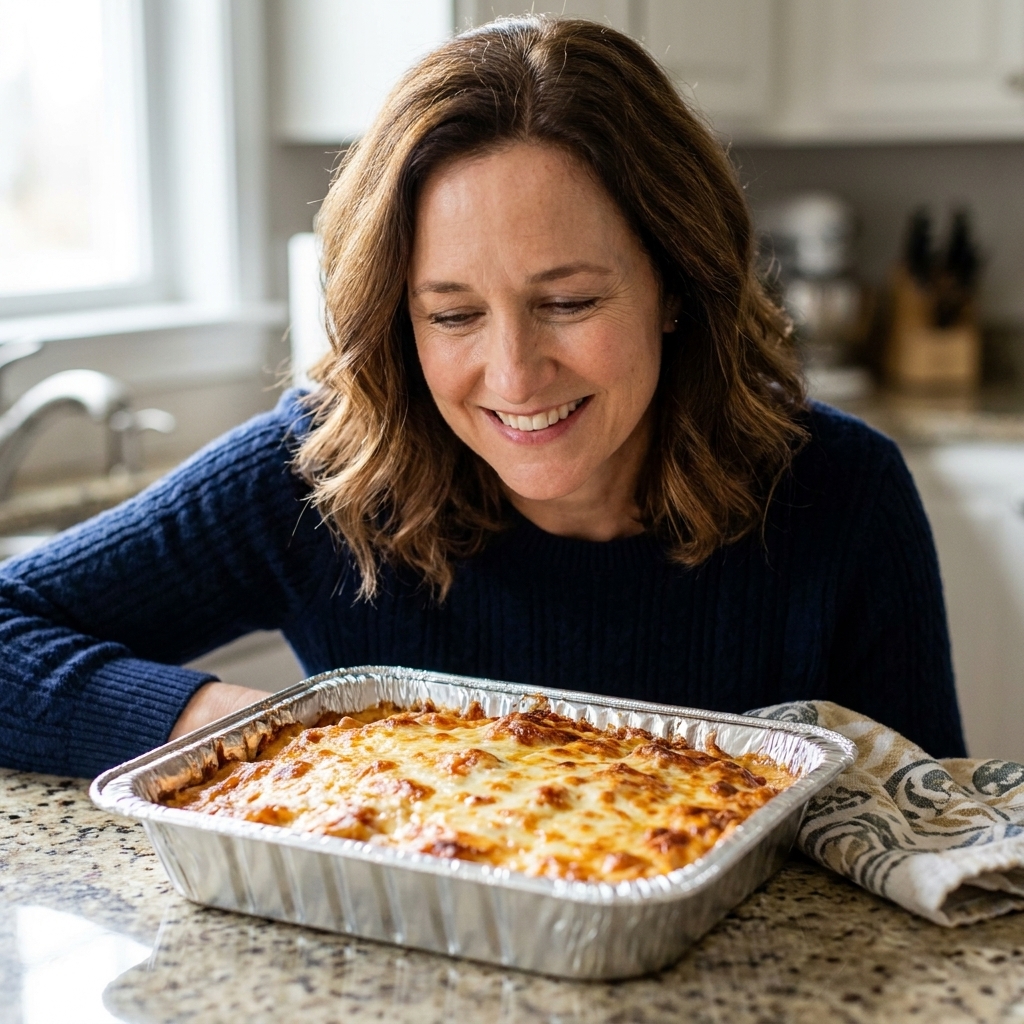
Once the center is hot (use a thermometer or the knife test below) and the casserole is bubbling at the edges, remove the foil so the top can brown and the cheese can do its glorious thing.
Step 6: Rest before serving
Give it 10 to 15 minutes on the counter before slicing. This helps everything set up and keeps the first scoop from turning into a lava slide.
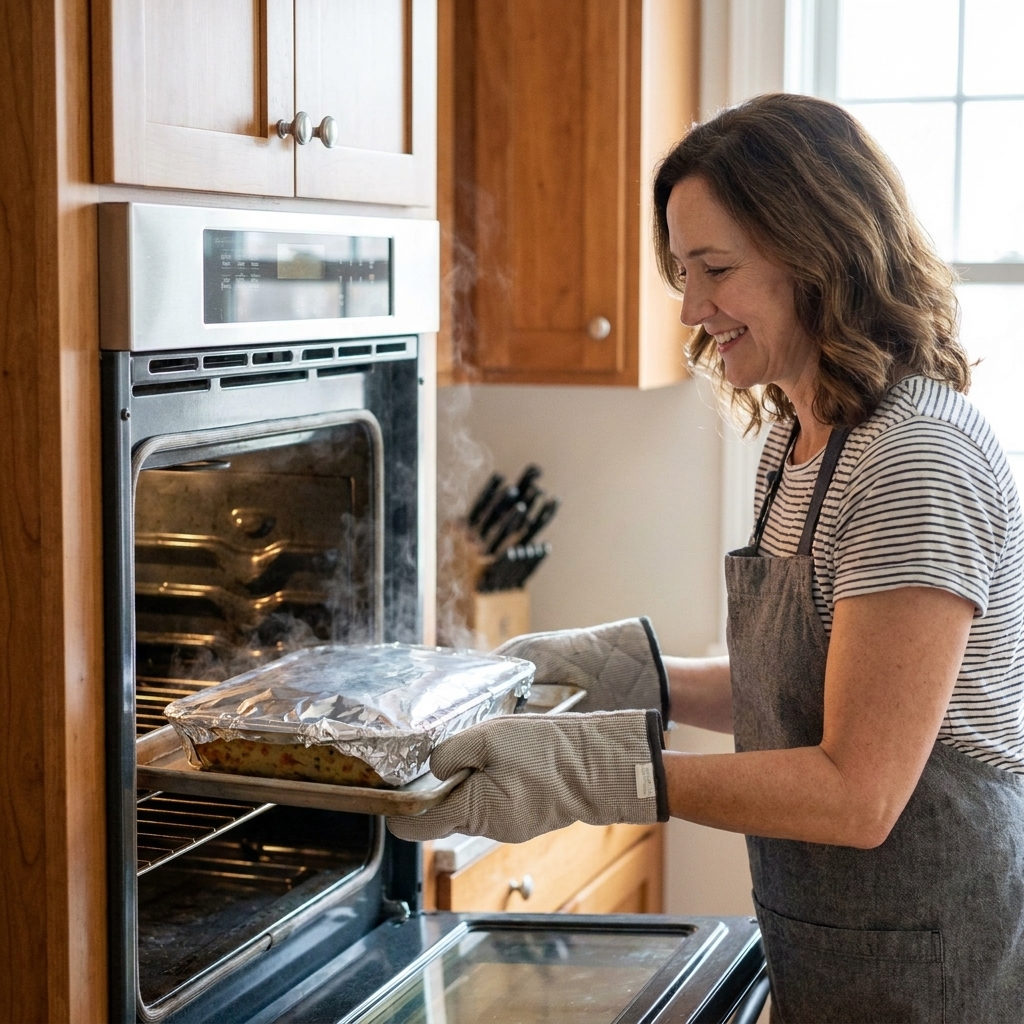
Oven temp: 350°F is your friend
If you remember nothing else, remember this: higher heat is not usually the answer for frozen casseroles. Cranking the oven to 400°F often browns the outside too fast while the center is still cold.
- 350°F: Best for most casseroles from frozen.
- 325°F: Helpful for very thick, dense casseroles (deep lasagna, heavy potato bakes) if your edges tend to dry out.
- 375°F: Works for thinner casseroles or when you are baking in a shallow foil pan and want a little faster finish, but watch the edges.
When in doubt, start at 350°F covered, then adjust at the end if you need more browning.
How to know it is done
The top can look perfect while the middle is still chilly, especially with pasta, rice, or thick fillings. Here is how I check doneness like a busy mom who cannot afford a cold center surprise.
Look for these signs
- Bubbling around the edges and, ideally, in the center too.
- Steam when you lift the foil.
- Hot in the middle when tested.
The most reliable check: a thermometer
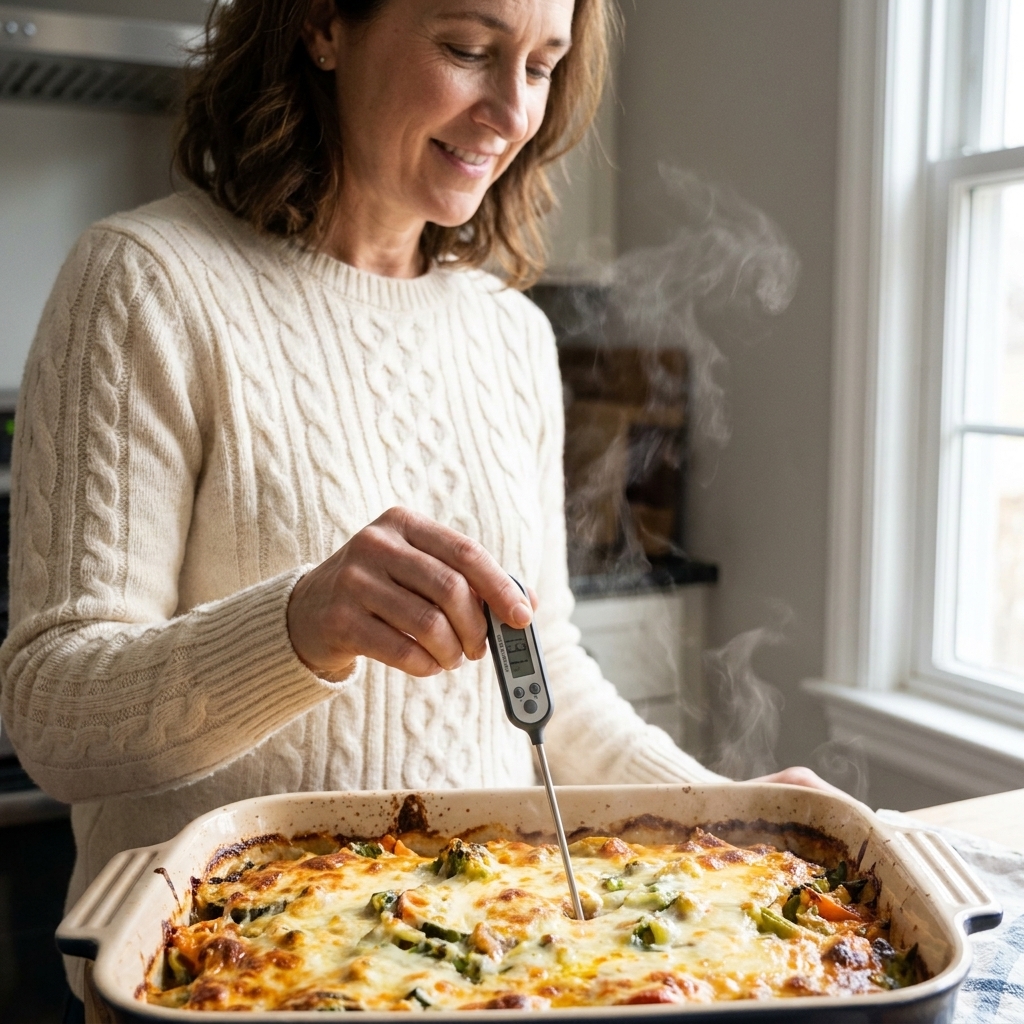
If your casserole includes meat, poultry, eggs, or seafood, I strongly recommend using an instant-read thermometer. Aim for 165°F in the center for a simple, conservative, one-size-fits-most safety target. (Some foods, like eggs on their own, are sometimes listed as safe at slightly lower temps, but 165°F keeps things straightforward.) For vegetarian casseroles, I still like checking that the center is at least 160°F so it is truly hot all the way through.
No thermometer? Insert a thin knife into the center for 5 seconds, then carefully touch the blade. It should feel very warm to hot, not cool.
Covering tips
Covering is not just about speed. It is moisture control, and casseroles live or die by moisture control.
For cheesy casseroles
- Cover tightly with foil for the first stretch.
- If your cheese sticks to foil, lightly oil the underside of the foil or tent it so it does not touch the cheese.
For crumb toppings
Crumb toppings can go soft under foil. Two good options:
- Option A: Freeze the casserole without the topping, then add the topping for the last 15 to 25 minutes.
- Option B: Bake covered until the center is hot, then uncover and broil briefly (watch it like a hawk).
For casseroles that get watery
Some veggies (zucchini, spinach, mushrooms) release water during baking. From frozen, that water can pool before the oven evaporates it.
- Bake covered until hot, then finish uncovered a bit longer to let steam escape.
- If you see a lot of liquid at the edges, do not panic. Keep baking uncovered and it usually reduces.
Timing cheat sheet
Every freezer, pan, and casserole thickness is a little different, but these ranges will get you very close. These times assume a frozen 9x13 casserole at 350°F. Use them to plan your evening, then confirm doneness in the center with a thermometer or knife test.
| Casserole type | Covered time | Uncovered time | Total (typical) |
|---|---|---|---|
| Lasagna and baked ziti | 60 to 80 minutes | 15 to 25 minutes | 75 to 110 minutes |
| Enchiladas (saucy) | 50 to 70 minutes | 10 to 20 minutes | 60 to 90 minutes |
| Chicken and rice casseroles | 60 to 90 minutes | 10 to 20 minutes | 70 to 110 minutes |
| Breakfast casseroles (eggs, hash browns) | 55 to 75 minutes | 10 to 20 minutes | 65 to 95 minutes |
| Shepherd’s pie | 50 to 70 minutes | 15 to 25 minutes | 65 to 95 minutes |
| Vegetable gratins and creamy bakes | 50 to 75 minutes | 15 to 25 minutes | 65 to 100 minutes |
Best practice: Start checking at the low end, then add time in 10 minute chunks until the center is truly hot and at temperature.
If you have time: the best thaw
If you want the most predictable bake (or you are dealing with a pan you do not fully trust), thawing helps.
- Thaw the casserole overnight in the fridge, still wrapped.
- Bake at the recipe temperature, but start checking 10 to 15 minutes earlier than the recipe states since your casserole may be extra cold from the fridge.
- As always, confirm the center is hot, and use 165°F for casseroles with meat, poultry, eggs, or seafood.
Freezer habits that help
A casserole that is frozen smart bakes smart. These little habits make a huge difference.
Freeze flat and even
- Spread fillings level before freezing so the center is not extra thick.
- Cool the casserole completely before freezing to reduce ice crystals and excess moisture.
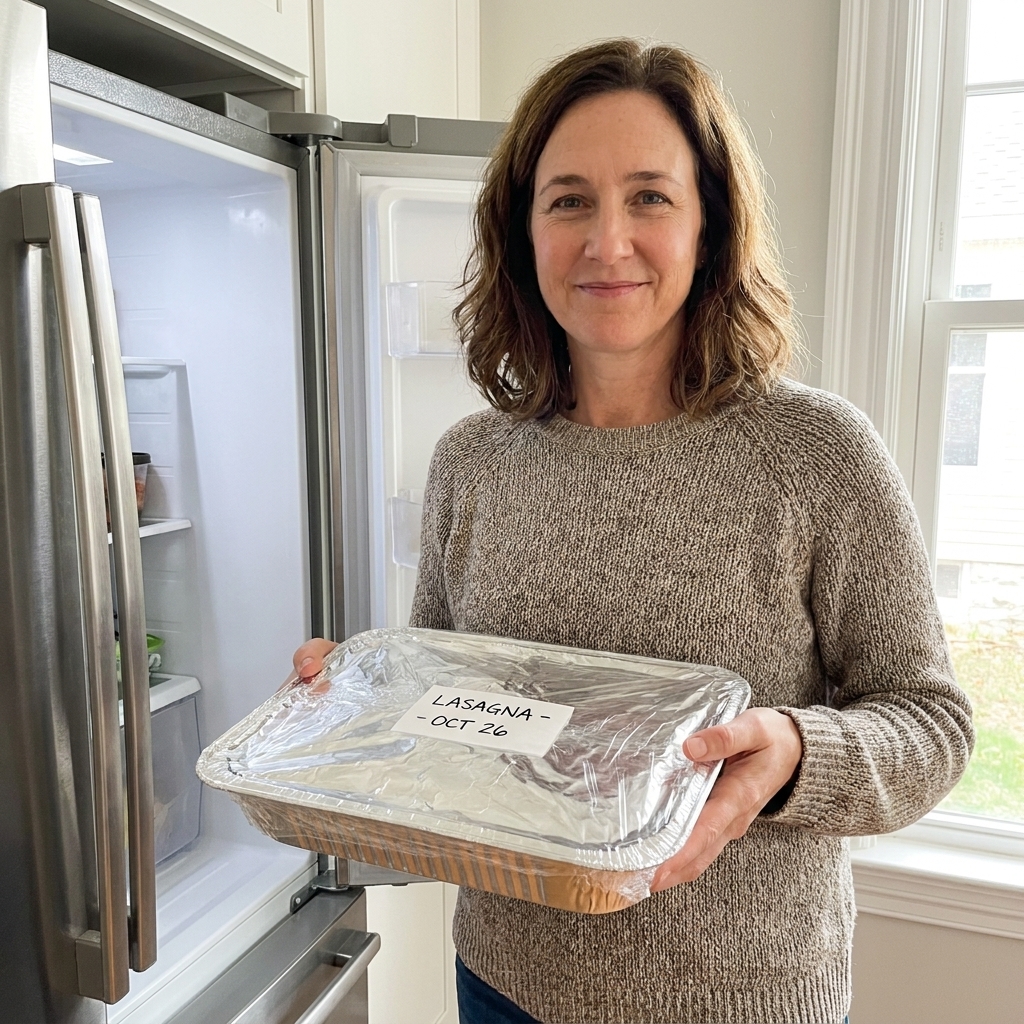
- Press plastic wrap directly onto the surface (then foil) to reduce freezer burn, but remember to remove that plastic before baking.
Label like your future self is tired
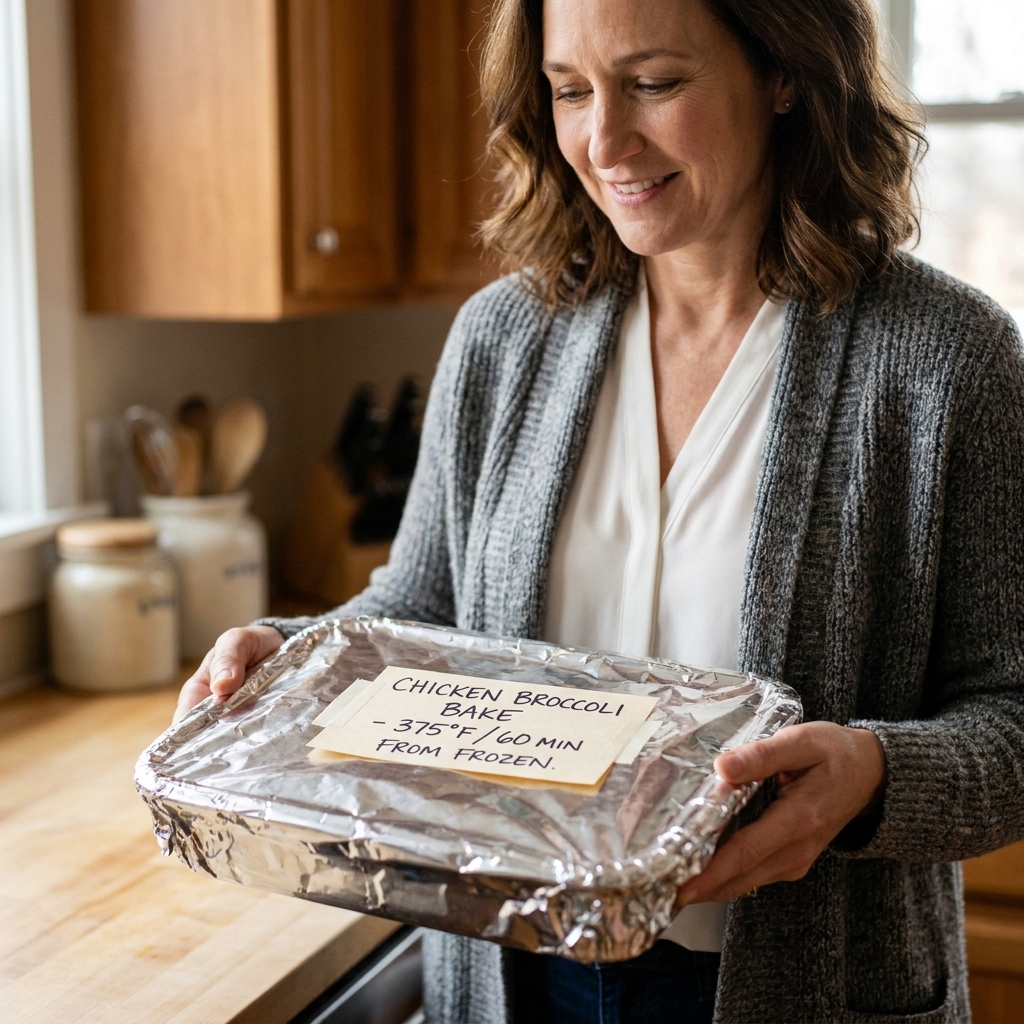
- Write the casserole name and the bake-from-frozen instructions right on the foil: “350°F covered 70 min, uncover 20 min”.
Use a baking sheet every time
- It catches drips, makes transfer easier, and helps heat circulate more evenly under the pan.
Troubleshooting
The edges are done but the middle is cold
- Keep it covered and lower the oven to 325°F.
- Move the pan to the middle rack.
- If your casserole is very thick, loosely tent foil and give it more time. Frozen centers need patience.
The top is getting too brown
- Your oven may run hot or the casserole may be close to the top element. Move it down a rack.
- Double-layer foil for the covered portion.
It is bubbling but still watery
- Uncover and bake 10 to 20 minutes longer to let moisture evaporate.
- Let it rest 15 minutes before serving. Many casseroles thicken as they cool slightly.
The bottom is soggy
- For future batches, cool the casserole completely before freezing and wrap well to prevent ice crystals (a major soggy-bottom culprit).
- If the recipe uses a starchy base (bread cubes, tots, hash browns), bake uncovered longer at the end to drive off moisture.
The pan overflowed
- Always bake from frozen on a rimmed baking sheet.
- If it is already happening, place a sheet pan on the rack underneath to catch drips and keep going.
Safety notes
- Never bake with plastic wrap on the casserole. Remove it completely before the oven.
- Heat to a safe internal temperature. For casseroles with meat, poultry, eggs, or seafood: 165°F in the center.
- When in doubt about your dish, do not freezer-to-oven it. Transfer to a safer pan or thaw in the fridge first.
- Bake-from-frozen works best with cooked proteins. If you used raw meat or seafood, plan on a longer bake and verify the center temperature.
Freezer-to-oven FAQ
Can I bake a frozen casserole at 400°F to make it faster?
You can, but I do not recommend it for most casseroles. The outside cooks too fast and dries out before the center heats through. Start at 350°F, then bump up briefly at the end if you want extra browning.
Should I crack the lid or vent the foil?
Keep it tightly covered at first to hold in heat and protect the top. Venting is helpful only toward the end if you need moisture to evaporate.
What if my casserole is frozen in a tall, deep container?
Deep casseroles take longer and are more prone to hot edges with a cold middle. If possible, freeze in a standard 9x13 depth. If it is already frozen deep, bake at 325°F covered and plan for extra time.
Can I bake two frozen casseroles at the same time?
Yes, with space between them for airflow. Plan on adding time, usually 10 to 20 minutes more, and rotate the pans halfway through.
Do I need to let it sit on the counter before baking?
If you are using a pan that is truly freezer-to-oven safe, you can go straight in. If you are unsure about the material, it is safer to thaw in the fridge or transfer to a foil pan rather than relying on a counter rest.
My emergency dinner promise
I keep two emergency meals in my chest freezer at all times, because life is loud and schedules are messy. When you know how to bake a casserole from frozen, you are not just saving time. You are giving your future self a real dinner plan that ends with a hot pan on the table.
If you want the simplest starting point, freeze a classic baked pasta in a foil 9x13, label it, and bake it at 350°F covered until the center hits 165°F. That one move has rescued more weeknights in my house than I can count.