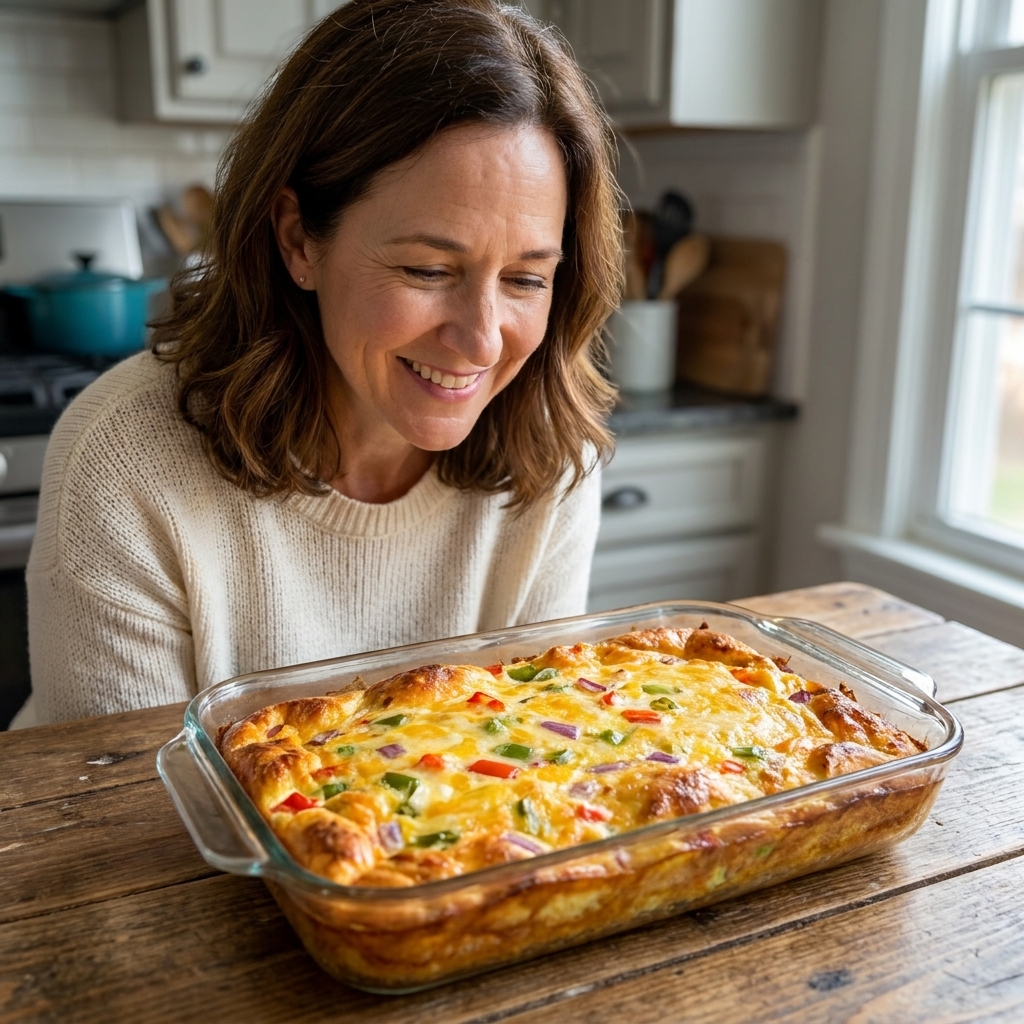

If you have ever stared at your trusty 9x13 breakfast casserole recipe and thought, “Okay, but I need to feed the whole fellowship hall,” you are in the right place. Scaling a breakfast casserole is not hard, but it does have a few rules if you want fluffy eggs, tender bread, and a top that is golden instead of rubbery.
I have scaled casseroles for everything from Christmas morning chaos to church breakfasts where the coffee runs out before the bacon does. Below is the math, the pan swaps, and the little moisture tricks that keep big batches tasting like you baked them on purpose.
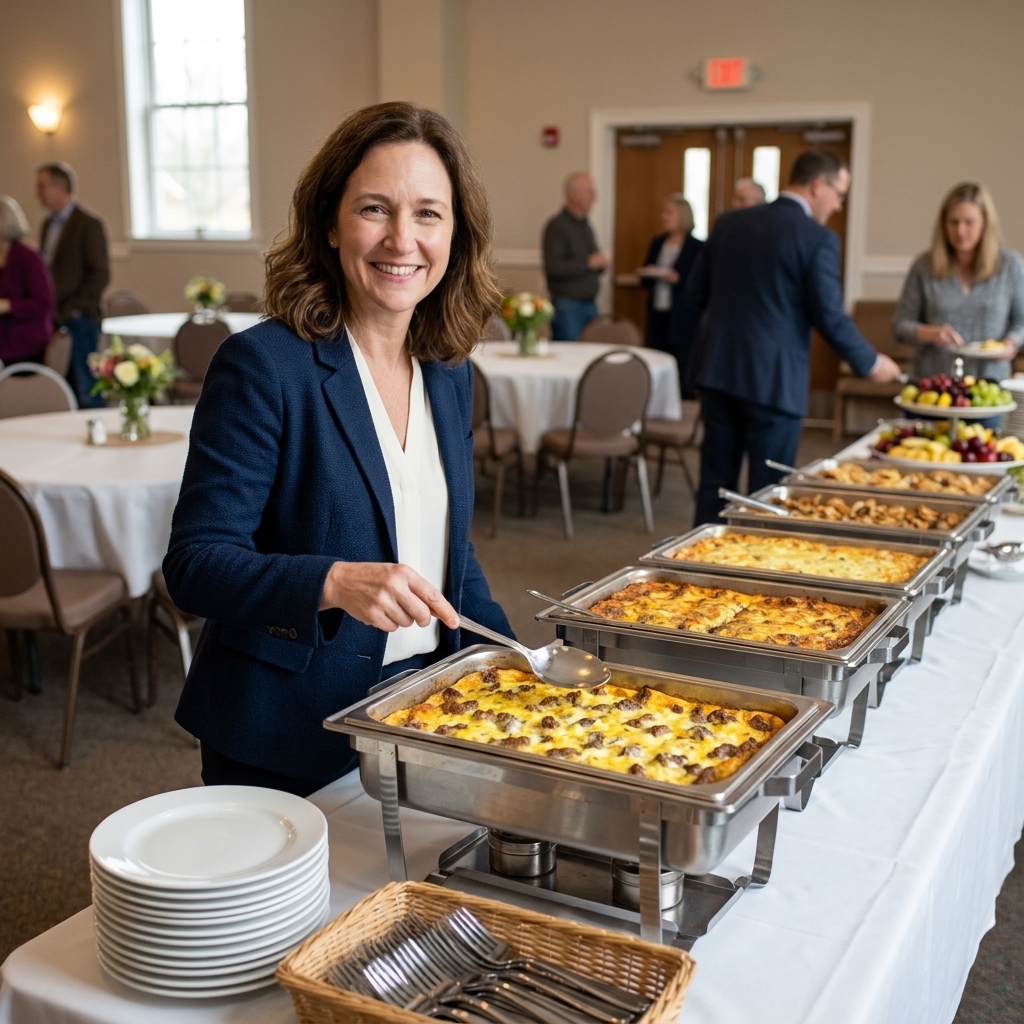
Start with servings, then pick the pan
Most breakfast casseroles written for a 9x13 pan typically feed about 8 to 12 people, depending on portion size and what else is on the table. When you scale, you have two choices:
- Make multiple pans. This is the easiest, most reliable path. Two 9x13 pans bake more evenly than one super-deep mega pan.
- Use a bigger pan. This works well if you have a large roasting pan or sheet pan and your casserole is not overly thick.
My busy-mom rule: if I am feeding more than 16 people, I go with multiple pans. It keeps bake times predictable and avoids the dreaded underbaked center.
The simple scaling math
Use area to scale the recipe
For casseroles, pan area is your best friend. Here are common pan areas:
- 9x13 = 117 square inches
- 11x15 = 165 square inches
- 12x18 half sheet = 216 square inches
- 18x26 full sheet = 468 square inches
To scale: New pan area ÷ original pan area = multiplier.
Quick multipliers you will actually use
- Double: 2x the ingredients (usually two 9x13 pans)
- Triple: 3x the ingredients (usually three 9x13 pans)
- 9x13 to half sheet (12x18): 216 ÷ 117 ≈ 1.85 (call it 1.75 to 2 depending on thickness)
- 9x13 to 11x15: 165 ÷ 117 ≈ 1.4 (about 1 1/2 batches)
If you are between sizes, round based on thickness. A thick strata-style casserole (lots of bread) can handle being a touch “short.” A mostly-egg casserole tends to bake better when it is not too deep, so I would rather split it into two pans than force a tall one-pan situation.
A quick real-life example
Say your base 9x13 recipe uses 10 eggs and 2 cups milk. If you move it to a 12x18 half sheet (about 1.85x), you are looking at roughly 18 to 20 eggs and 3 1/2 to 4 cups milk. I round to what is practical (hello, carton sizes), then watch the depth and how “soupy” the mix looks before I pour.
Pan-size cheat sheet
Here is the crowd-cooking cheat sheet I keep in my head while I am standing at the pantry with a carton of eggs and zero patience.
| Goal | What to do | Notes |
|---|---|---|
| Feed 16 to 24 | Make 2 (9x13) pans | Best for even baking and easy transport |
| Feed 24 to 36 | Make 3 (9x13) pans | Stagger racks and rotate halfway |
| Feed 18 to 22 | Use a 12x18 half sheet pan | Use a rimmed pan and check early |
| Feed 40+ | Use 4+ (9x13) pans or 2 half sheets | Keep it shallow so eggs set cleanly |
Important: Glass dishes often brown differently than metal and can require a bit more time. For big-batch mornings, metal pans (disposable or sturdy hotel pans) tend to give you more even browning and more predictable timing.
Sheet-pan reality check: Many rimmed half sheets are only about 1 inch deep. That is great for faster baking, but it is also easy to overfill. Make sure your pan has enough rim height, and if it is even close, set it on a baking sheet to catch drips.
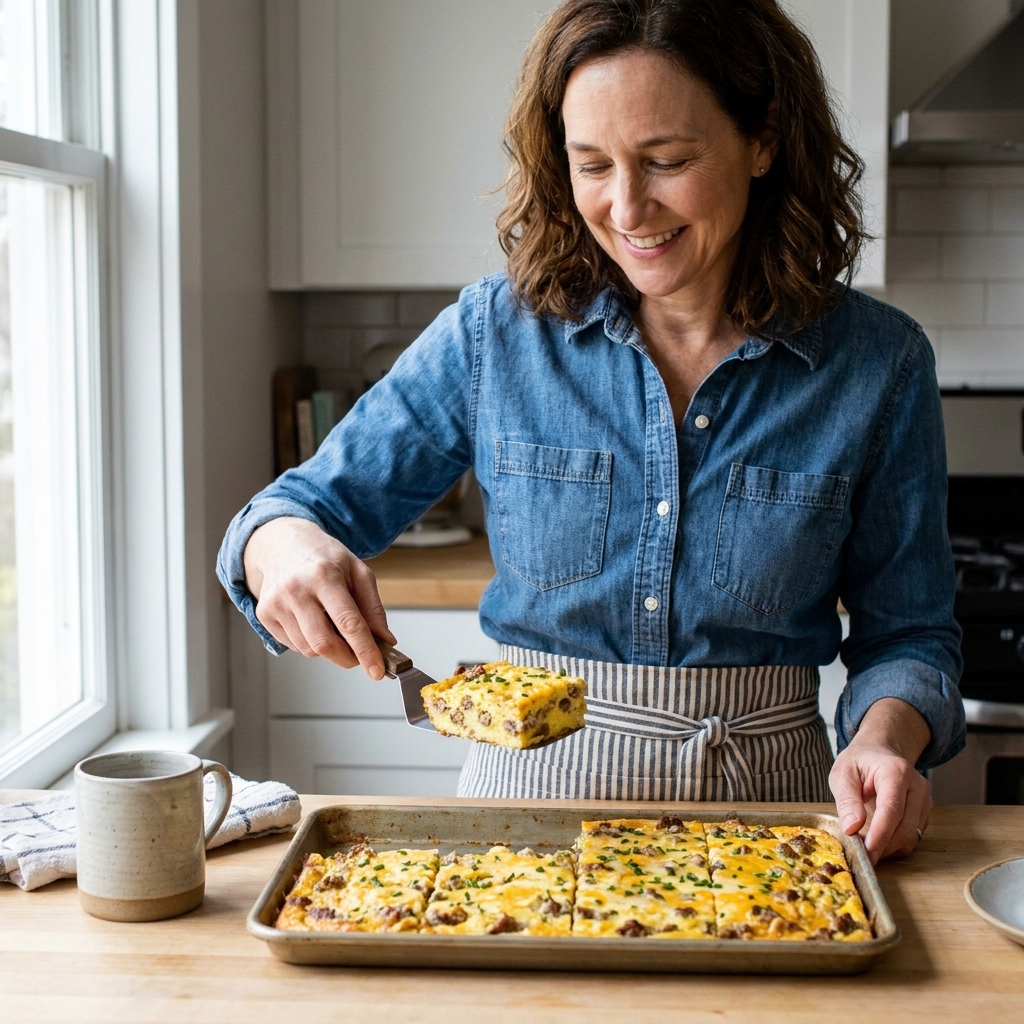
Scaling eggs, dairy, and bread
Eggs
When you double or triple, it is tempting to just dump in eggs and call it good. Do that, and your casserole can turn out dense, watery, or spongy. Here is my practical approach:
- Scale eggs directly with the recipe multiplier.
- Whisk longer than you think. For big batches, whisking well matters. You want the whites fully blended so you do not get chewy patches.
- Salt after you multiply. Salt affects egg texture. Measure carefully, do not eyeball a “bigger pinch.”
Dairy (milk, half-and-half, cream)
Dairy keeps eggs tender, but too much makes a loose bake that weeps when you cut it. When scaling up:
- Use the same multiplier, then hold back a small splash if your mix looks soupy.
- Choose dairy based on hold time. If I know the casserole will sit on a buffet a while, I find half-and-half stays a little creamier than skim milk.
Bread or hash browns
Bread-based casseroles (strata style) need time to soak. Potato-based casseroles need moisture control.
- Bread: If you triple the recipe, plan on a longer rest time in the fridge so the center is not dry.
- Hash browns: Thaw and squeeze if needed. Extra water is the number one cause of soggy bottoms in scaled-up potato bakes.
Scaling add-ins
Meat
Cook and drain meats well, especially sausage and bacon. When you scale up, the grease scales up too, and it can fry the edges while the center struggles to set.
- Drain on paper towels.
- For very large batches, blot once more right before mixing in.
Vegetables
Veggies release water. Multiply them without thinking and you can end up with a wet casserole.
- Mushrooms, zucchini, spinach, tomatoes: sauté or drain before adding.
- Frozen peppers/onions: thaw and pat dry.
Cheese
Cheese is where people get heavy-handed for a crowd. I love a bubbly top as much as anyone, but too much cheese can insulate the casserole and slow setting.
- Scale cheese normally, then add an extra light sprinkle on top if you want more browning.
- If you are using a very oily cheese (like lots of full-fat cheddar), consider mixing in part-skim mozzarella for stretch without the grease.
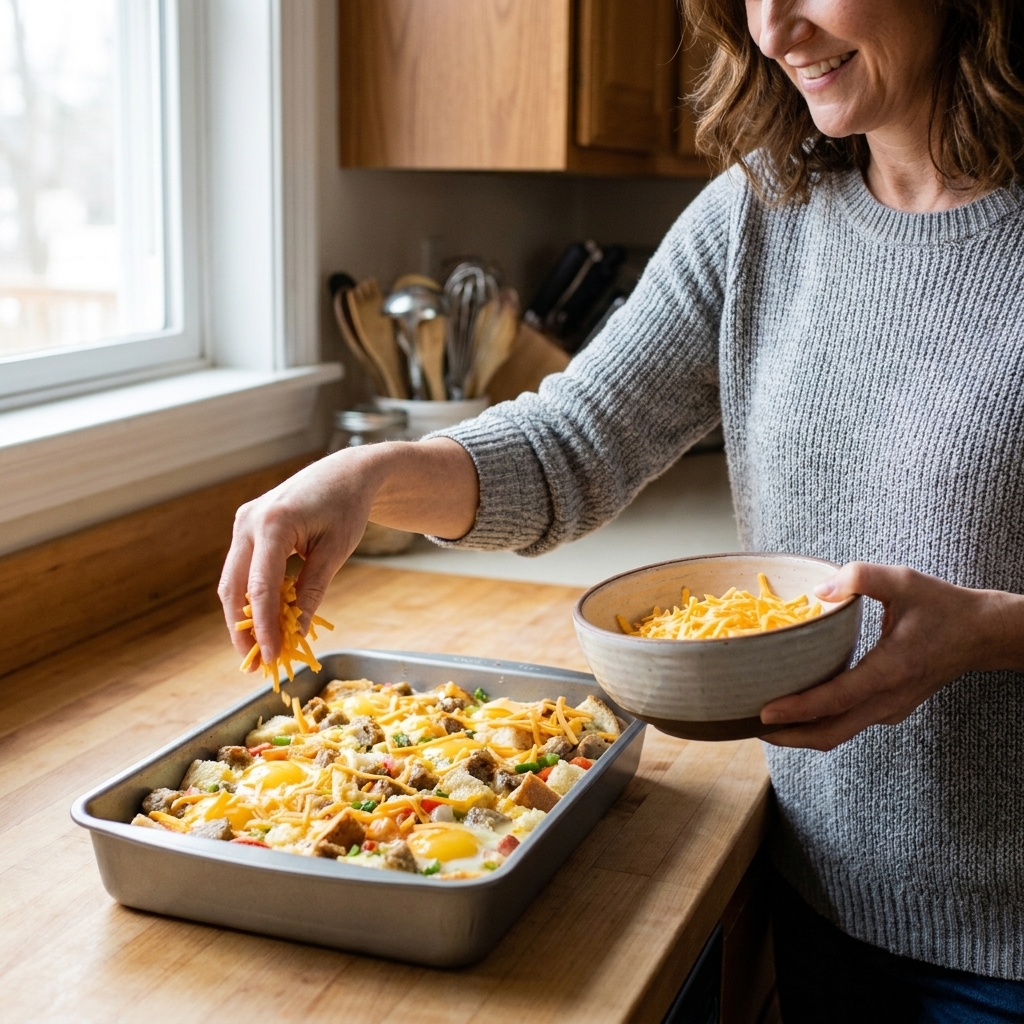
Bake times for big batches
This is the part everyone wants a single magic number for, and I wish I could tape one to every oven door. Bake time changes based on depth, pan material, and how full your oven is.
Multiple 9x13 pans
- Keep the same oven temperature as the original recipe.
- Start checking for doneness at the original time.
- Add time in 5 to 10 minute chunks if your oven is packed.
- Rotate pans front-to-back halfway through.
One larger pan (shallower casserole)
- Expect it to bake faster because it is thinner.
- Start checking 10 to 15 minutes earlier than the 9x13 timing.
One deeper pan (thick casserole)
Depth is what gets you. A deep egg casserole can brown on top and still be raw inside.
- Lower the oven temperature by 25°F and bake longer.
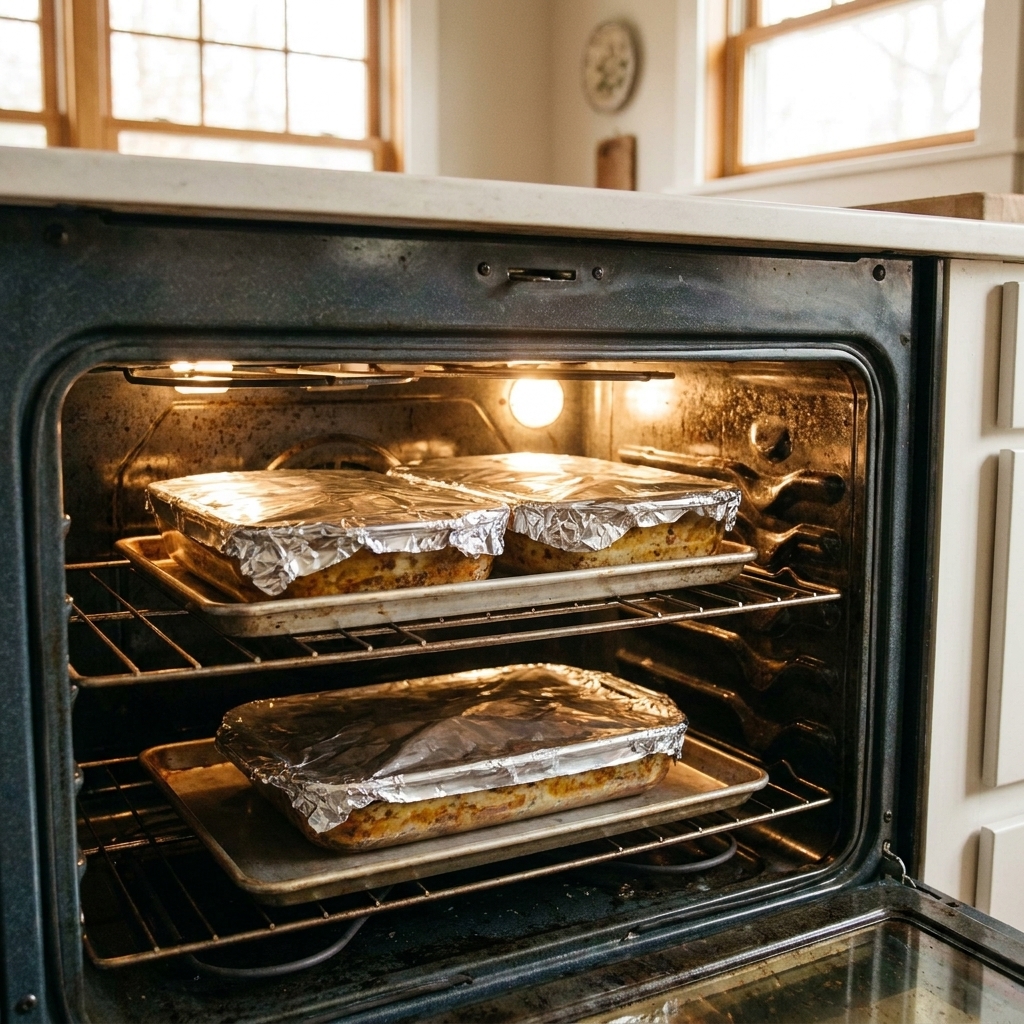
- Cover loosely with foil once browned, then continue baking until set.
Rack placement and convection
- Two pans: I use upper and lower middle positions, leaving space for airflow.
- Three pans: Two racks, stagger the pans so they are not directly above each other, then rotate their positions halfway through.
- Convection: If you use convection, reduce the temperature by about 25°F and start checking early.
How to tell when it is done
- The center should hit 160°F on an instant-read thermometer.
- The middle should look set, not sloshy, when you gently jiggle the pan.
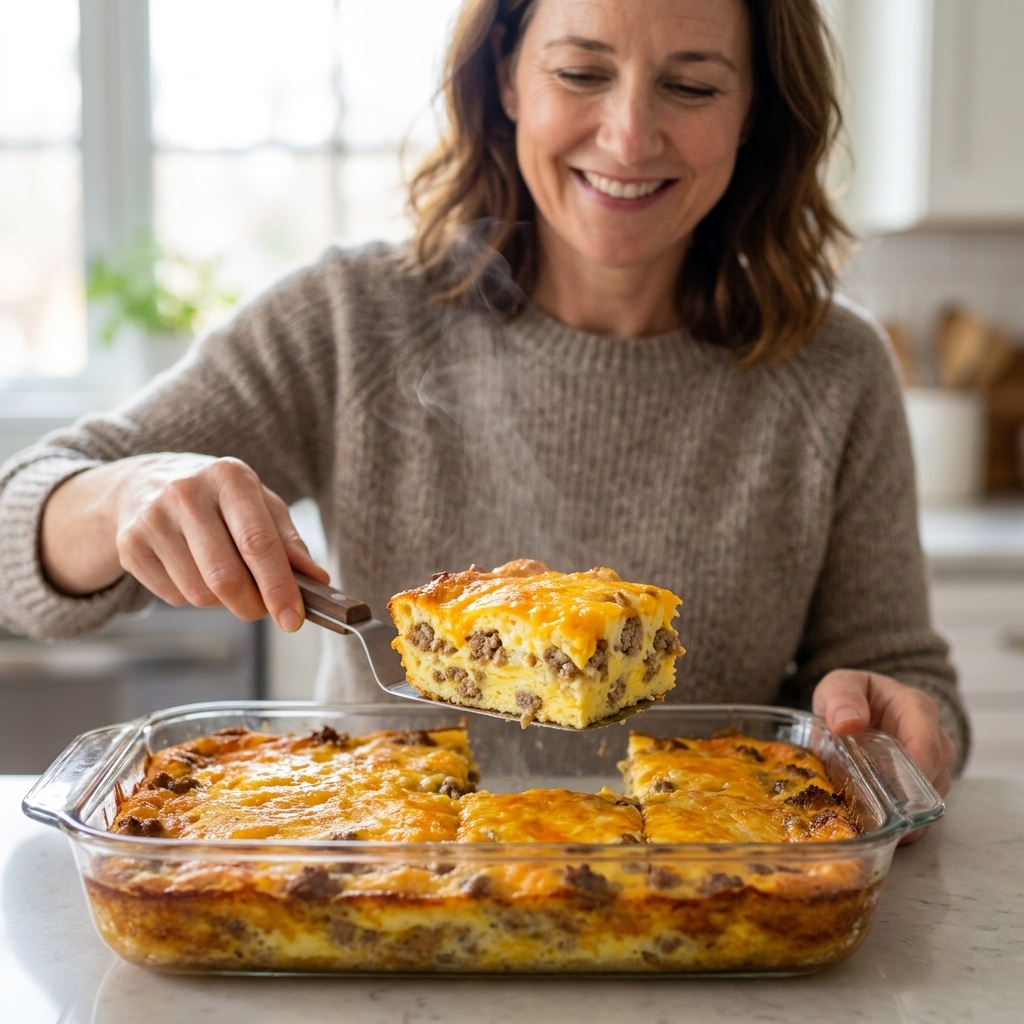
- Let it rest 10 to 15 minutes before cutting for cleaner slices.
Overnight plan
When I am feeding a crowd, I want the morning to feel calm. Overnight casseroles are made for that.
- Assemble the night before. Cover tightly and refrigerate.
- Set out while the oven preheats. 20 to 30 minutes on the counter helps it bake evenly.
- Bake, rest, serve. Plan the rest time into your schedule so you are not cutting a molten, messy pan right as people line up.
Tip for big batches: If you are making 2 or 3 pans, label them with painter’s tape before refrigerating. You will remember which one has mushrooms, but your helpers might not.
Freezer tips
Scaling up is also the perfect excuse to build yourself a freezer cushion. I always keep two emergency meals in my chest freezer, and breakfast casserole is one of the best.
Option 1: Freeze unbaked
- Assemble in a freezer-safe pan or foil pan.
- Wrap tightly in plastic wrap, then foil.
- For best flavor, use within 1 to 2 months.
- Thaw 24 to 36 hours in the fridge before baking.
Option 2: Freeze baked
- Bake and cool completely.
- Cut into portions, then wrap portions individually.
- Reheat covered at 350°F until hot, or microwave single servings.
Soggy-bottom prevention: Cool fully before wrapping. Steam trapped under wrap turns your nice casserole base into a wet sponge.
Holding and food safety
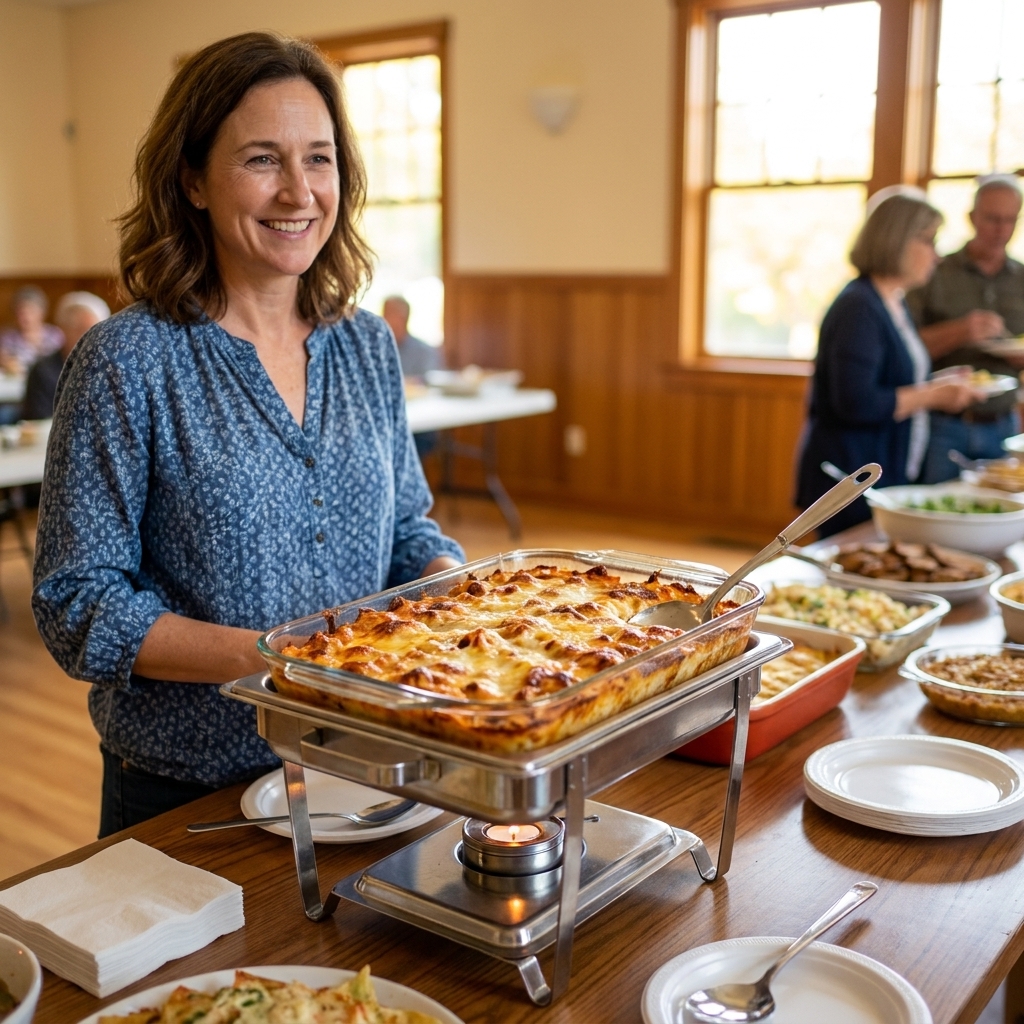
If you are serving this at a church breakfast or a holiday buffet, the baking is only half the battle. The other half is keeping it safe and still tasty.
- Keep hot food hot: Aim to hold the casserole at 140°F or warmer using warming trays, chafing dishes, or a low oven.
- Two-hour rule: Do not leave egg casseroles sitting at room temperature for more than 2 hours total (less if the room is very warm).
- My practical trick: Put out one pan, keep the others covered and hot, then refill the buffet with fresh, hot slices.
Common problems
“It is browned on top but still wet in the middle.”
- Cover with foil and keep baking.
- Next time, use two pans instead of one deep pan.
- Check your add-ins for excess moisture (spinach and mushrooms are repeat offenders).
“The edges are dry.”
- Do not overbake chasing a fully firm center. Use a thermometer.
- Let it rest. The center continues setting after you pull it out.
- If it happens often, try metal pans for more even heat.
“It tastes bland when I scale it up.”
- Multiply salt and spices accurately, then taste your mix if your recipe allows.
- Add a big-flavor helper: a spoonful of Dijon, a pinch of smoked paprika, or a handful of sharp cheddar.
FAQ
Can I double a breakfast casserole in one pan?
You can, but I do not recommend it unless you have a wide, shallow pan that keeps the depth similar to a 9x13. A deeper pan is where you get underbaked centers and overbrowned tops. Two pans are safer and usually faster.
How many eggs do I need for a crowd?
Follow your base recipe and multiply, but as a rough planning tool: many 9x13 breakfast casseroles use 8 to 12 eggs for 8 to 12 servings. For 24 servings, you are often in the 24 to 30 egg neighborhood, depending on how bready or meaty the casserole is.
Can I bake multiple breakfast casseroles at once?
Yes. Use two racks, keep space between pans for airflow, and rotate halfway through. If your oven is stuffed wall-to-wall, expect to add bake time.
What is the best pan for church breakfasts?
Rimmed metal pans and disposable foil pans both work well. They heat evenly and travel easily. If you are using foil pans, set them on a sturdy baking sheet so they do not wobble when you carry them.
My plan for 30 people
If you want a simple blueprint, here is what I do for most big breakfasts:
- Make three 9x13 pans the night before.
- Choose variety: one meat-and-cheddar, one veggie-and-swiss, one hash brown and sausage.
- Bake two pans first, then the third. Or borrow a second oven if you can.
- Rest, cut, and keep warm covered with foil.
Once you get comfortable with the pan math and a thermometer, scaling becomes a cozy kind of confidence. You are not just feeding people. You are giving them the warm, casserole-table welcome that says, “Come on in. There is plenty.”