
Nothing makes me happier than seeing a lineup of 9x13 pans at a potluck. Nothing makes me more nervous than watching a creamy casserole slowly cool down on a folding table while people “just graze.” If you have ever wondered exactly how long your casserole can sit out, here is the clear, no-drama answer, plus the real-life tricks I use so nobody goes home with more than leftovers.
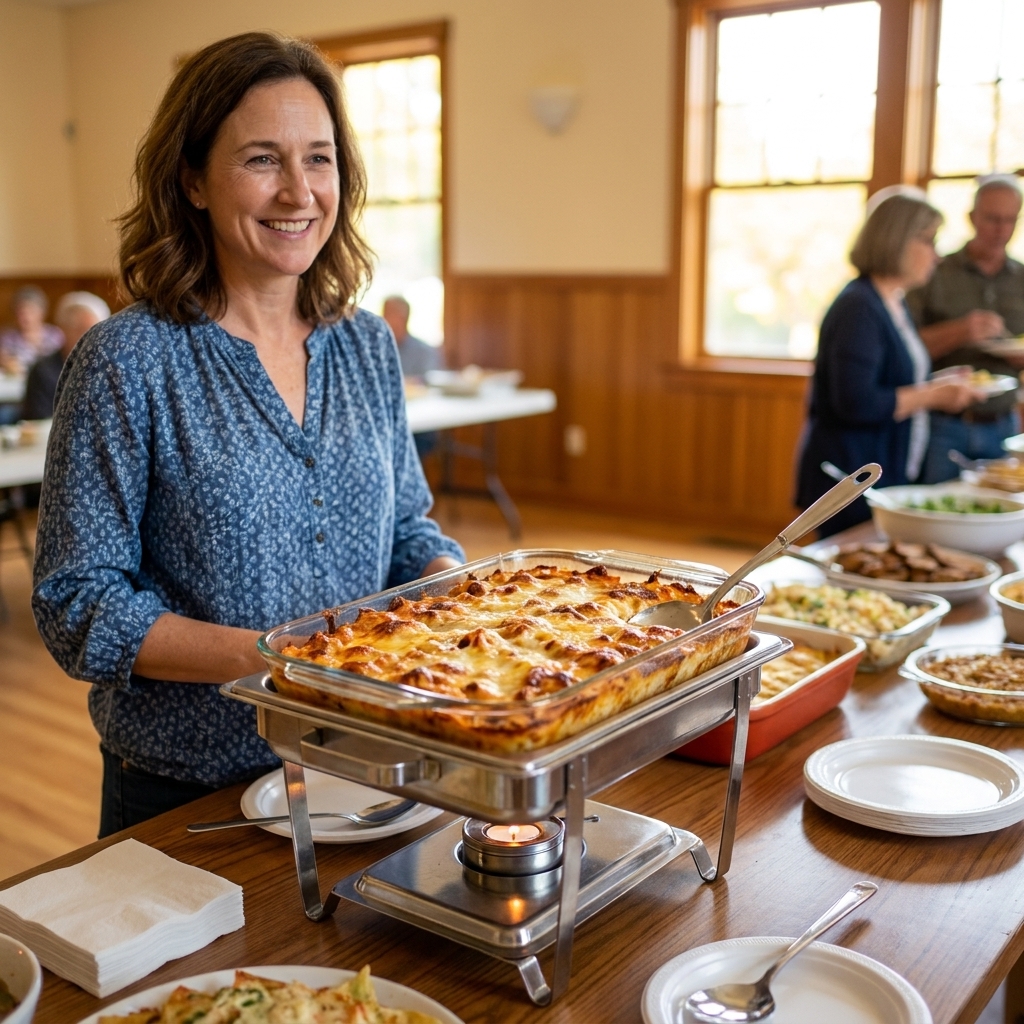
The rule that matters most: the danger zone
Food safety for casseroles boils down to temperature control. The commonly taught home “temperature danger zone” is:
- 40°F to 140°F
In that range, bacteria can grow quickly. One quick nuance: the FDA Food Code used in many restaurants and catering settings uses 135°F as the hot-holding minimum. At home and at potlucks, you will often hear 140°F. If you want the simplest approach, aim for 140°F+ so you cover both.
Your job at a potluck is to keep your casserole either:
- Hot: at 140°F or hotter (or at least 135°F if you are following Food Code)
- Cold: at 40°F or colder (think chilled pasta salads or no-bake desserts)
Most casseroles are served hot, so the rest of this article focuses on hot holding, cooling, and reheating. I included a quick cold-food box later, too, because dessert tables deserve safety rules as much as the main course.
How long can a casserole sit out?
Use these buffet-time limits for any casserole that contains meat, poultry, seafood, eggs, cooked rice or pasta, dairy, or anything creamy (so basically, the good ones).
If it is not held hot
This includes “warming trays” or low slow cookers that feel warm but cannot keep the food at temp. If it is below your hot-hold target (140°F, or 135°F minimum), treat it as not held hot.
- Up to 2 hours total at normal room temperature.
- Up to 1 hour total if the room or outdoor temp is above 90°F (summer picnics, garage parties, park shelters).
That clock starts the moment the casserole leaves temperature control, not when you take the first scoop.
If it is truly held hot
From a food safety standpoint, a casserole can stay out for serving as long as it stays at or above the hot-holding temperature the whole time. Quality is the thing that taps out first (dry edges, overcooked noodles), so I still like to plan on refreshing or swapping pans rather than leaving one dish out all afternoon.
One more real-world note: buffet heat is uneven. Stir (when it makes sense), rotate the pan, keep the lid on, and check the temperature again after 30 to 60 minutes.
The easiest way to stay safe: bring a thermometer
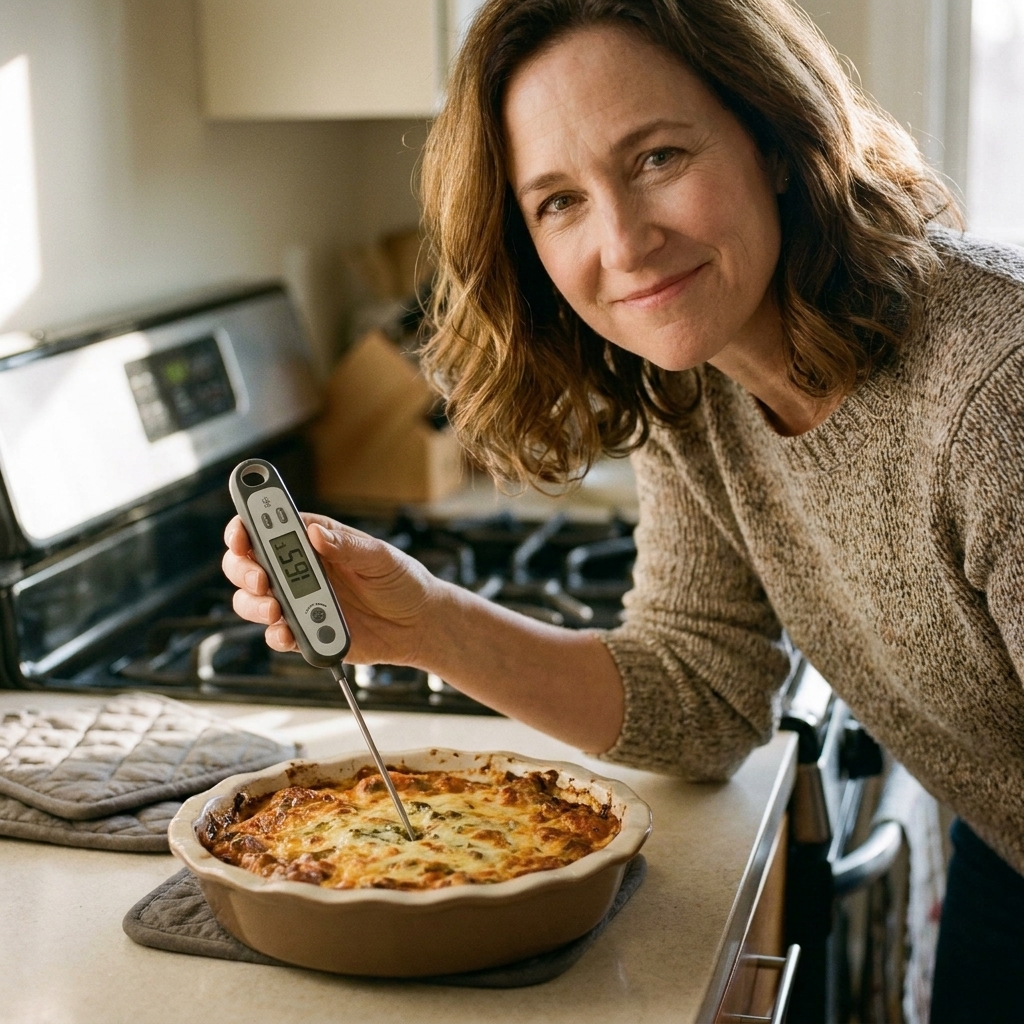
I know, I know. It feels a little extra. But a small instant-read thermometer turns “I think it is still hot?” into a confident yes or no.
- Target for hot holding: 140°F+ (or 135°F minimum)
- Best practice before serving again: reheat cooled casserole back to 165°F
How to check: insert the thermometer into the center of the dish and also test a second spot, because some casseroles have hot edges and a cooler middle. And when you reheat, make sure all parts reach 165°F, not just one lucky pocket of steam.
If you are feeding a crowd with kids, grandparents, or anyone pregnant or immunocompromised, that thermometer is your best potluck friend. In those cases, I also keep time in the danger zone as close to zero as I can.
Hot-holding strategies that work
Your goal is to keep the center of the casserole at the hot-holding temp, not just the corners.
1) Slow cooker (for scoopable casseroles)
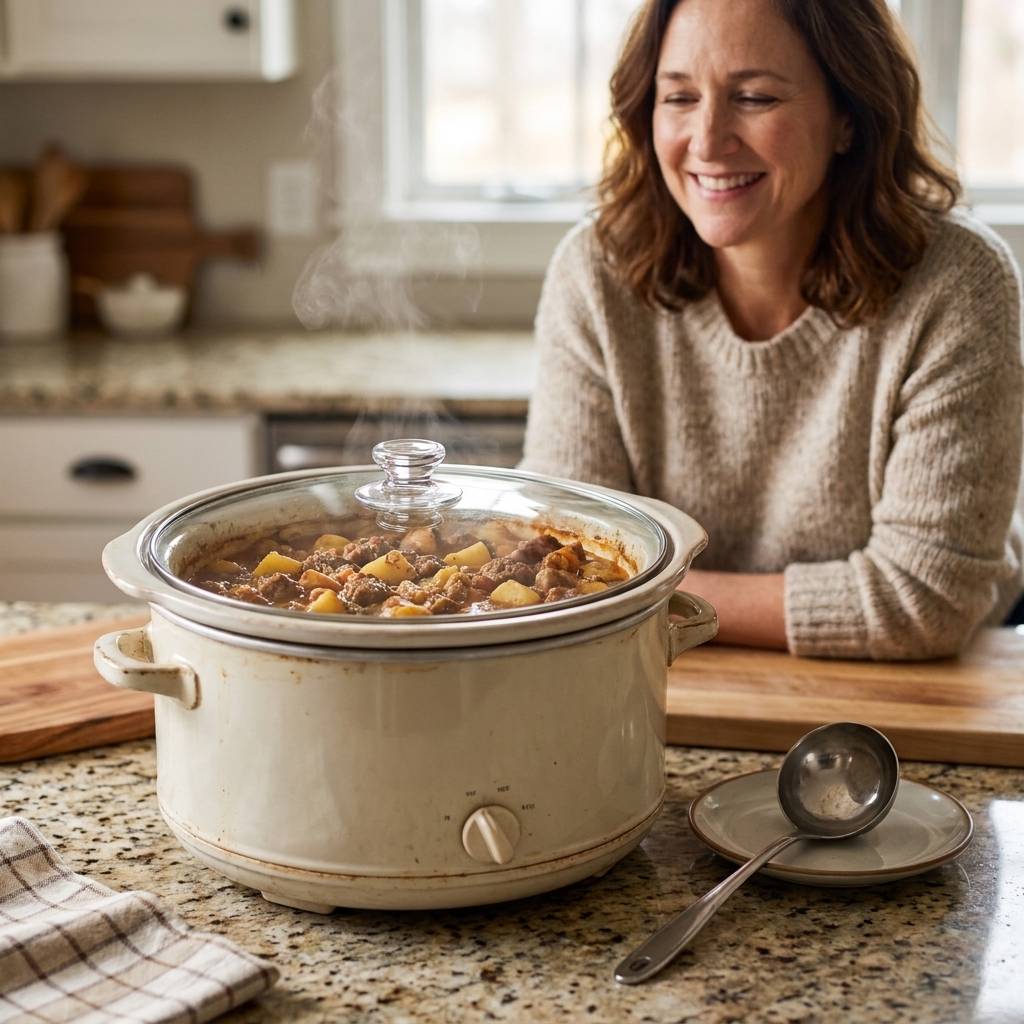
Some casseroles transition beautifully into a slow cooker: cheesy potatoes, mac and cheese, meatballs in sauce, sloppy joe bake filling, creamy chicken mixtures.
- Preheat the slow cooker on High.
- Transfer the hot casserole (do not start cold).
- Hold on Low or Warm only if it keeps 140°F+ (or at least 135°F). Check it once, then recheck later.
2) Chafing dish setup (sternos)
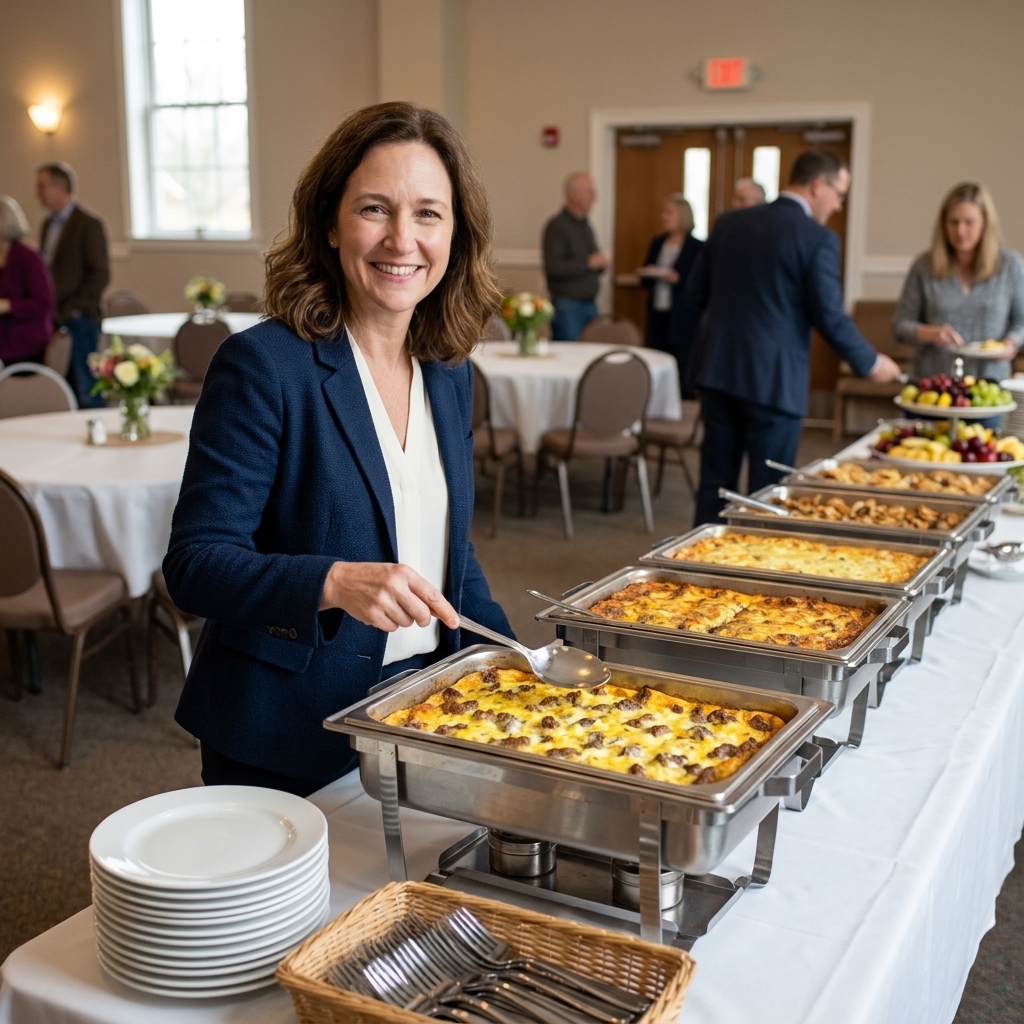
This is the classic buffet solution, and it works well for 9x13 style casseroles.
- Start with the casserole piping hot.
- Add hot water to the water pan (carefully) for gentler, more even heat.
- Keep the lid on as much as possible. Every peek dumps heat.
- If the center temp starts slipping, stir if you can, rotate the pan, or swap in a fresh hot pan.
3) Electric roaster oven
If you are hosting or traveling by car, a roaster oven is a secret weapon. It can hold multiple pans at a steadier temp than a drafty kitchen counter ever will.
4) Insulated carriers plus smaller-pan planning
If you do not have a heat source, plan the casserole like a pro:
- Bring two smaller dishes instead of one huge one.
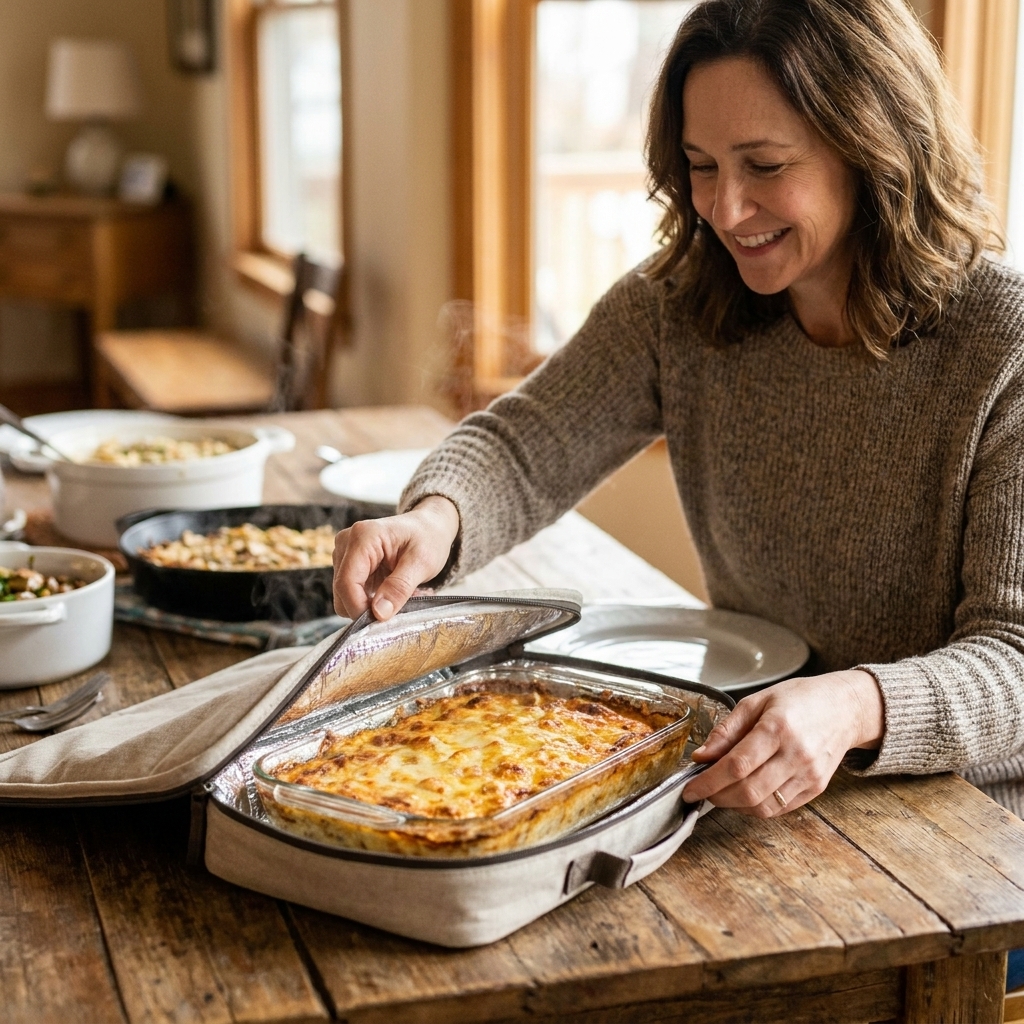
- Keep the backup dish hot in an insulated carrier.
- Swap in the second dish later so the buffet pan does not sit for hours.
Cold foods at potlucks
Cold casseroles and desserts are not magically safe just because they start out chilled. The rule is the same: keep them 40°F or colder.
- If a cold dish warms above 40°F and is just sitting out, follow the same limits: 2 hours total (or 1 hour above 90°F).
- Use nested bowls of ice, keep portions small, and restock from the fridge or cooler as needed.
When time is up
Here is the straight talk I use at church potlucks: if a casserole has been sitting out longer than 2 hours (or 1 hour above 90°F) without being held hot at temp, it is safest to discard it.
If you are still within the safe window and want to save leftovers, do this:
- Portion fast: transfer leftovers into shallow containers so they cool quickly.
- Refrigerate promptly: get them into a fridge or cooler with ice packs.
- Do not “cool it on the counter” first: that just burns your time.
If you are the host, a simple trick is to designate a “leftovers station” near the kitchen with containers and a marker. People pack up quickly, and food does not linger.
Reheating leftovers safely
When you bring potluck leftovers home, reheat them like you mean it.
- Reheat to 165°F: make sure all parts of the casserole hit 165°F, especially for dishes with meat, poultry, or eggs.
- Cover while reheating to prevent dry edges. Foil is perfect.
- Add moisture if needed: a splash of broth, milk, or sauce can revive pasta bakes and rice casseroles.
My weeknight method: portion into squares, reheat covered, then uncover for the last few minutes to bring back that toasty top.
Travel tips for a hot arrival
- Heat it through before leaving: aim for a solid, bubbling hot center.
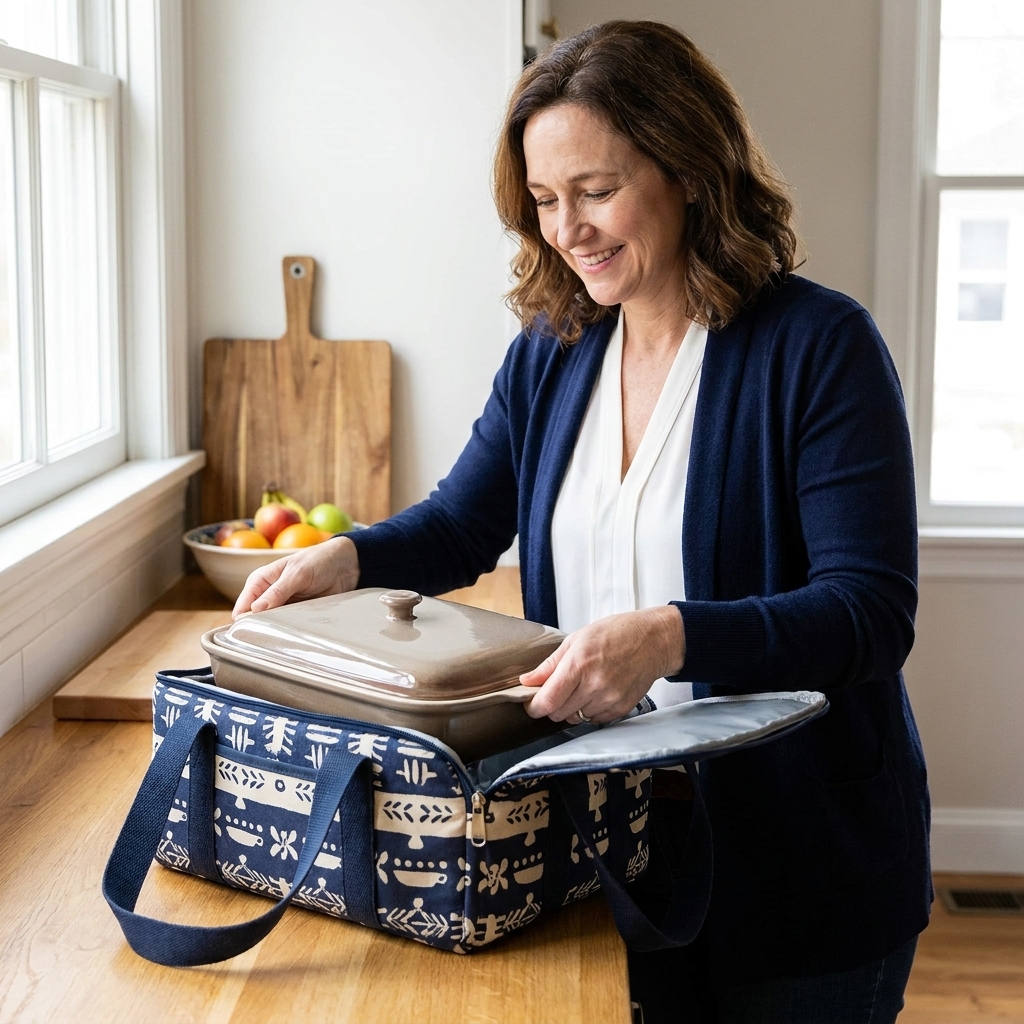
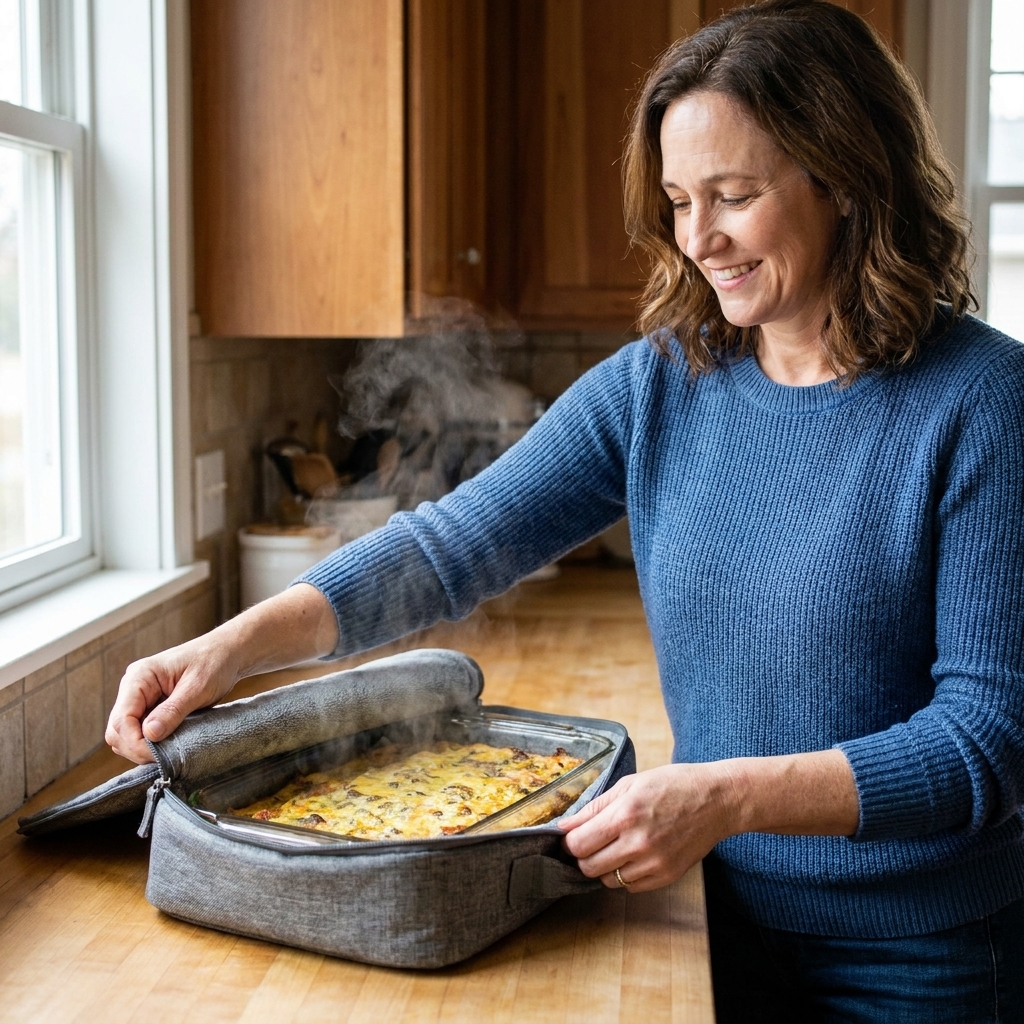
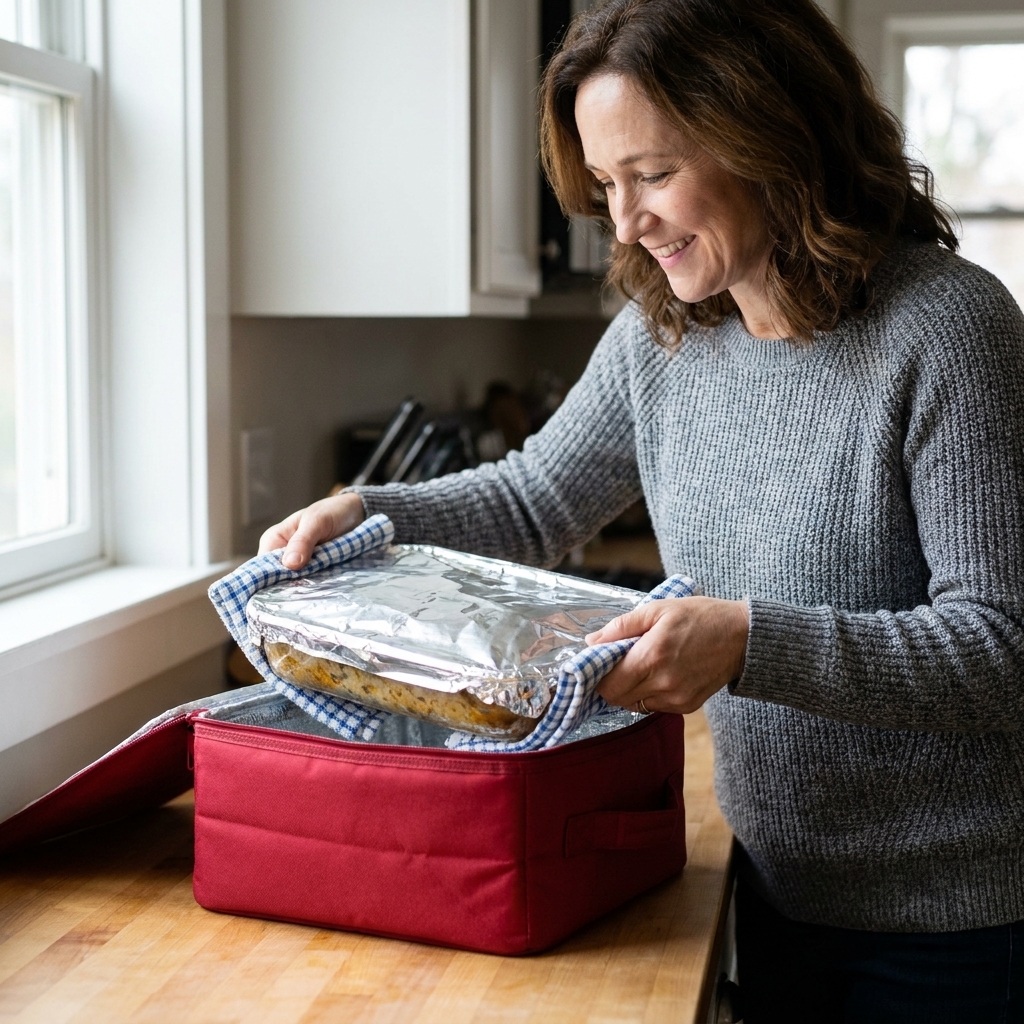
- Wrap the pan: foil on top, then a towel, then into an insulated carrier or cooler (no ice).
- Drive smart: keep it in the warmest part of the car, not the trunk in winter.
- Plan a landing spot: if the host has an oven, ask if you can pop it in at 200°F to hold, then verify the temp before serving.
Quick buffet checklist
- Keep hot foods hot: 140°F+ (or 135°F minimum)
- Keep cold foods cold: 40°F or below
- Danger zone: 40°F to 140°F
- Time limit if not held at temp: 2 hours (1 hour if above 90°F)
- Reheat leftovers to: 165°F throughout
- When in doubt: toss it. A new casserole is cheaper than food poisoning.
FAQ
Does a cheesy casserole count as perishable?
Yes. Cheese, milk, sour cream, cream cheese, and most creamy sauces make a casserole firmly perishable. Stick to the time limits unless you are holding it at temp (140°F+, or at least 135°F).
What about a vegetarian casserole?
Vegetarian does not automatically mean safe to leave out. If it includes dairy, eggs, cooked rice, cooked pasta, or any moist baked dish that will sit out, treat it as perishable.
If it is still warm, is it safe?
“Warm” is not a temperature. Food safety happens at numbers, not vibes. If it is below your hot-holding target, the clock is running.
Can I put a hot casserole straight into the fridge?
Yes, you can refrigerate hot food. The catch is volume: a deep, tightly covered pan can cool slowly and can warm up the fridge around it. The best move is what you would do at a potluck anyway: portion into shallow containers, leave a little airflow in the fridge, and get it chilled fast.
My potluck promise
I am all for comfort food that brings people together. A few simple habits, especially watching that 40°F to 140°F zone and actually checking temps, lets you show up with a cozy, bubbly casserole and the kind of confidence that makes hosting and sharing actually fun.