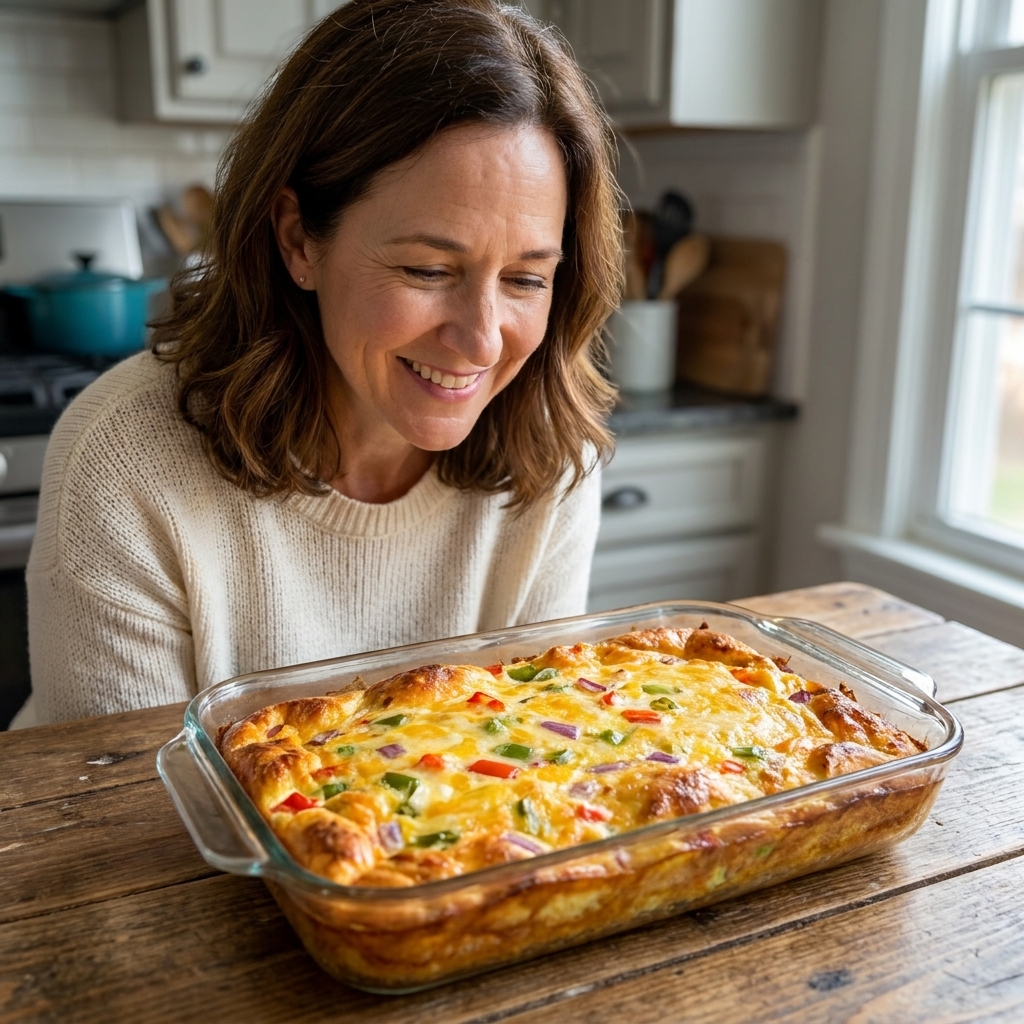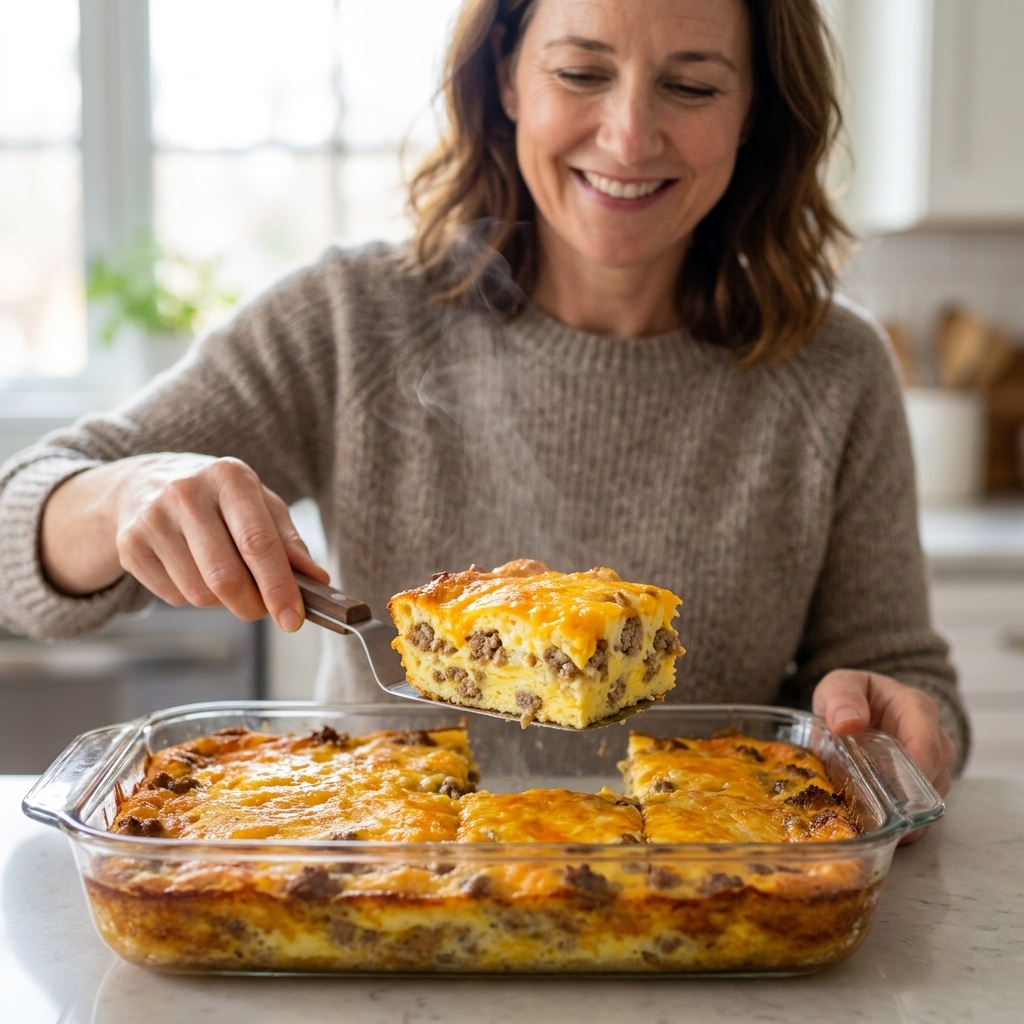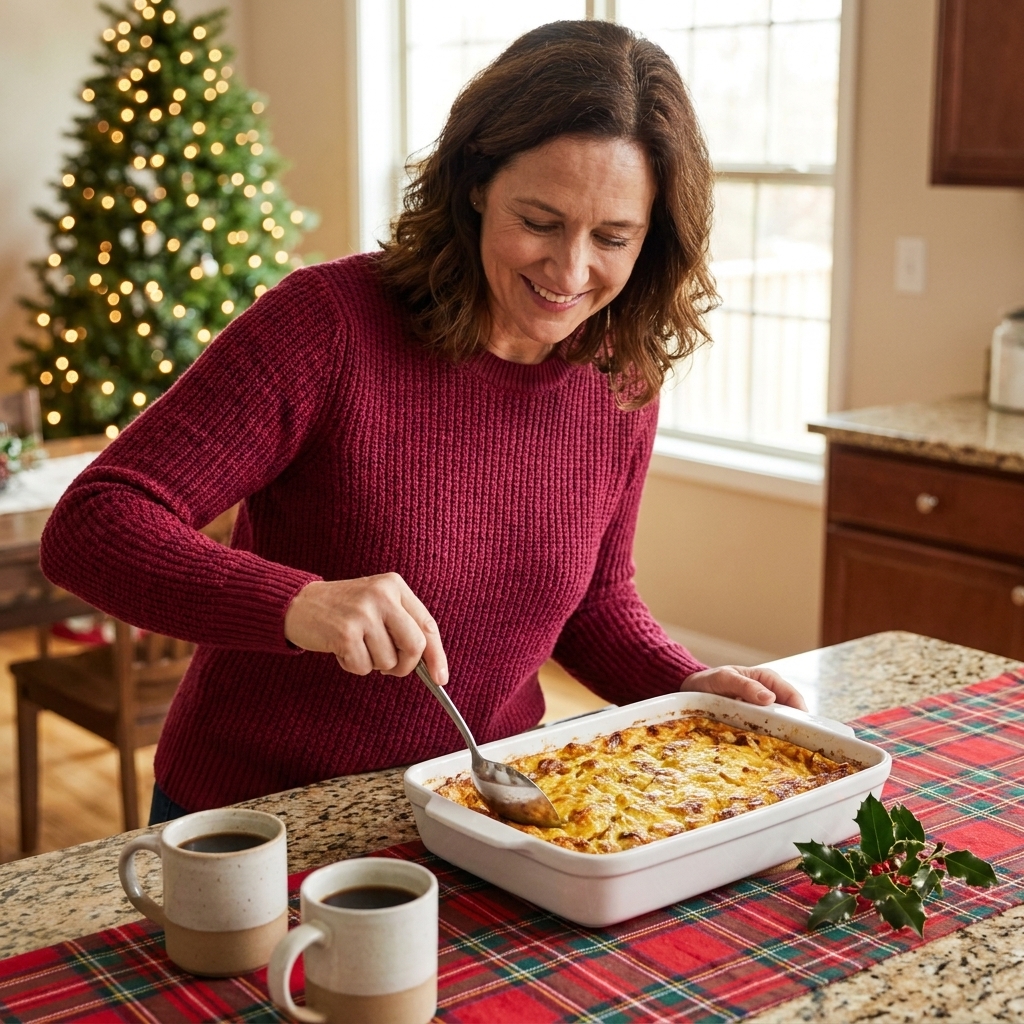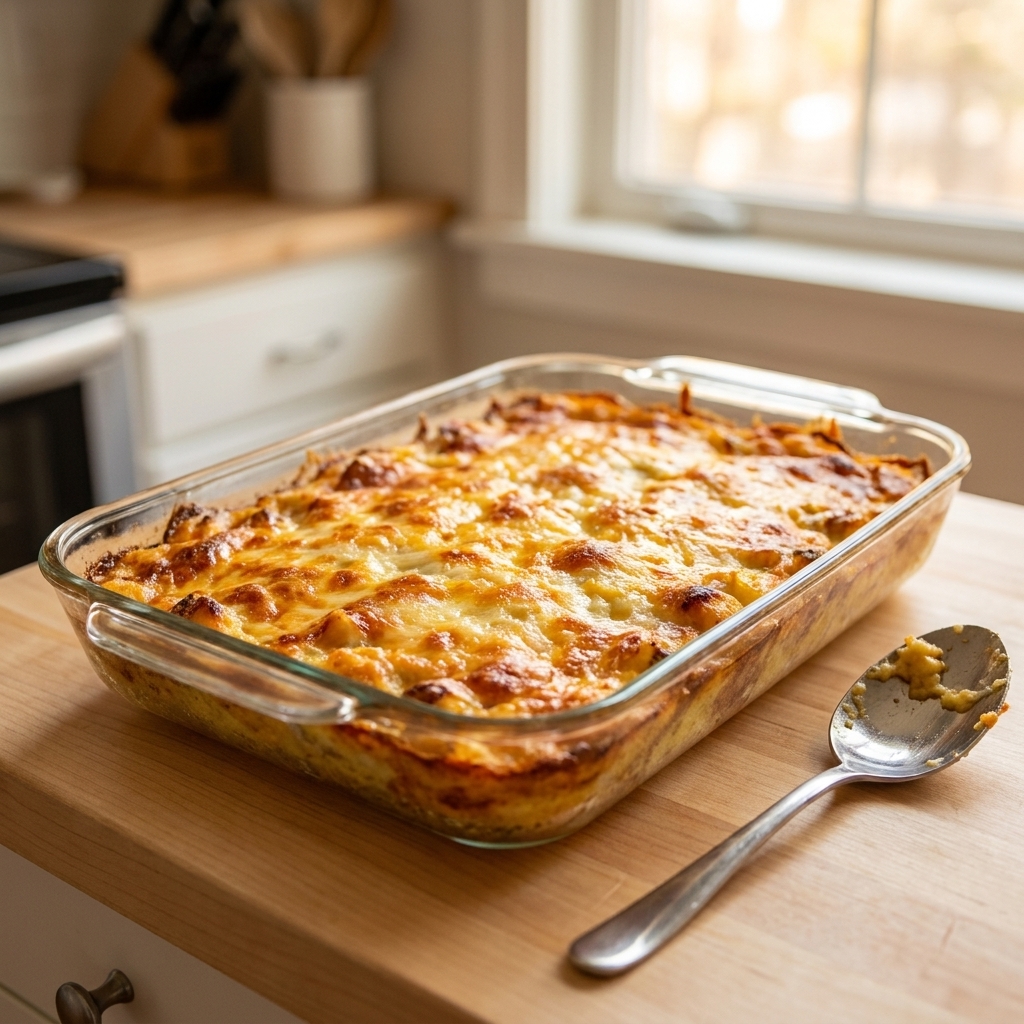

Breakfast casseroles are my favorite kind of “future me will be so grateful” meal. If you freeze them the right way, you get a hot, homemade breakfast with almost zero morning stress and no rubbery eggs, dried-out corners, or that dreaded soggy bottom. Below is exactly how I freeze both unbaked and baked egg casseroles, how long they keep, and the gentlest ways to bake or reheat them so they come out fluffy and moist.
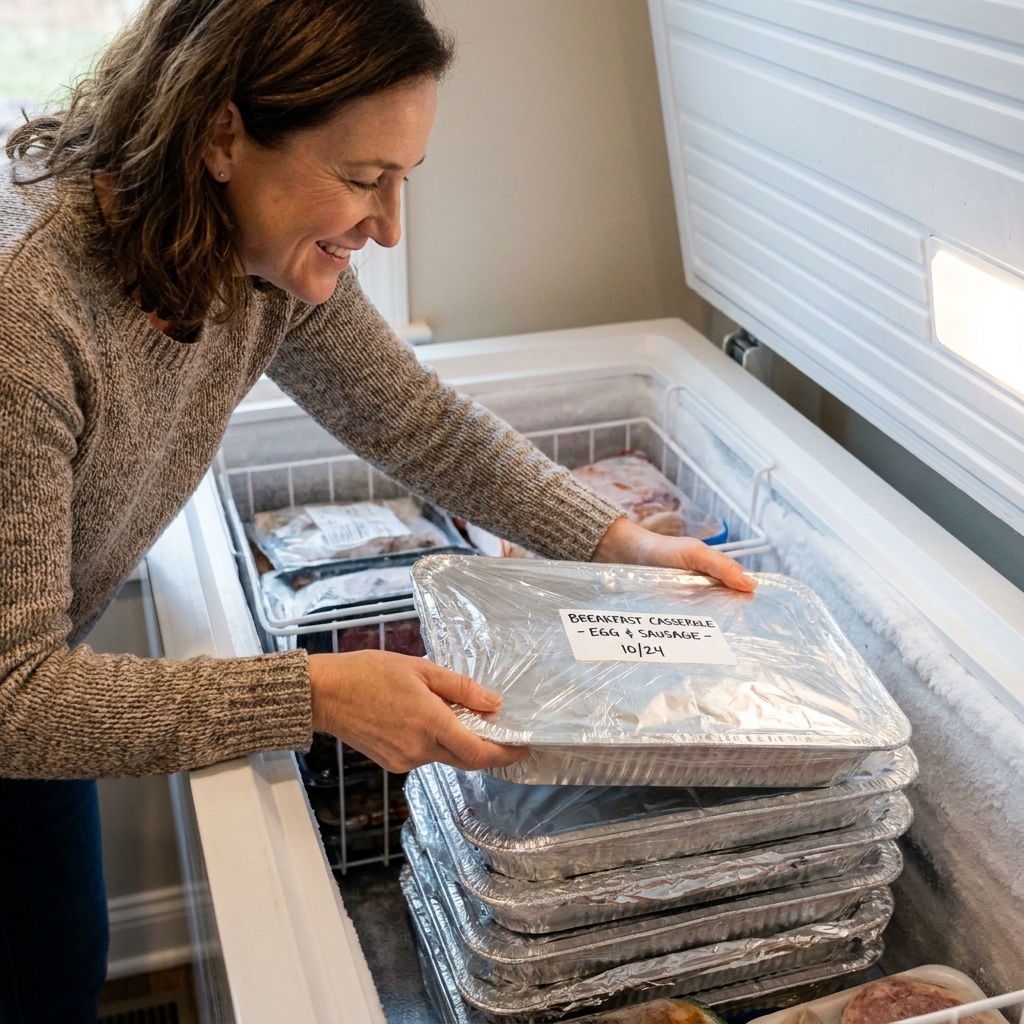
Pick a freezer-friendly casserole
Almost any egg-based breakfast casserole can be frozen, but a few choices make a big difference in texture after baking or reheating.
Freezer-friendly mix-ins
- Cooked breakfast meats (sausage, bacon, ham): cook and cool first to prevent grease pockets.
- Sturdy veggies (bell peppers, onions, mushrooms): sauté to drive off moisture.
- Cheese: cheddar, Monterey Jack, Swiss, mozzarella, pepper jack all freeze well.
- Breads and starches: cubed bread, English muffins, croissants, hash browns, tater tots all work, but moisture control matters (more on that below).
Ingredients that need extra care
- Watery vegetables (tomatoes, zucchini, spinach): cook them down and squeeze out moisture. Otherwise, hello puddles.
- Fresh herbs: add after baking if you want the brightest flavor.
- Creamy add-ins: dairy can separate after freezing and reheating. In general, higher-fat dairy holds up better than low-fat. If you want sour cream or cream cheese in the mix, keep it to a modest amount and whisk it in thoroughly (for a 9x13, think a few spoonfuls to about 1/2 cup, not a whole tub).
Unbaked vs baked
I do both, depending on the week. Here is how I decide.
Freeze unbaked if:
- You want the freshest baked texture (especially for bread-based strata).
- You have a little extra time on serving day to bake it.
- You are prepping for a holiday morning and want the kitchen to smell amazing.
Freeze baked if:
- You want the fastest reheat for school mornings.
- You plan to freeze in individual portions for grab-and-go breakfasts.
- You want to reduce the risk of an undercooked center (great for thick casseroles).
Freeze an unbaked casserole
This is my go-to for holiday brunches and make-ahead weekends.
Step 1: Prep for moisture
- Cook meats fully and cool.
- Sauté watery veggies until the pan is dry, then cool.
- If using frozen hash browns, thaw and pat dry with a clean towel.
Step 2: Assemble in the right pan
You can use a standard 9x13 baking dish, but if you want your baking dish back, build it in a disposable foil 9x13 pan. Either way, grease well. If you use a flimsy foil pan, set it on a sheet tray for stability in both the freezer and the oven.
Step 3: Chill before freezing
Once assembled, refrigerate the unbaked casserole for 2 to 4 hours so it is cold all the way through. Cold casserole freezes faster, which helps protect texture.
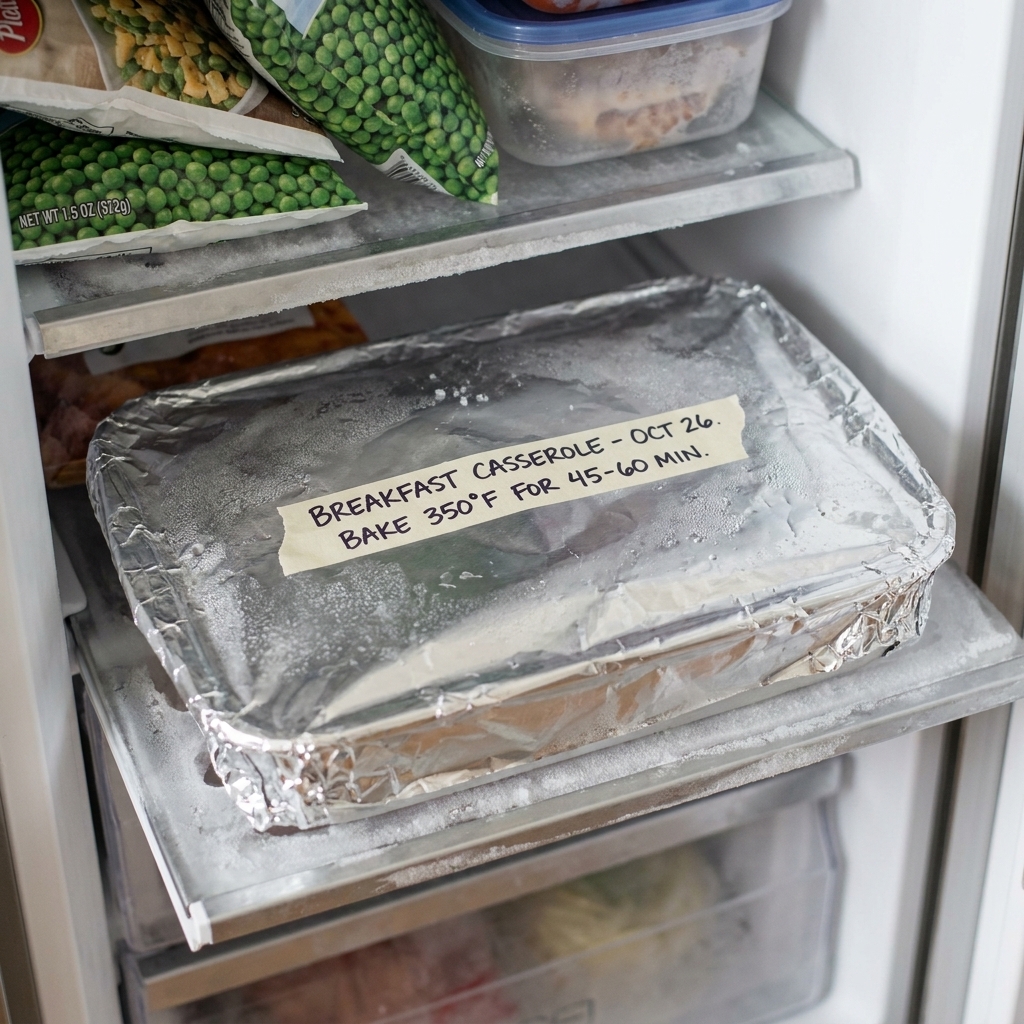
Step 4: Wrap tight
- Press plastic wrap directly against the surface (this helps prevent freezer burn).
- Wrap the whole pan again tightly.
- Add a layer of heavy-duty foil.
- Label on the foil: name, date, baking temp, estimated bake time.
Step 5: Freeze flat
Set the pan on a small sheet tray so it stays level in the freezer until solid.
Best quality window: 2 to 3 months. It will often be safe longer, but quality starts to drop.
Freeze a baked casserole
If you want quick weekday breakfasts, baked-and-frozen is your best friend.
Step 1: Bake until just set
Egg casseroles stay tender when they are not overbaked. Aim for the center to be set and no longer jiggly, and a thermometer reading of 160°F in the middle for doneness. (More on 160°F vs 165°F below.)
Step 2: Cool safely
Cool at room temperature for about 20 to 30 minutes, then refrigerate until fully cold. For food safety, try to get it chilled within 2 hours.
Step 3: Portion (optional but so handy)
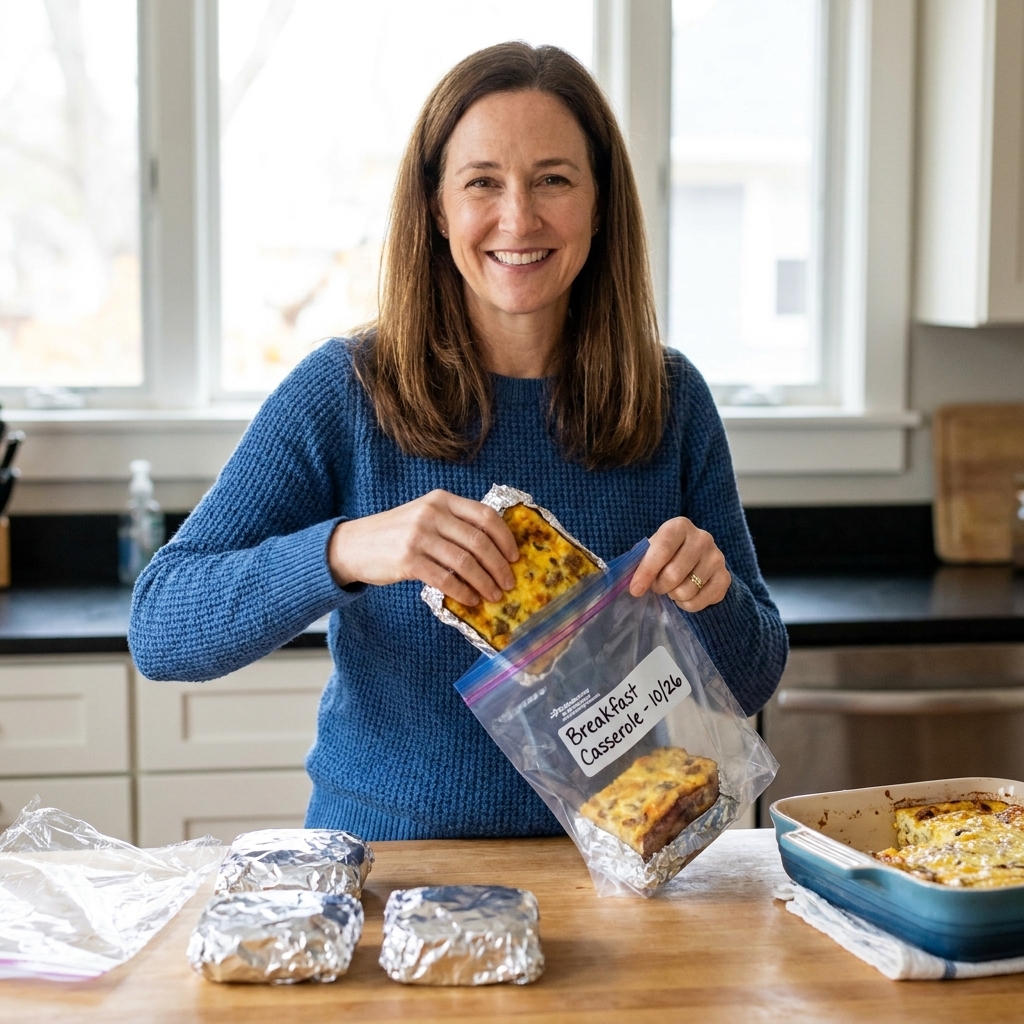
You can freeze the whole pan, but I love slicing into squares and freezing portions for quick reheat.
- For portions: wrap each piece in plastic wrap, then place in a freezer bag. For extra odor protection (hello, oniony freezer), double-bag or use an airtight container.
- For a full pan: wrap the cold pan in plastic wrap plus foil.
Step 4: Label and freeze
Write the reheating instructions right on the bag or foil. Your future self deserves that kindness.
Best quality window: 2 to 3 months.
No-soggy-bottom rules
Soggy bottoms usually come from one of three things: too much liquid, too much condensation trapped during reheat, or ingredients that release water as they thaw.
- Drain and dry: thawed hash browns and cooked veggies should be patted dry.
- Cool hot ingredients: adding steaming-hot mix-ins creates condensation that later freezes, then melts back into extra moisture.
- Use the right dairy: whole milk or half-and-half gives tenderness without being watery. Too much low-fat milk can bake up thin.
- Go easy on add-ins: an overstuffed casserole weeps. As a simple guideline, for a 9x13 made with about 10 to 12 eggs, try to keep total mix-ins (meat, veg, starch) to roughly 6 to 8 cups, not “fill the pan to the brim.”
- Reheat covered, then uncover: covered first keeps eggs moist, uncovered at the end helps the top and edges dry just enough to feel “baked,” not steamed.
Thaw safely
When eggs are involved, slow and cold is your safest bet.
Best method: overnight in the fridge
Move the casserole from freezer to refrigerator for 24 to 48 hours, depending on thickness and whether it is in a glass dish.
If you forgot
- Baked portions: microwave from frozen using a lower power setting, then finish in the toaster oven or oven if you want a better texture.
- Whole unbaked casserole: I do not recommend thawing on the counter. If you are short on time, bake from frozen using the instructions below.
Bake and reheat
160°F vs 165°F (quick and clear)
Here is the temperature logic I follow: 160°F is the doneness target for cooking an egg casserole from raw (the eggs are set). 165°F is the food-safety target for reheating cooked leftovers. 165°F is not “too hot” as a rule, but eggs can turn rubbery if you blast them with high heat or keep cooking them long after they hit the target, so I use gentler oven temps and pull them as soon as they are there.
Option A: Bake an unbaked casserole (thawed)
Best for: unbaked casseroles that thawed overnight.
- Preheat oven to 350°F.
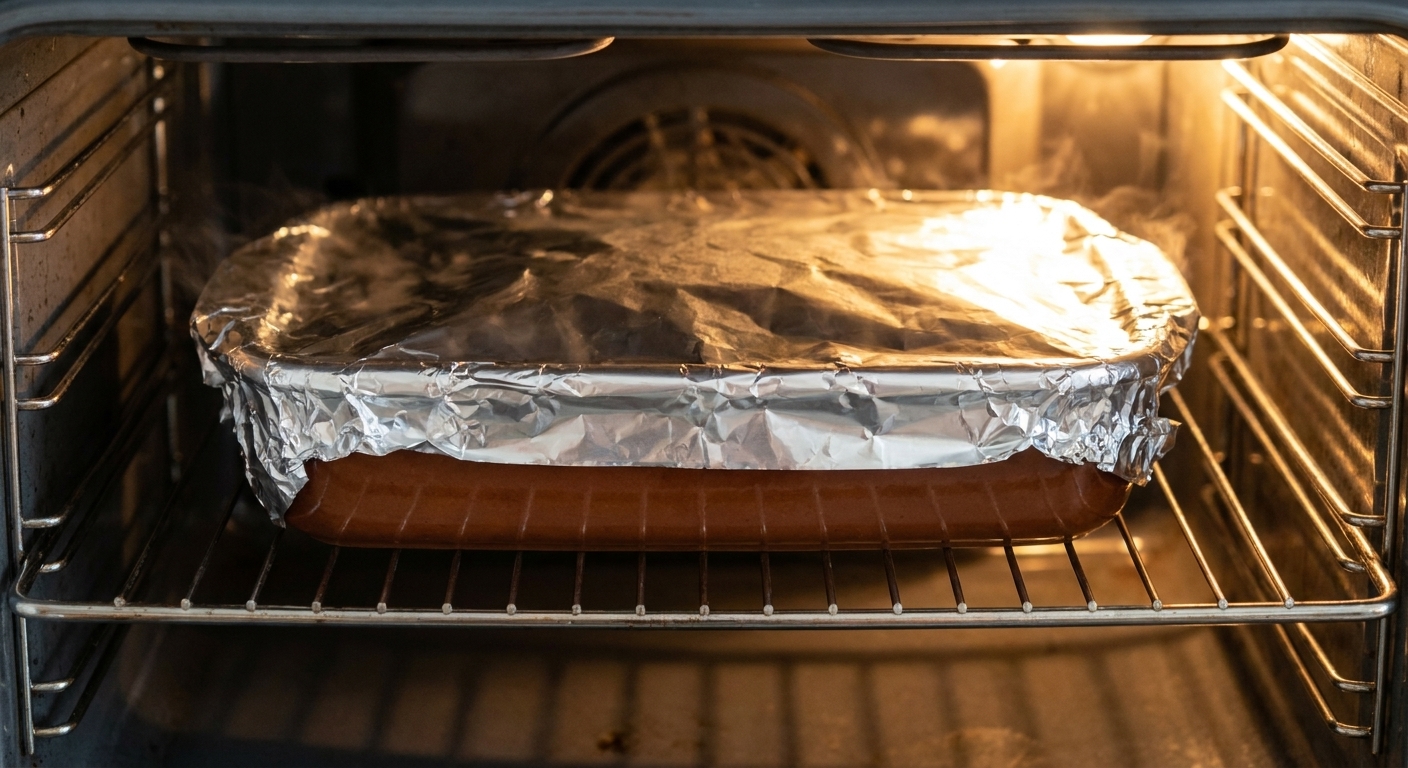
- Remove plastic wrap. Keep foil on for the first part of baking.
- Bake covered for 30 minutes.
- Uncover and bake 15 to 30 minutes, until the center hits 160°F. Visual cue: the center looks set (not shiny or wet), and a knife inserted a couple inches from the center comes out mostly clean.
- Rest 10 minutes before slicing. This helps prevent weeping.
Option B: Bake an unbaked casserole (from frozen)
Best for: mornings when you forgot to thaw.
- Preheat oven to 350°F.
- Remove plastic wrap, re-cover with foil.
- Bake covered for 60 minutes.
- Uncover and bake 20 to 40 minutes, until the center hits 160°F. Visual cue: edges are bubbling and the center is set.
- Rest 10 to 15 minutes.
Pro tip: If the top is getting too brown before the center is hot, keep it tented with foil and give it time. Eggs hate rushing.
Option C: Reheat a baked whole casserole
Best for: already-baked casseroles thawed overnight.
- Preheat oven to 325°F (gentler heat keeps eggs tender).
- Add 1 to 2 tablespoons of milk or broth around the edges if it looks dry.
- Cover tightly with foil.
- Heat for 20 to 35 minutes, until the center reaches 165°F.
- Uncover for the last 5 minutes if you want the top a little drier.
Option D: Reheat single portions
Microwave: Place a portion on a plate, cover with a damp paper towel. Heat at 50 to 70% power in 45-second bursts until hot. (Lower power helps prevent rubbery eggs.)
Toaster oven or air fryer: Reheat at 325°F for 6 to 12 minutes, depending on thickness. Cover loosely with foil for the first half if it is drying out.
Egg casserole safety basics
- Cook from raw: bake unbaked egg casseroles until the center reaches 160°F.
- Reheat leftovers: reheat cooked egg casseroles to 165°F.
- Do not thaw on the counter for long periods. Use the refrigerator method whenever possible.
- Cool quickly before freezing: refrigerate first, then freeze once fully cold.
Freezer packaging that works
For whole pans
- Plastic wrap pressed on the surface
- Second tight wrap around the pan
- Heavy-duty foil outer layer
- Label with date and instructions
For slices
- Wrap each piece in plastic wrap
- Store in a freezer bag or airtight container (airtight helps with freezer odors)
- Squeeze out excess air to prevent freezer burn
Labeling I swear by
- Name of casserole
- Date frozen
- “Baked” or “Unbaked”
- Oven temp and covered or uncovered notes
Troubleshooting
“My casserole is watery after thawing.”
- Next time, cook down vegetables and cool them completely before assembling.
- Thaw in the fridge, then blot the surface gently with a paper towel before baking if you see pooled liquid.
- For baked casseroles, reheat covered first, then uncover at the end to steam off excess moisture.
“The eggs turned rubbery.”
- Reheat at 325°F, not higher.
- Microwave at reduced power.
- Do not keep cooking well past the target temp. Pull it when it hits 165°F for reheating.
“The edges are dry but the center is cold.”
- Cover tightly with foil for most of the reheat.
- Use a lower oven temp and give it more time.
- Let a whole casserole sit out 15 to 20 minutes before baking or reheating to take the chill off. Just keep total time at room temperature under 2 hours.
“The bottom is soggy.”
- Dry out hash browns and vegetables before assembling.
- Do not overdo liquid add-ins.
- Rest after baking so the custard sets instead of seeping.
Quick timeline
| Task | Best practice |
|---|---|
| Freeze unbaked casserole | Chill 2 to 4 hours first, then wrap and freeze flat |
| Freeze baked casserole | Cool, refrigerate until cold, then wrap tightly |
| Quality window | 2 to 3 months for best taste and texture |
| Thaw time | 24 to 48 hours in the refrigerator |
| Reheat baked casserole | 325°F, covered, to 165°F |
| Bake unbaked casserole | 350°F, to 160°F |
FAQ
Can I freeze a breakfast casserole in a glass 9x13 dish?
Yes, but be careful with temperature shock. Chill the casserole completely before freezing, and never put a frozen glass dish straight into a hot oven. Thaw in the fridge first, or transfer to a different pan for baking if you are going from frozen.
Should I add cheese before freezing or after?
You can do either. For the best top, I often freeze with a light layer of cheese and add a fresh handful in the last 10 minutes of baking.
Can I freeze a casserole with runny yolks or very soft eggs?
I would not. Freezing and reheating pushes eggs toward firm. If you love soft eggs, bake fresh instead of freezing, or use the unbaked-freeze method and bake just until set.
How do I keep the top from getting tough?
Cover with foil for most of the reheat. Eggs dry out fastest on the surface, so a covered reheat is your friend.
My freezer habit
I keep two breakfast casseroles tucked away at all times: one baked and sliced for weekday mornings, and one unbaked for a slow weekend or surprise guests. Once you get the wrap, label, and reheat rhythm down, a freezer breakfast casserole stops being a backup plan and starts being a lifestyle.