
If you have eggs, a splash of milk, and a 9x13 pan, you are never far from a hot breakfast that looks intentional. This is the exact formula I use when the fridge is full of little containers, half a pepper, two lonely sausage links, and a bag of shredded cheese with about a cup left. It is the same cozy casserole energy every time, just with different “supporting actors.”
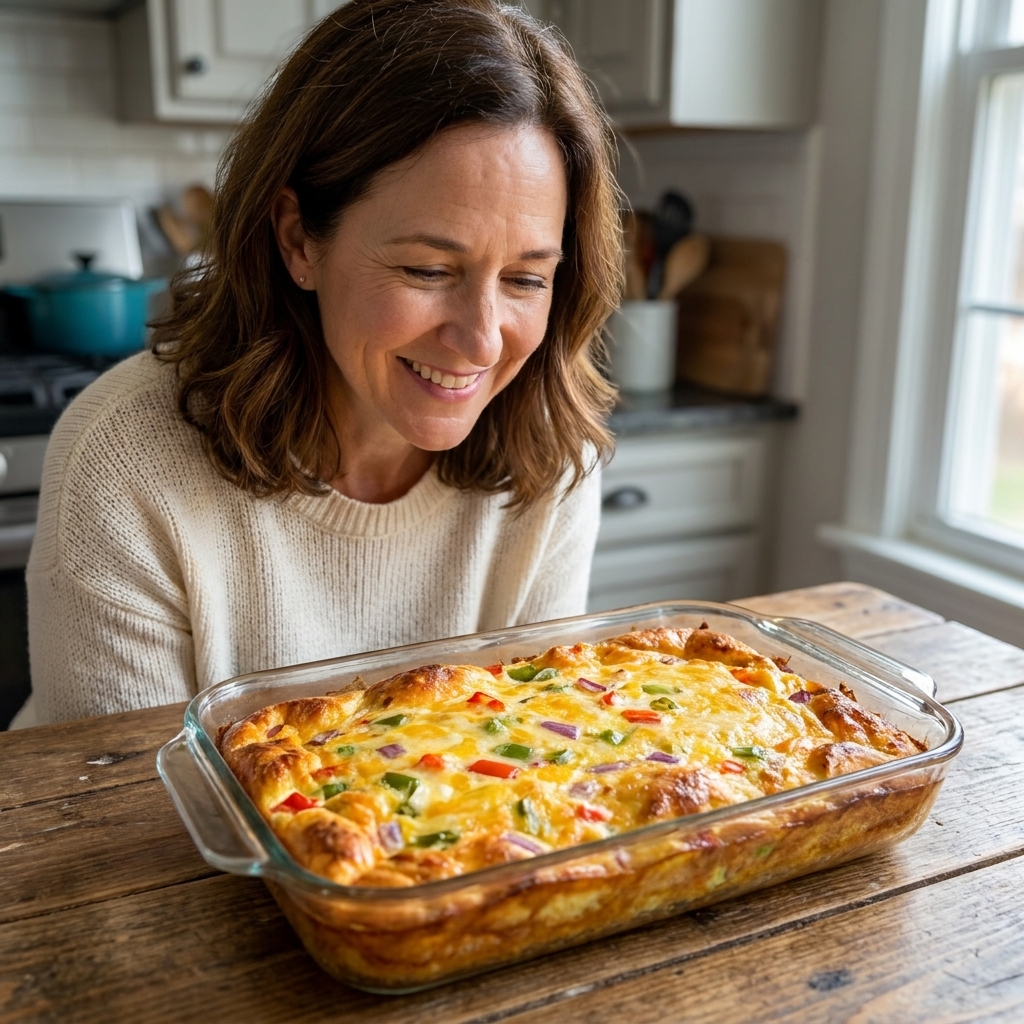
Below is my master egg casserole formula, the add-in rules that keep it fluffy instead of watery, and my favorite freezer moves to avoid the dreaded soggy bottom.
The base formula (9x13 pan)
Think of this as a “choose-your-own-leftovers” breakfast. The ratios matter more than the specific ingredients.
What you need
- 12 large eggs
- 1 1/2 cups dairy (milk, half-and-half, or a mix)
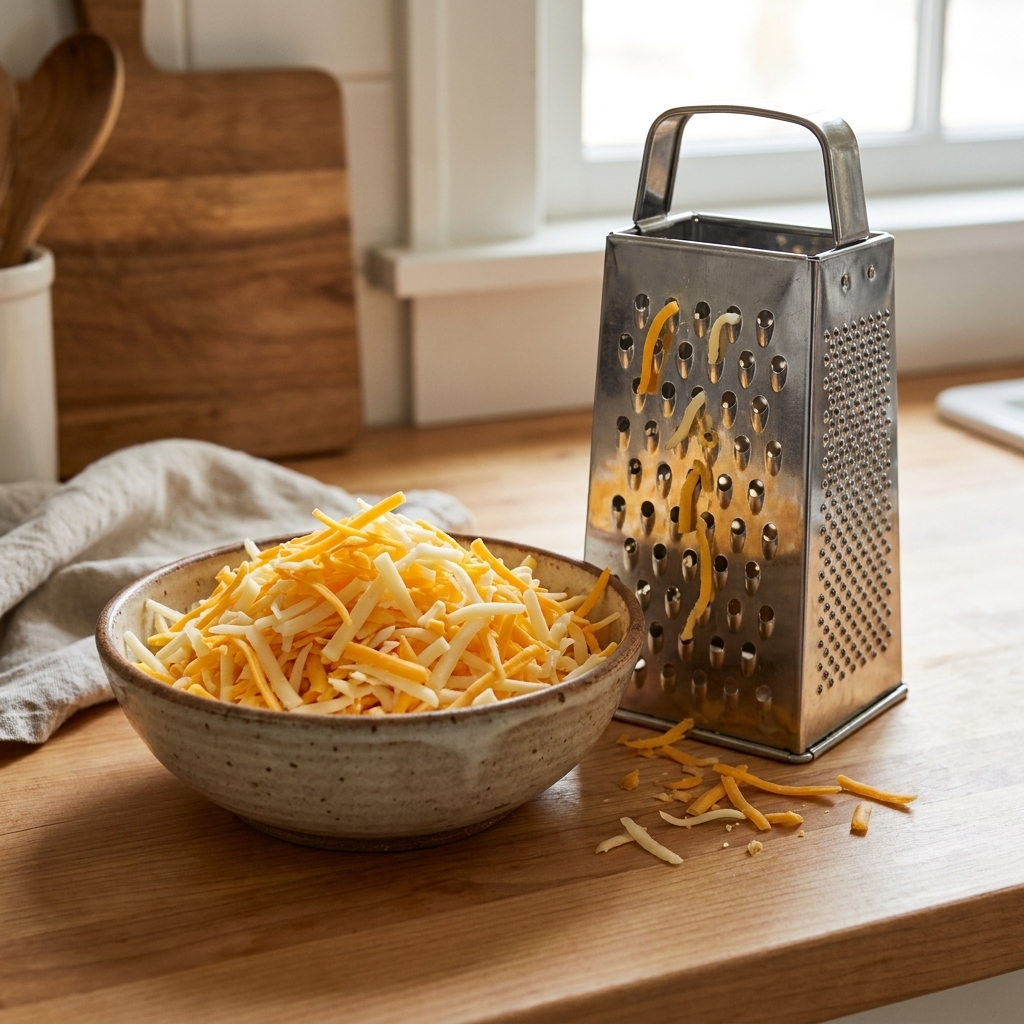
- 2 cups shredded cheese (about 8 ounces)
- 3 to 4 cups total add-ins (cooked meats, cooked vegetables, sturdy greens)
- Seasoning: 1 1/2 teaspoons kosher salt, 1/2 teaspoon black pepper (plus any extras you love)
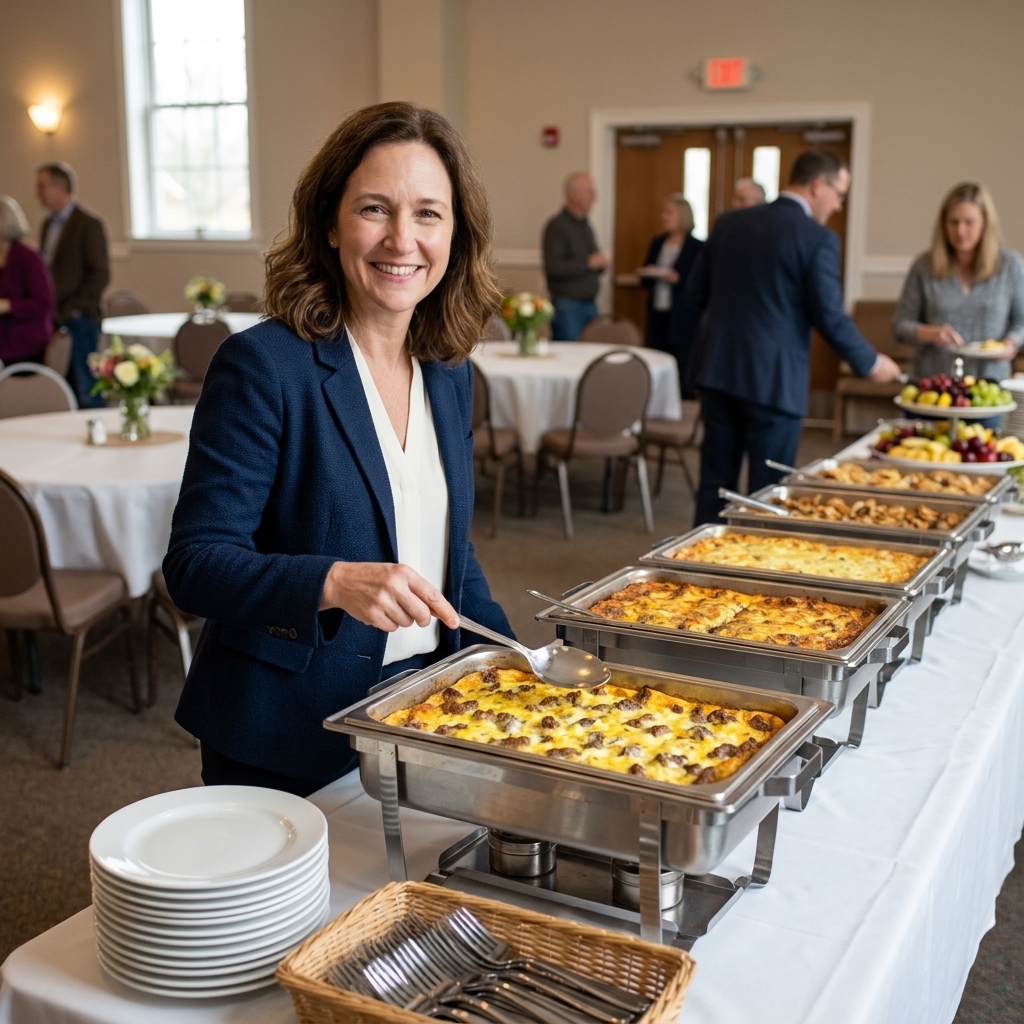
Servings: Usually 8 to 12, depending on how big you cut the squares and whether it is breakfast-only or part of a bigger spread.
Why this works: 12 eggs plus 1 1/2 cups dairy gives a tender custard that still slices cleanly. Two cups of cheese brings structure and flavor without turning the whole pan greasy.
Dairy swap guide
- All milk: light and fluffy, a little less rich
- Half milk, half half-and-half: my everyday sweet spot
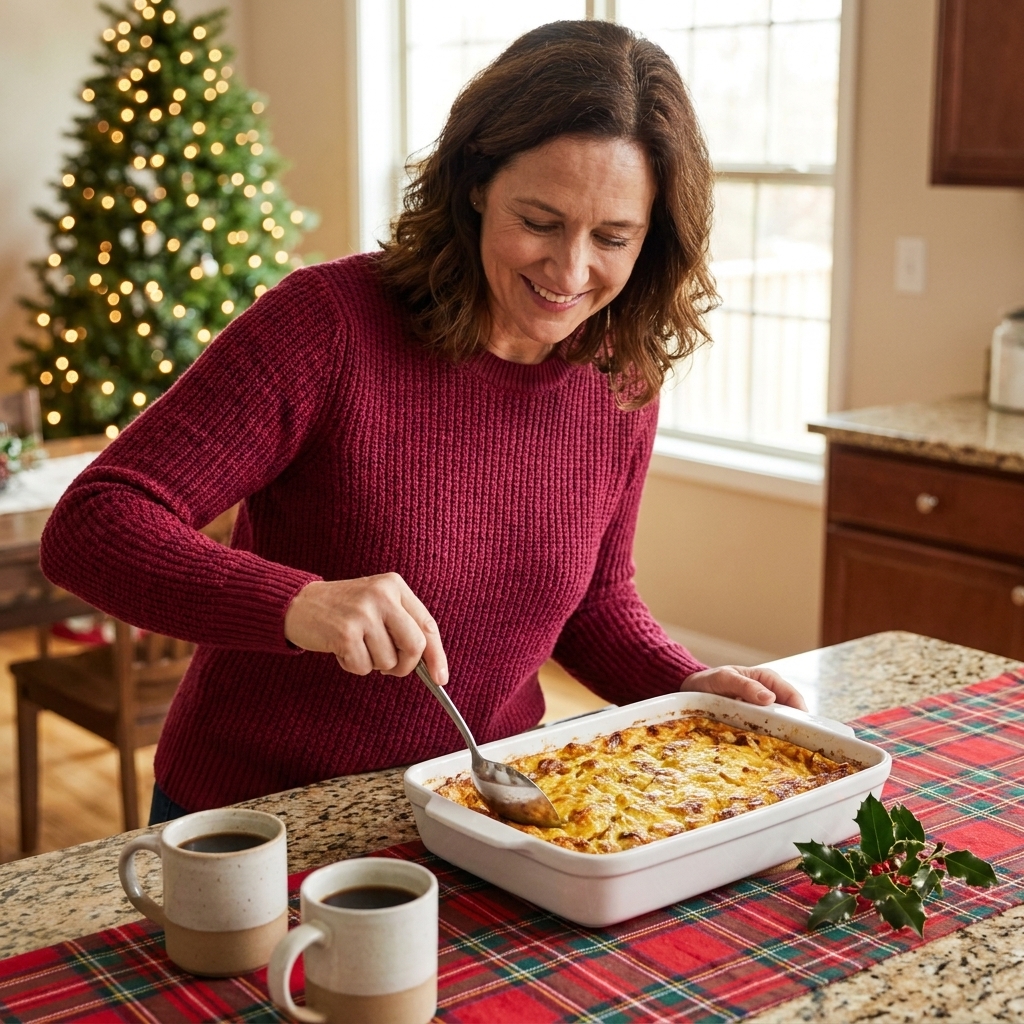
- All half-and-half: extra creamy, great for holiday mornings
- Evaporated milk: very reliable texture, especially for make-ahead
If you only have heavy cream, use 3/4 cup cream + 3/4 cup water or milk. Straight cream can bake up richer with a tighter set.
Add-in rules (no watery pans)
Egg casseroles are forgiving, but moisture is the boss. These simple rules keep your casserole fluffy instead of weepy.
Rule 1: Measure by volume
A 9x13 pan likes 3 to 4 cups total add-ins. Less than 3 cups can taste plain. More than 4 cups crowds the eggs and can prevent a clean set.
- Vegetables: 1 1/2 to 2 1/2 cups
- Meat: 1 to 1 1/2 cups
- Extras (olives, roasted chiles, sun-dried tomatoes): 2 to 6 tablespoons
Quick reality check: “3 cups” of fluffy roasted peppers does not act the same as “3 cups” of packed potatoes or a mountain of meat. If your add-ins are dense and heavy, aim closer to 3 cups total so the eggs still have room to do their thing.
Rule 2: Cook and cool watery vegetables
Raw, high-water vegetables release liquid as they bake. That liquid has nowhere to go, so it pools and you end up with a wet layer.
- Always cook first: mushrooms, zucchini, spinach, kale, broccoli, cauliflower rice, onions, peppers
- Drain well: spinach and kale should be squeezed dry in a clean towel
- Roasted vegetables are perfect leftovers because they are already moisture-controlled
Leftover steamed broccoli is totally usable. Just chop it smaller and pat it dry.
Rule 3: Use cooked meats only
Breakfast sausage, bacon, ham, shredded chicken, leftover taco meat, smoked salmon, even chopped meatloaf. Cooked, cooled, and chopped is the goal.
- Drain sausage and bacon on paper towels so grease does not float to the top.
- If the meat is salty (ham, bacon), pull back your added salt a touch.
Rule 4: Pick cheeses that melt
You can mix cheeses, and honestly, that is usually what happens in my fridge.
- Best melters: cheddar, Monterey Jack, pepper jack, mozzarella, Swiss
- Big flavor boosters: feta, goat cheese, blue cheese (use 1/4 to 1/2 cup and fill the rest with a melter)
- Parmesan: sprinkle 2 to 4 tablespoons on top for a browned finish
Rule 5: Starches get their own lane
If you want a heartier, “brunch buffet” style casserole, you can add starch. Just keep the balance.
- Bread cubes: 3 to 4 cups (stale is best). Reduce add-ins to stay under the 4-cup total.
- Cooked potatoes or hash browns: 3 cups, thawed and squeezed dry if frozen.
- Tortilla strips: 2 to 3 cups. Great for Tex-Mex flavors.
When adding starch, I keep the veggies and meat closer to 2 to 3 cups combined so the pan does not get crowded.
Master method (step-by-step)
This is my no-stress routine. You can prep the add-ins while the oven heats, or use what is already cooked in the fridge.
1) Heat oven and prep the pan
- Heat oven to 350°F.
- Grease a 9x13 baking dish well with butter or nonstick spray.
2) Spread add-ins in the dish
Scatter your cooked vegetables and meats evenly in the pan. If you are using any bold extras (jalapeños, olives, sun-dried tomatoes), sprinkle them around so you do not get one spicy corner and one bland corner.
3) Whisk the custard
- In a large bowl, whisk 12 eggs until the whites and yolks are fully blended.
- Whisk in 1 1/2 cups dairy, salt, and pepper.
- Stir in 1 1/2 cups of the cheese, and save the remaining 1/2 cup for topping.
4) Pour, top, and bake
- Pour egg mixture over add-ins.
- Top with the remaining cheese.
- Bake 35 to 45 minutes, until the center is just set.
My tip: If the top is browning fast but the center is still jiggly, lay foil loosely over the top for the last 10 minutes.
Doneness check you can trust: If you have an instant-read thermometer, the center should hit at least 160°F. (Eggs can fool the “knife test,” especially with melty cheese.)
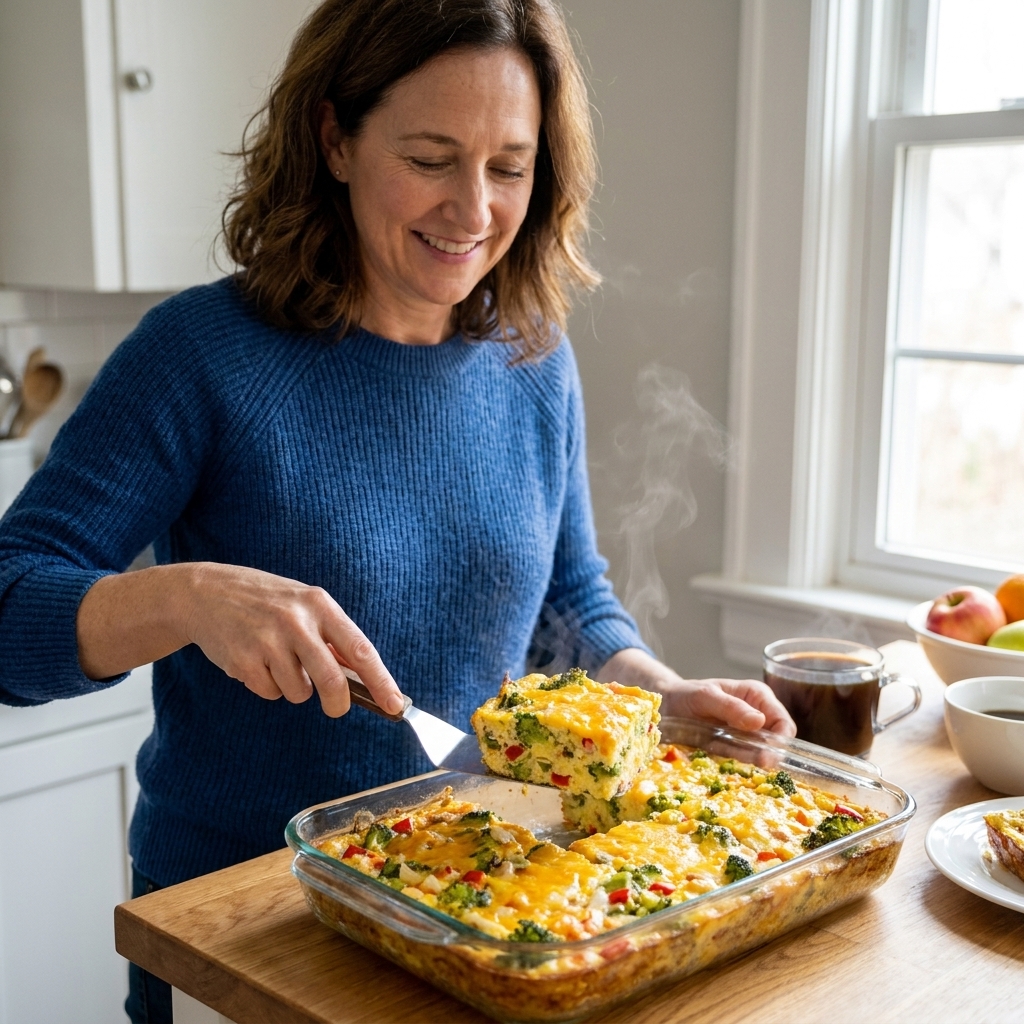
5) Rest before slicing
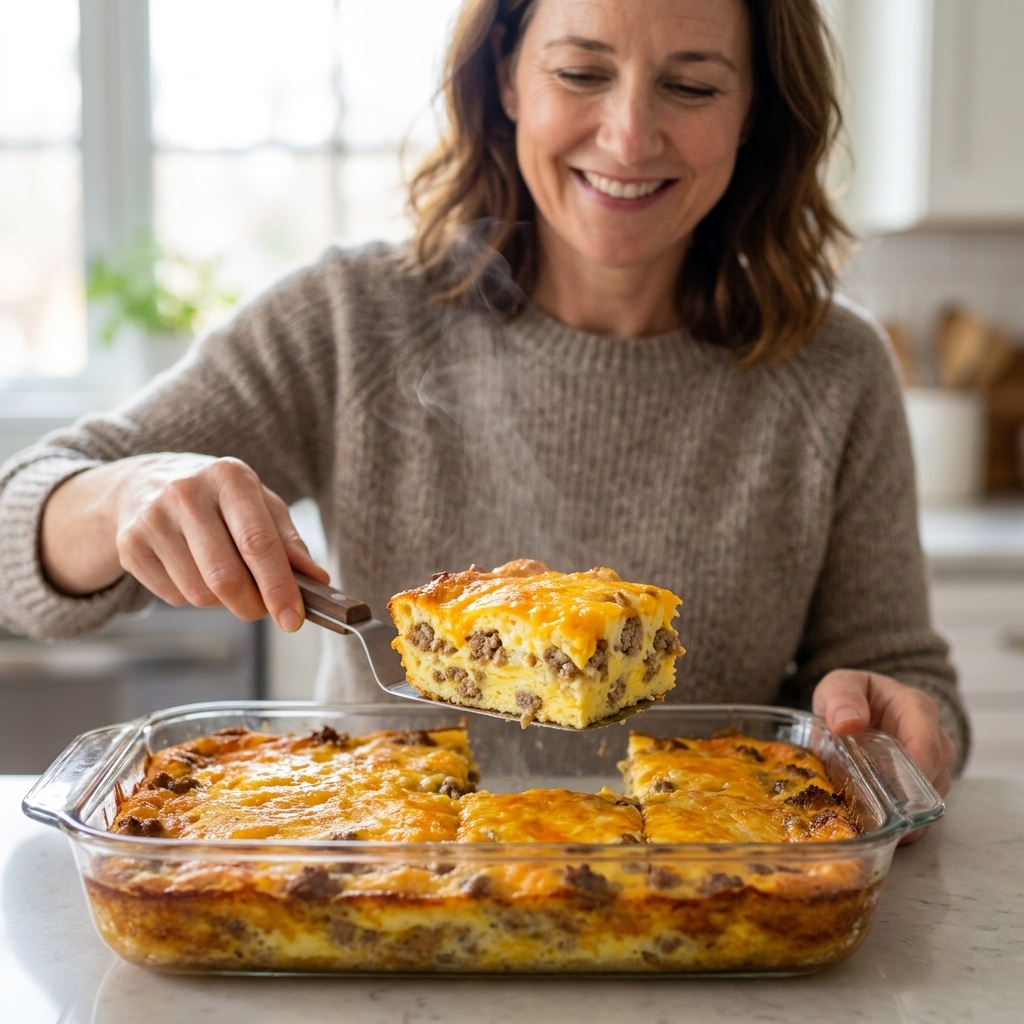
Let it rest 10 minutes. This finishes the set and gives you neat slices instead of scrambled-egg scoops.
Flavor ideas (mix and match)
If you are staring into the fridge and drawing a blank, pick a lane. These combinations are hard to mess up.
Classic diner
- Add-ins: cooked sausage or bacon, sautéed onions, bell peppers
- Cheese: cheddar or pepper jack
- Extra: pinch of garlic powder
Ham and Swiss
- Add-ins: diced ham, sautéed spinach (squeezed dry)
- Cheese: Swiss with a little mozzarella for melt
- Extra: Dijon mustard, 1 teaspoon whisked into the eggs
Garden veggie
- Add-ins: roasted zucchini, mushrooms, peppers, onions
- Cheese: Monterey Jack or mozzarella, plus Parmesan on top
- Extra: Italian seasoning or basil
Southwest clean-out
- Add-ins: leftover taco meat or shredded chicken, roasted peppers, black beans (rinsed and well drained)
- Cheese: cheddar and pepper jack
- Extra: salsa on the side, chopped cilantro after baking
Smoked salmon brunch
- Add-ins: smoked salmon pieces, sautéed leeks, chopped dill
- Cheese: Swiss or a little cream cheese dotted on top
- Extra: lemon zest in the egg mixture
Make-ahead and freezer tips
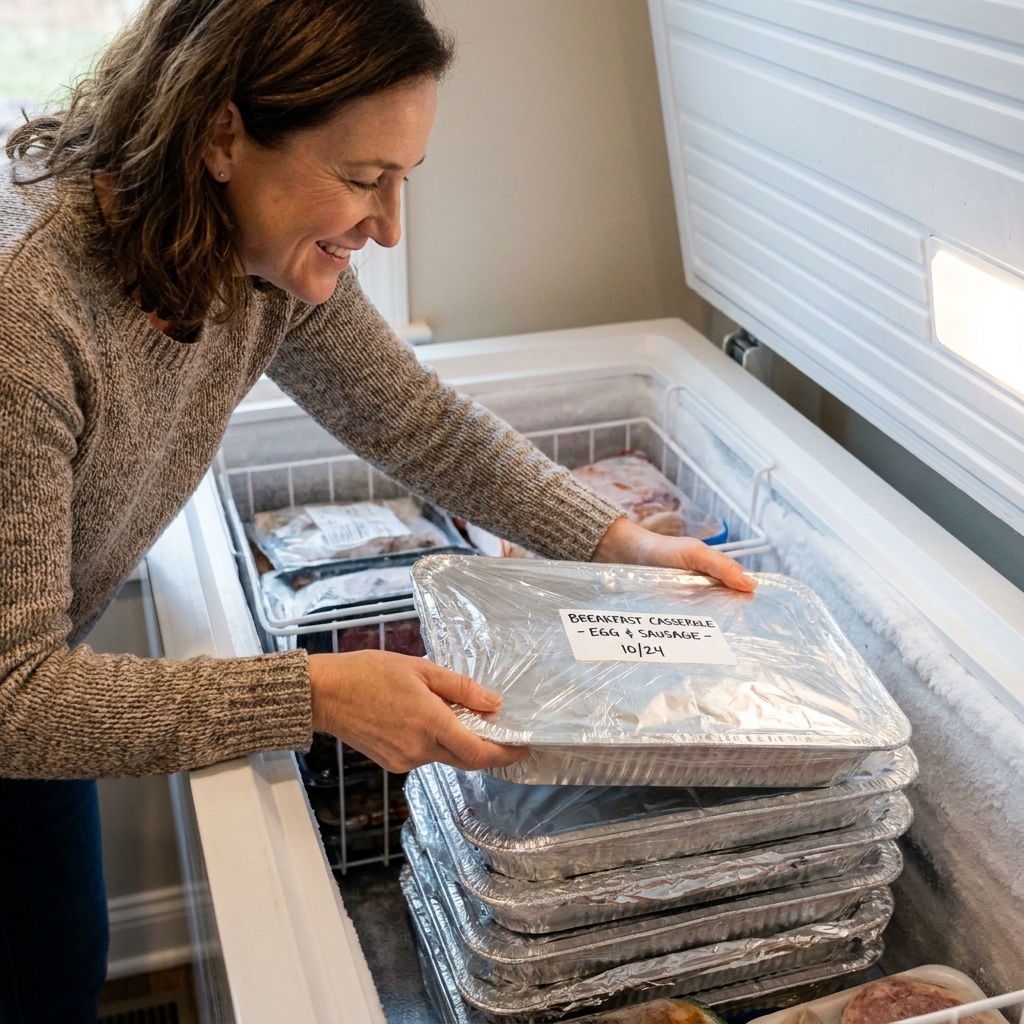
I keep two emergency meals in my chest freezer at all times, and an egg casserole is one of the easiest to rotate in and out. Here are the methods that actually reheat well.
Make ahead (refrigerator)
- Best method: Assemble everything the night before, cover tightly, refrigerate.
- In the morning, set the dish on the counter 20 to 30 minutes while the oven heats.
- Bake at 350°F, adding 5 to 10 minutes if it is still cold in the center.
Moisture note: If your add-ins are very juicy (tomatoes, sautéed mushrooms), assemble the night before but hold back a few wet ingredients and stir them in right before baking.
Freeze baked (best texture)
- Bake and cool completely.
- Chill in the refrigerator for 2 hours so the slices firm up.
- Slice into squares, wrap each piece tightly, and place in a freezer bag.
- Freeze up to 3 months.
Reheat single squares fast, and you are not committed to thawing an entire pan.
Freeze unbaked (works, with one tweak)
You can freeze the whole unbaked casserole, but the texture is best when the add-ins are on the drier side.
- Assemble in a freezer-safe 9x13 dish.
- Cover the surface with parchment, then wrap tightly with foil.
- Freeze up to 2 months.
- Thaw in the fridge 24 to 36 hours, then bake.
My tweak: I have found reducing the dairy slightly to 1 1/4 cups when freezing unbaked helps prevent weeping after thawing.
Reheating without drying out
- Oven (best for a full pan): Cover with foil and warm at 325°F until hot, about 20 to 30 minutes.
- Microwave (best for slices): Cover and heat at 50 to 70% power in short bursts.
- Air fryer (for edges you can brag about): 320°F for 5 to 8 minutes for a slice.
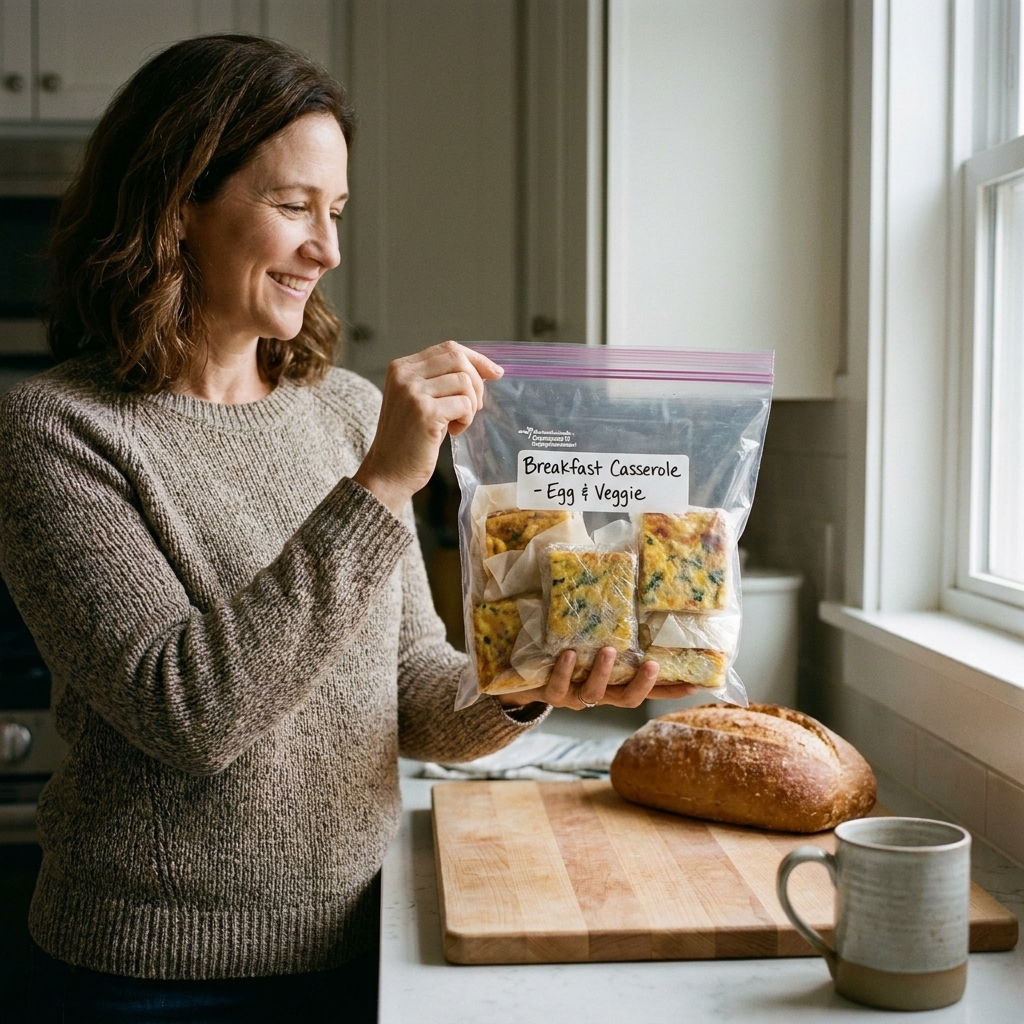
Soggy bottom prevention: Cool completely before wrapping, and never trap steam. If it is even a little warm, the condensation turns into ice crystals, and that is where the sogginess starts.
How long it keeps
- Refrigerator: Store covered for 3 to 4 days.
- Freezer: Best within 3 months for baked slices, before the texture starts to get a little spongy.
Troubleshooting
My casserole is watery
- Most common cause: vegetables were not cooked, drained, or cooled.
- Fix next time: sauté veggies and let them cool on a plate before adding.
- If it happens now: rest the casserole longer. Often the liquid reabsorbs as it cools.
The middle will not set
- Pan is overcrowded with add-ins, or pieces are too large.
- Fix: cover with foil and bake 10 minutes more. Check again.
- If you have a thermometer, aim for at least 160°F in the center.
It is puffy, then it sinks
Totally normal. Egg casseroles puff in the oven and settle as they cool. The goal is a tender slice, not a soufflé that never drops.
It tastes bland
- Add 1/2 teaspoon garlic powder, a pinch of paprika, or a spoon of Dijon.
- Use a sharper cheese, or add 2 tablespoons Parmesan on top.
- Finish with something bright: hot sauce, salsa, scallions, or fresh herbs.
Leftover combos I love
These are built for real leftovers, not grocery-store perfection.
- Leftover roasted vegetables + deli ham + Swiss: tastes like a fancy cafe breakfast.
- Two cooked sausage links + half an onion + a wrinkly bell pepper + cheddar: weeknight-for-breakfast magic.
- Broccoli stems (thin sliced and sautéed) + shredded chicken + Monterey Jack: a sneaky way to use the parts no one grabs first.
- Last scoop of cooked rice + cooked spinach (squeezed dry) + feta: surprisingly satisfying and very lunchable.
FAQ
Can I make this in a smaller pan?
Yes. For an 8x8 pan, use about 6 eggs, 3/4 cup dairy, 1 cup cheese, and 1 1/2 to 2 cups add-ins. Start checking around 25 to 30 minutes at 350°F.
Do I have to use milk?
No. Half-and-half, evaporated milk, or a mix works. If you are dairy-free, unsweetened plain oat milk is the closest swap I have used successfully. Avoid sweetened or flavored options.
How do I know when it is done?
The center should be set with only a slight jiggle, and an instant-read thermometer in the middle should read at least 160°F.
Can I add raw spinach?
I do not recommend it in a 9x13. Raw spinach dumps water. Quick sauté, cool, then squeeze dry and you are golden.
What is the best cheese to use up odds and ends?
Use any melty cheese as your base (cheddar, Jack, mozzarella), then sprinkle smaller amounts of bold cheeses (feta, goat, blue) for personality.
Your new default plan
Once you memorize the ratio, you do not need a “recipe” again. It becomes a method: 12 eggs, 1 1/2 cups dairy, 2 cups cheese, and 3 to 4 cups cooked add-ins. That is how you turn fridge leftovers into a brunch-ready pan that feeds a family, slices beautifully, and freezes like a champ.
If you want, tell me what you are trying to use up (even the random bits), and I will help you build a combo that bakes up fluffy and flavorful.