
If you have ever walked into a potluck with a gorgeous, bubbly brunch bake and set it down… only to realize it is already drifting toward lukewarm, you are not alone. Breakfast casseroles are at their very best hot and steamy, and they also need to stay in a safe temperature zone when they are sitting out at a tailgate.
I have hauled more 9x13 pans across parking lots, church basements, and soccer fields than I can count. Here is what works in real life: how to pack it, how to hold it, and how to serve it so it stays piping hot and food-safe.
First, a quick food-safety baseline
Warm is not the goal. Hot and held hot is the goal.
- Hot holding target: Keep your casserole at 140°F / 60°C or higher once it is cooked. Some guidelines allow 135°F, but I aim for 140°F as a simple, conservative target.
- The risky zone: Between 40°F and 140°F. Try not to let your casserole hang out there.
- Two-hour rule: If it is below 140°F for more than 2 hours, it is time to toss it. If the air temperature is above 90°F / 32°C, that window drops to 1 hour.
My best friend for potlucks: a cheap digital probe thermometer. If you only buy one “extra” tool, make it that.
The best ways to keep a brunch casserole hot while traveling
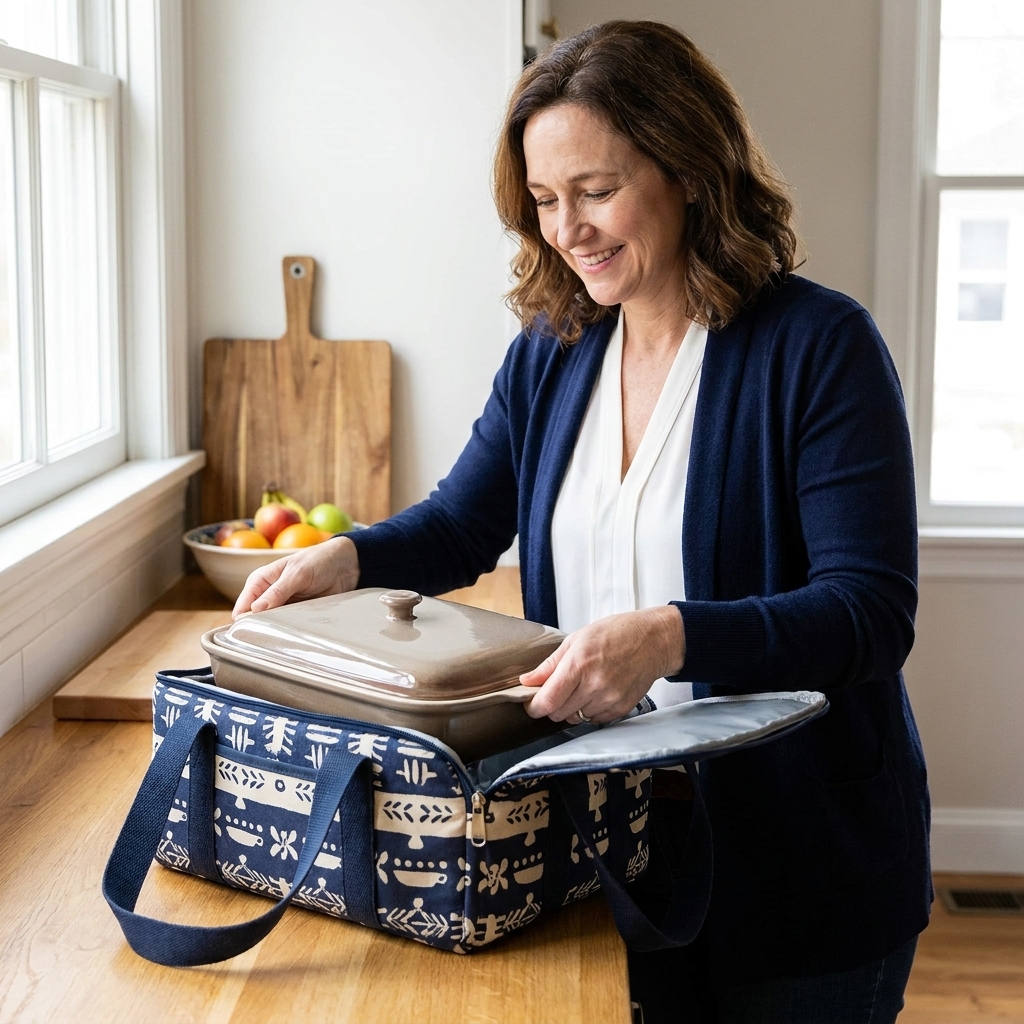
Option 1: A real thermal carrier (my go-to)
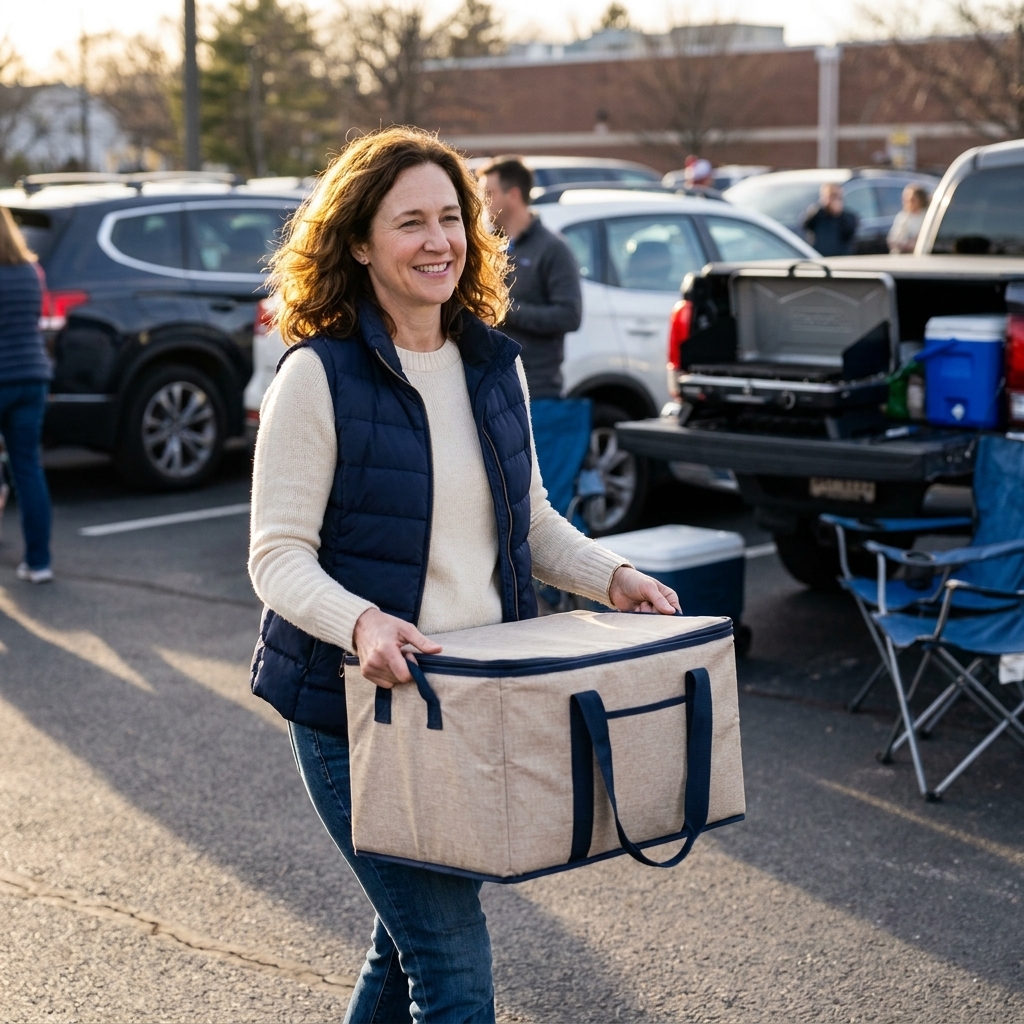
If you bring brunch bakes more than twice a year, an insulated carrier is worth it. Look for one that fits a 9x13 pan snugly. Extra empty space equals heat loss.
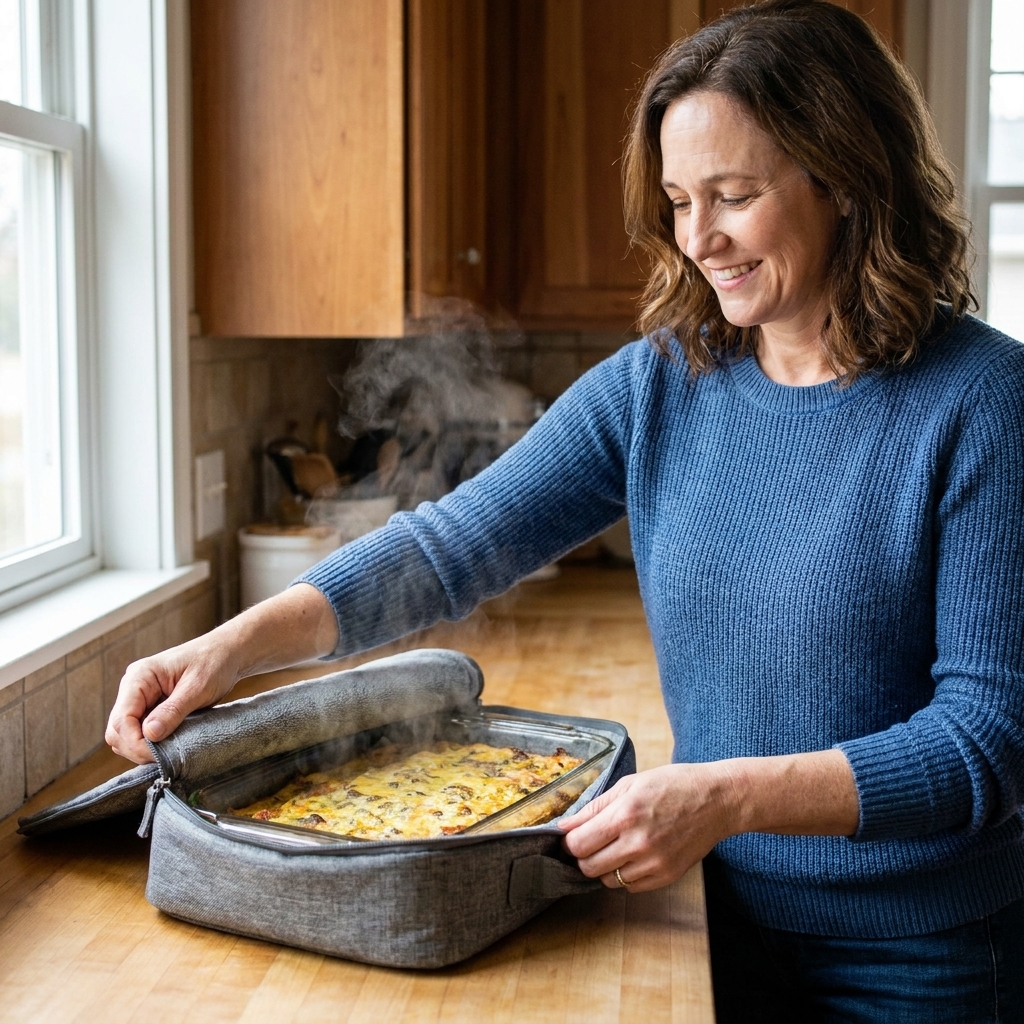
- Preheat the carrier: Zip it closed with a microwaved heat pack inside for 10 minutes, then swap in the hot casserole.
- Wrap the dish first: A layer of foil over the top, then a clean bath towel around the dish, then into the carrier.
- Keep it closed: Every peek dumps heat. Transport it like it is a sleeping baby.
My tip: Heat retention is mostly about thermal mass. Thicker, heavier pans often stay hot longer than thin ones. If I know I have a longer drive, I choose a deeper, heavier dish and wrap it well.
One more safety note: If you are using a glass dish, buffer it with a folded towel so it is not pressed against anything cold in the carrier. Sudden temperature swings can crack glass.
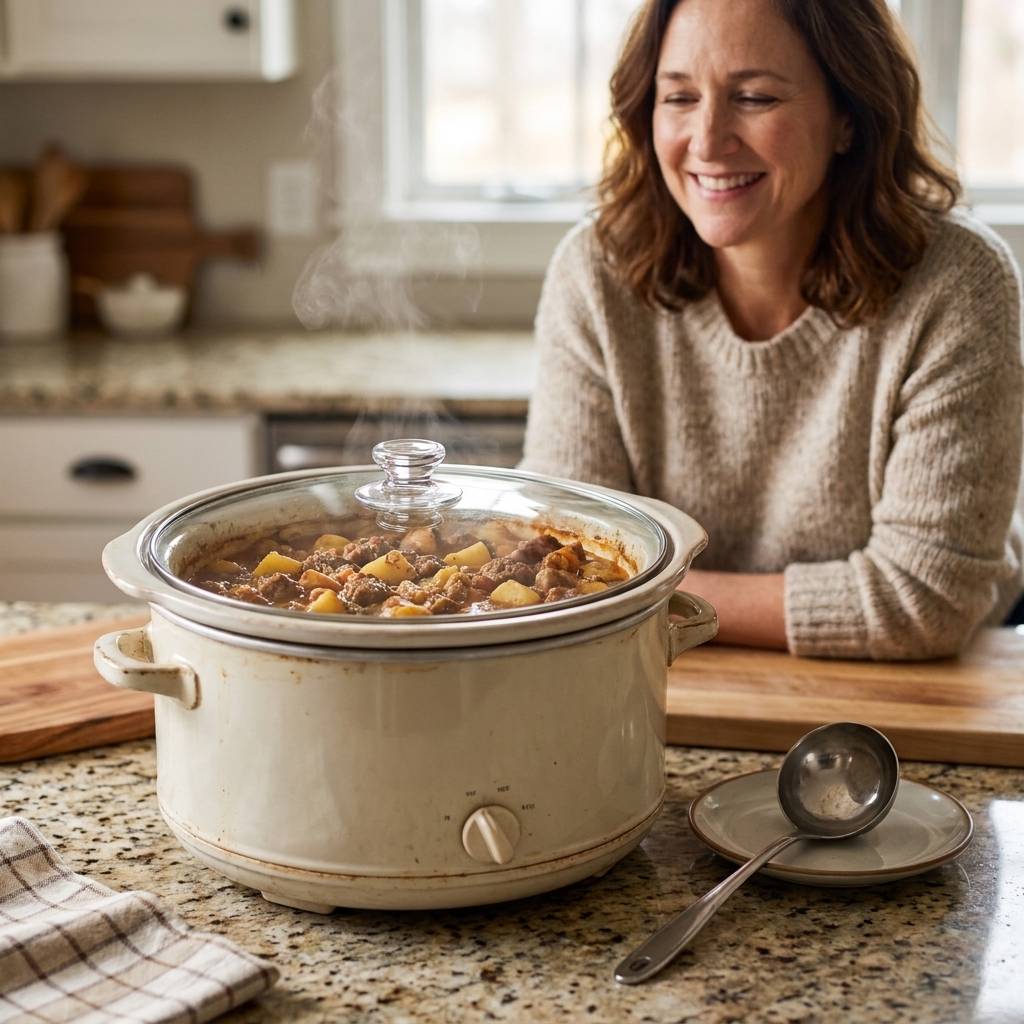
Option 2: Slow cooker holding
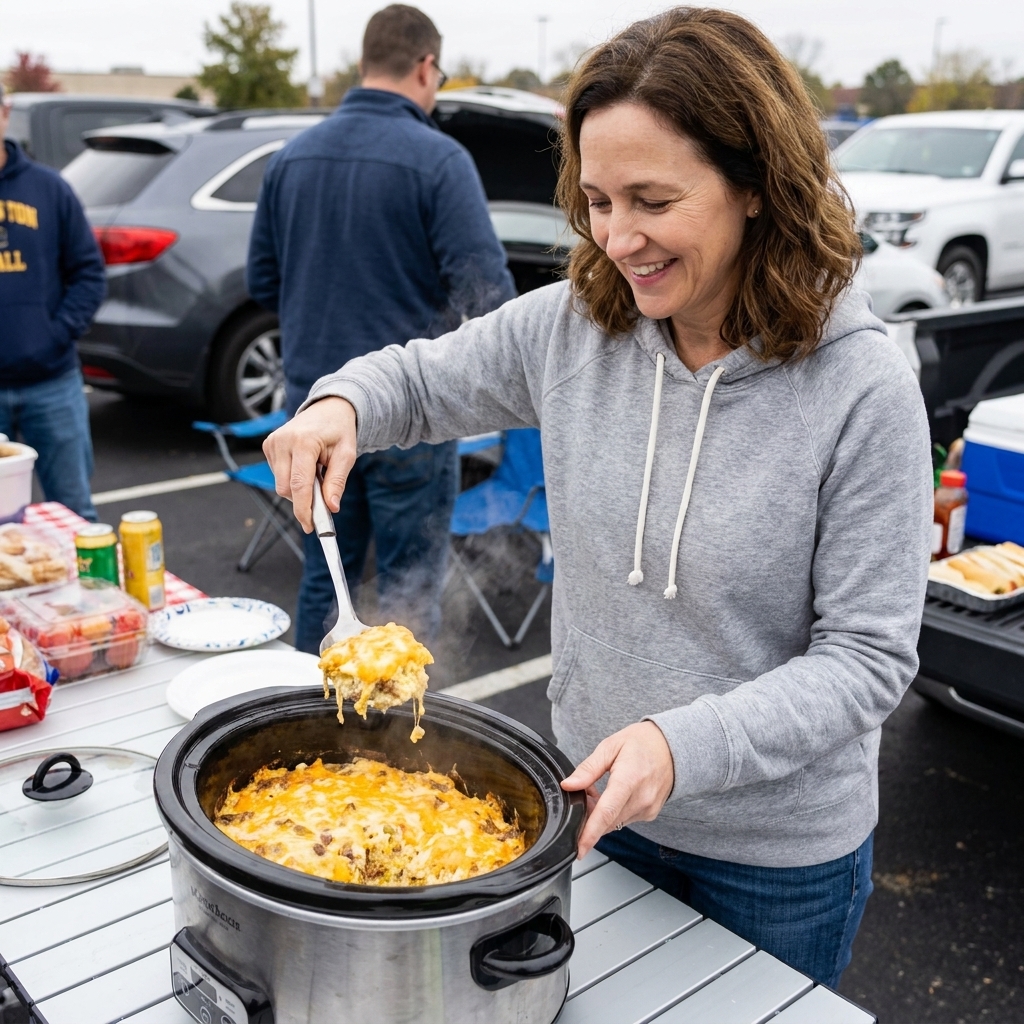
If the event has an outlet, a slow cooker is basically a hot-holding superhero. You have two ways to use it, depending on your casserole style.
Method A: Bake it, then transfer for holding
- Bake your casserole at home until fully done.
- Let it rest 10 to 15 minutes so it sets.
- Scoop portions into the slow cooker set to LOW or KEEP WARM.
- Stir gently once in a while so the edges do not overcook.
This is best for soft casseroles like cheesy hash brown bakes, French toast casseroles, or anything spoonable.
Important: Not every KEEP WARM setting is truly food-safe. Check the center temperature after 15 to 20 minutes and make sure it is holding at 140°F or higher.
Method B: Cook it in the slow cooker
Some egg bakes adapt beautifully to the slow cooker, especially ones with bread cubes or hash browns. The key is to avoid a watery bottom.
- Grease the insert well.
- Line the bottom with a parchment round (optional but very helpful).
- Keep add-ins like mushrooms and spinach pre-cooked and well-drained.
- Cook until the center reaches the right temperature for what is inside:
- Egg-based casseroles (no poultry): 160°F
- With poultry: 165°F
Heads up: Slow cookers hold heat well, but they also hold moisture. If your casserole seems steamy, crack the lid for 5 to 10 minutes right before serving.
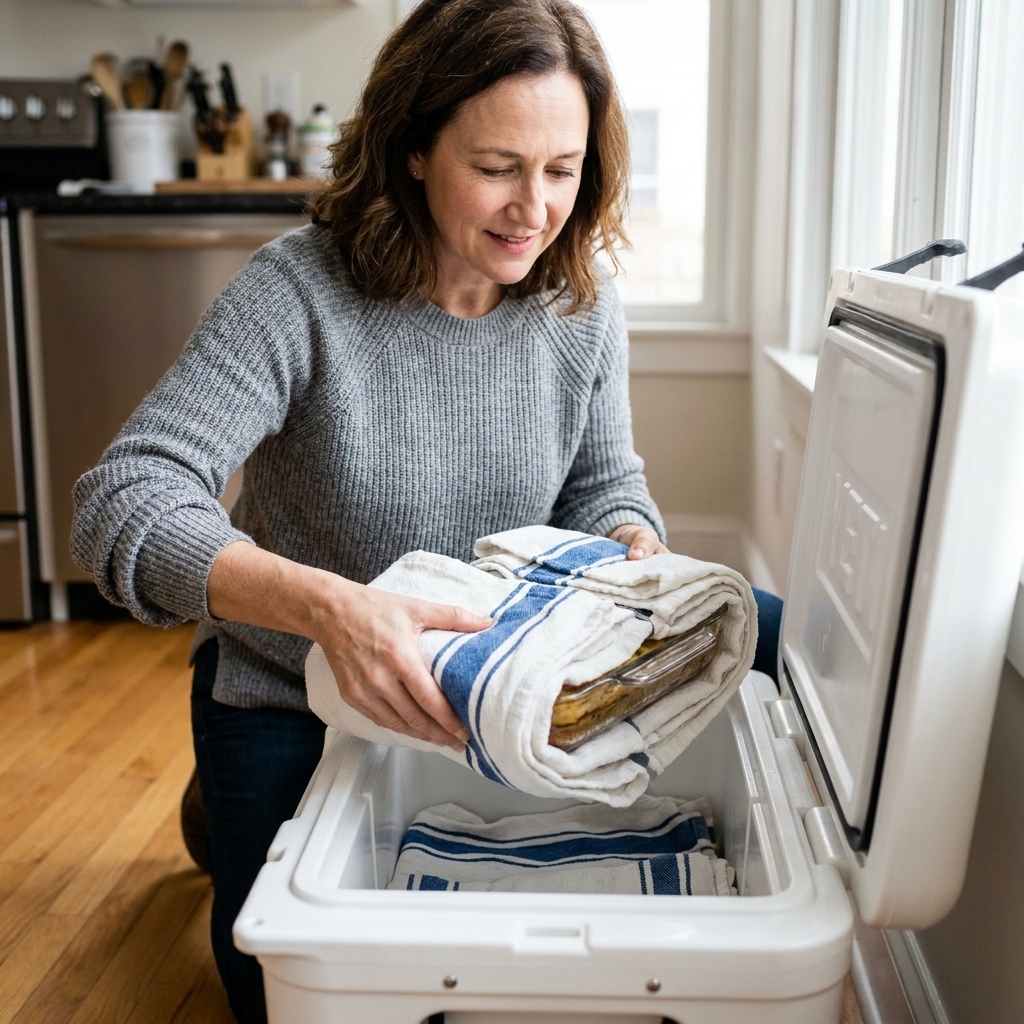
Option 3: Towel-and-cooler trick
No carrier? No problem. A small hard-sided cooler makes an excellent heat vault.
- Preheat the cooler: Pour in very hot tap water, close for 5 minutes, then dump and dry.
- Wrap the casserole: Foil on top, then wrap the whole dish in two thick towels.
- Pack it tight: Place it in the warm cooler with extra towels filling any open space.
- Keep it closed: Open only when you arrive.
This method shines for 30 to 90 minutes of travel. In a pre-warmed cooler packed tight, many casseroles will stay above 140°F for about 60 to 120 minutes, especially if they went in truly hot. Weather and pan thickness matter, so check the temperature when you arrive.
Glass dish note: Put a folded towel under and around a hot glass dish before it goes into the cooler so it is not touching cold plastic.
How to bake for heat retention
Keeping it hot starts in your oven, not in your car.
Do not pull it early
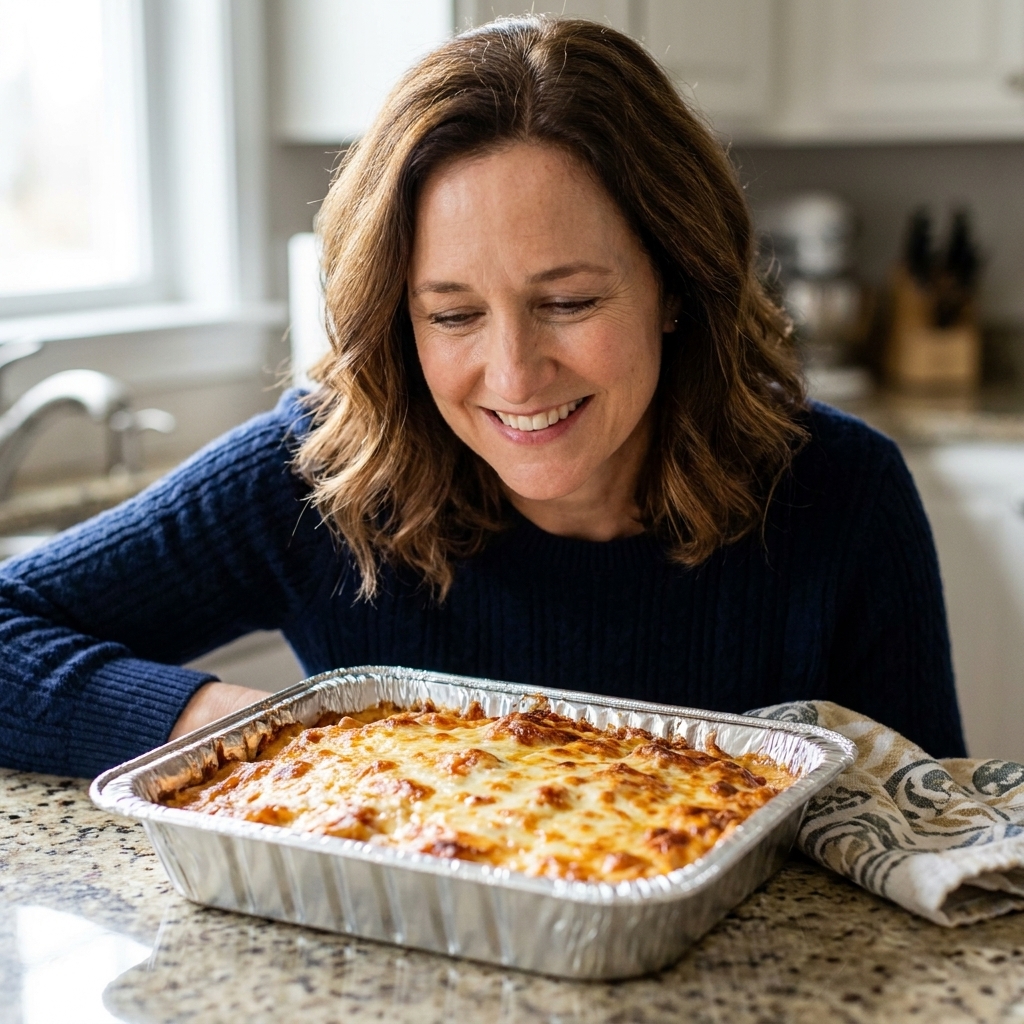
A casserole that is just barely set cools quickly. Bake until the center is fully set and properly hot, then hold it covered for 10 minutes before packing.
Use foil, not just a lid
A tight foil seal holds heat and prevents the top from drying out. If your dish has a lid, I still like foil underneath for a better seal.
Prep watery add-ins
Watery casseroles cool faster and get soggier as they sit.
- Cook mushrooms and onions until their moisture is gone.
- Thaw and squeeze frozen spinach dry.
- Drain tomatoes well, or use sun-dried tomatoes for concentrated flavor.
Serving setup that stays hot
If you have electricity
An electric roaster oven or warming tray is the easiest way to keep a 9x13 pan above 140°F without overcooking the edges.
- Preheat the roaster or warmer before the casserole arrives.
- Keep the casserole covered between servings.
- Use a thermometer and check the center occasionally.
If you do not have electricity
This is where strategy matters.
- Serve in smaller pans: Keep a backup pan insulated and only set one out at a time.
- Slice at home: Pre-cut portions reheat and serve faster, with less time sitting open.
- Use a windbreak: At a tailgate, wind steals heat. Set your serving table behind the vehicle hatch or a pop-up wall.
My always-do: Bring a roll of foil. When the serving spoon comes out, the foil goes back on.
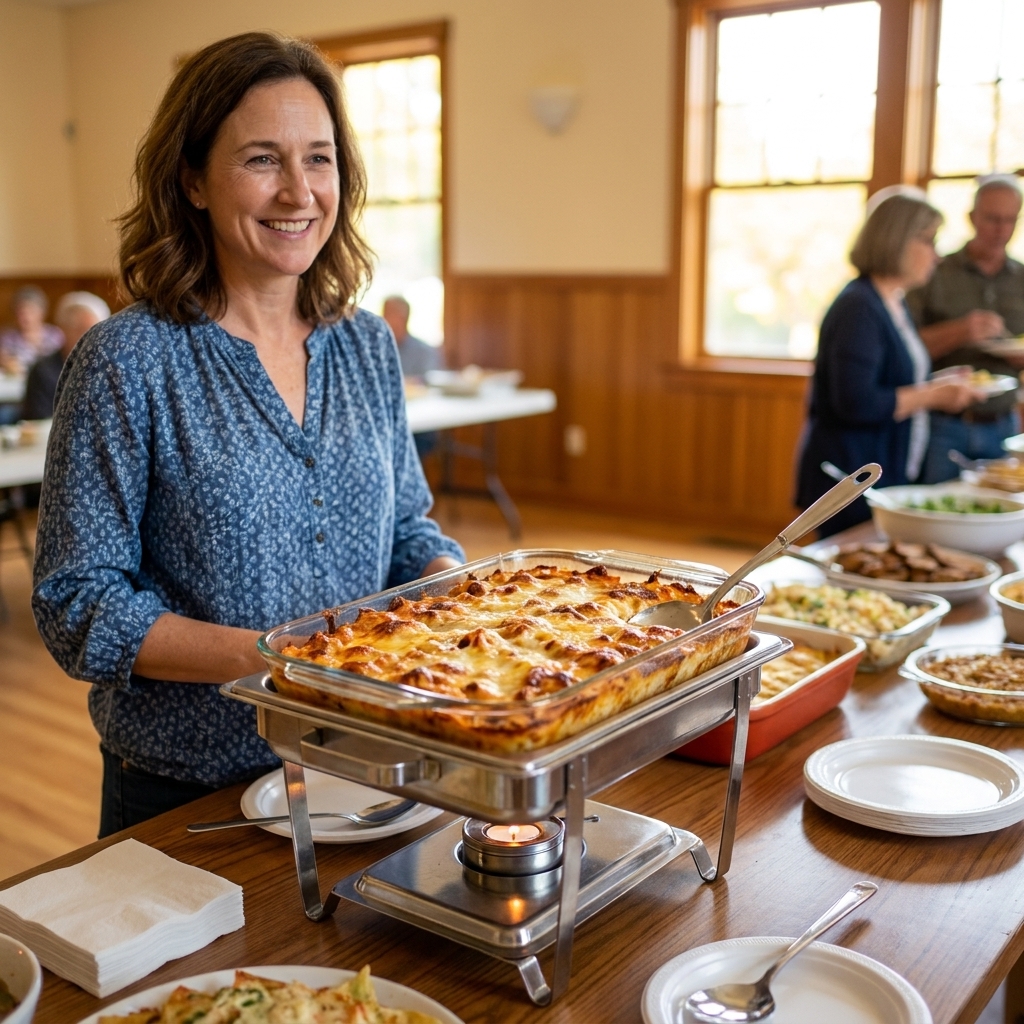
Chafing dish option
If your group already uses chafing dishes and gel fuel, they can work for holding, too. Use a sturdy setup on a level surface, keep kids away from the flame, and still use a thermometer so the center stays at 140°F or higher.
Reheating on-site
Oven or toaster oven
- Cover tightly with foil.
- Reheat at 325°F until the center is back to 165°F if it cooled down or is leftovers. If it stayed hot and you are simply holding it for service, keep it at 140°F or higher.
- Add 1 to 2 tablespoons of milk or cream around the edges if it looks dry.
Microwave
- Microwave portions covered with a damp paper towel.
- Use 50 to 70% power so eggs reheat gently.
Grill hack
You can rewarm a foil-covered pan on a grill over indirect heat. Keep the lid down, rotate the pan occasionally, and check the center temperature. This is more “get it done” than “perfect,” but it works.
What not to do
- Do not transport in a cold pan. A room-temp dish plus a cold car equals fast cooling.
- Do not set a hot glass dish on a cold surface. Use a towel or trivet to prevent thermal shock.
- Do not rely on a thin tote bag. It is better than nothing, but you will lose heat quickly.
- Do not leave the lid cracked “so it does not get soggy.” You will cool it right into the danger zone. Manage steam at the very end, not during holding.
My packing checklist
- Digital thermometer
- Foil roll
- Serving spoon and a backup (someone always “borrows” one)
- Trivet or folded towel for the table
- Knife and small spatula if it is a slice-and-serve casserole
- Paper towels for quick condensation wipes
And yes, I am the lady who keeps two emergency meals in the chest freezer. One of them is usually a breakfast casserole, because mornings have a special talent for getting away from us.
FAQ
How long will a brunch casserole stay hot in an insulated carrier?
If it goes in piping hot, wrapped well, and the carrier stays closed, you can often get 60 to 120 minutes of safe heat. Weather, pan thickness, and how snug the fit is all matter. Check with a thermometer when you arrive.
Should I bake it, then reheat it at the potluck?
If you know you will have oven access, that is a great plan. Bake at home, cool slightly, transport covered, then reheat covered at 325°F until the center is hot again. If it cooled down, aim for 165°F before serving.
Can I keep an egg casserole warm in a slow cooker without overcooking it?
Yes, especially if you transfer it in portions and use KEEP WARM or LOW. Stir gently now and then, and keep the lid on between servings. Use a thermometer to confirm it is holding at 140°F or higher.
What is the simplest no-equipment way to keep it warm?
Foil on top, two thick towels around the dish, then into a pre-warmed cooler packed tight with extra towels. It looks humble, but it holds heat beautifully.