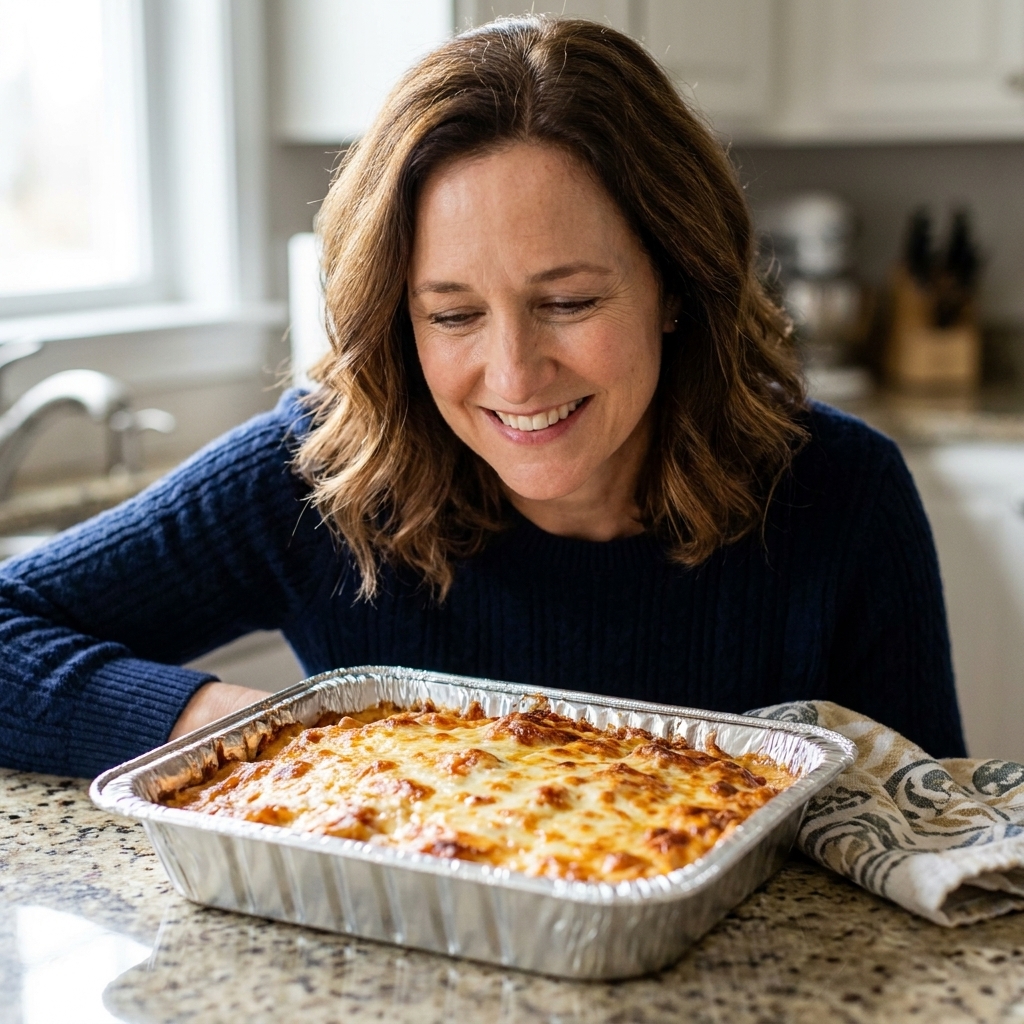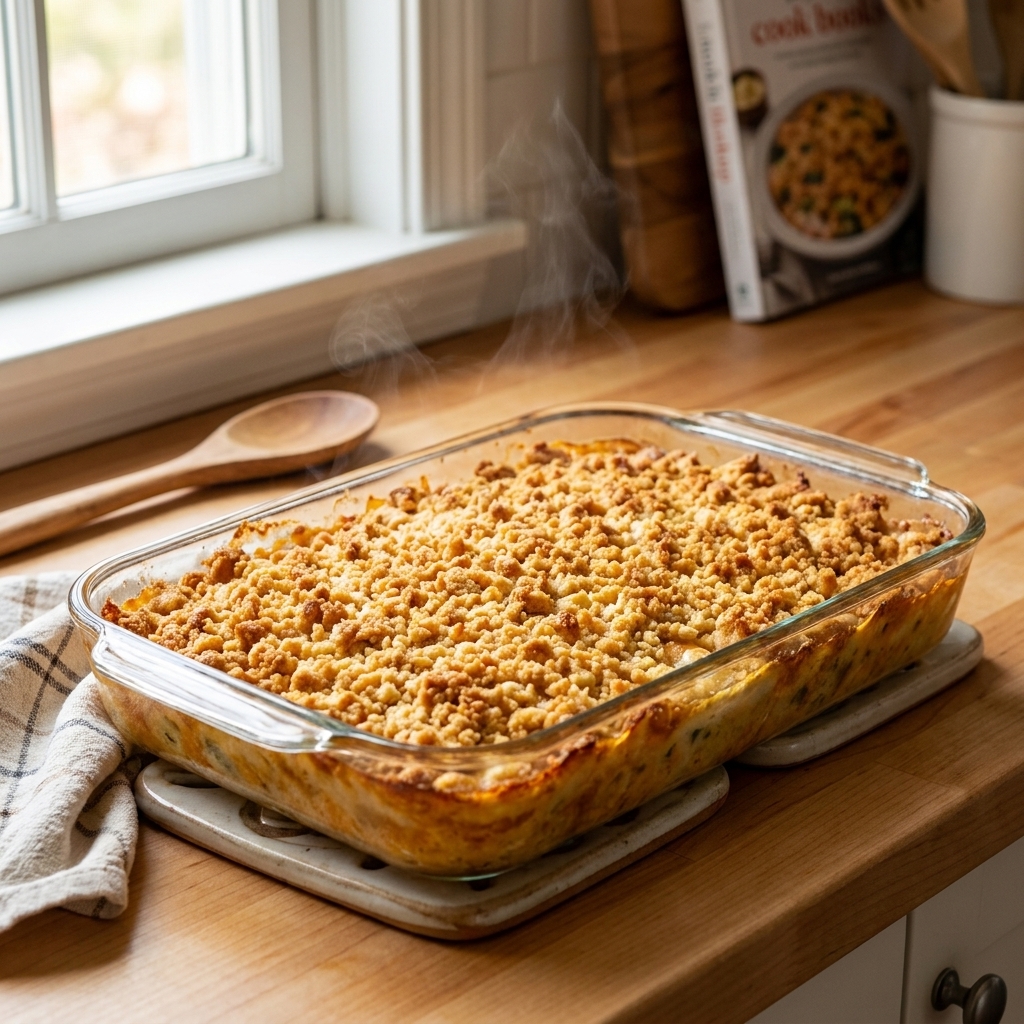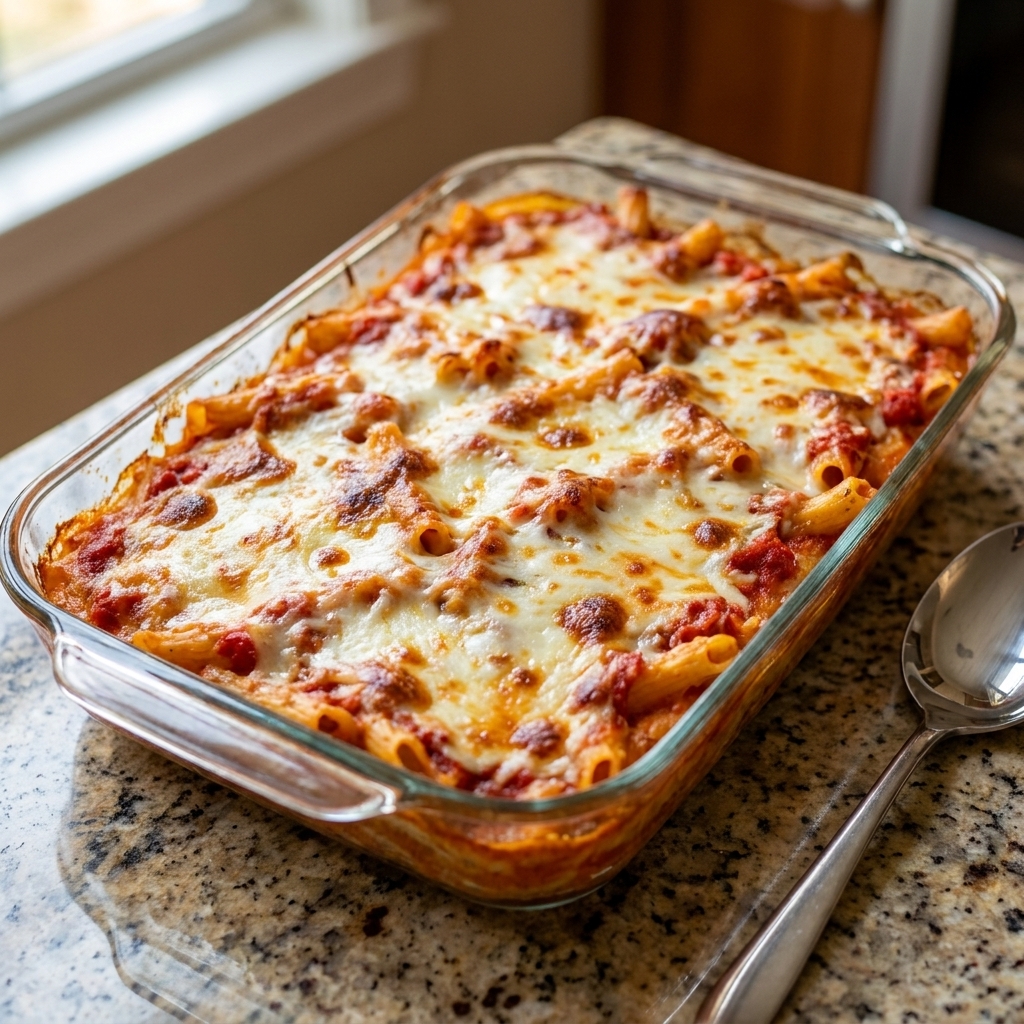

If you have ever hit one yellow light and watched your beautiful baked ziti become “baked ziti soup” in the passenger seat, welcome. I have been hauling 9x13s to Sunday dinners, school functions, and neighborhood potlucks for over two decades, and the good news is this: a spill-free casserole trip is mostly about stability, temperature, and sealing.
Below are my most reliable, real-life methods for getting a heavy casserole from your kitchen to the party without sliding, sloshing, or turning your car into a marinara crime scene.
Start with the right pan and lid
Your transport success starts before you even preheat the oven. Heavy casseroles shift because the pan flexes, the lid pops, or the whole thing is too full.
Pan choices that travel well
- Metal 9x13 (aluminum or stainless): Lightweight, less likely to crack, and great for bumpy drives.
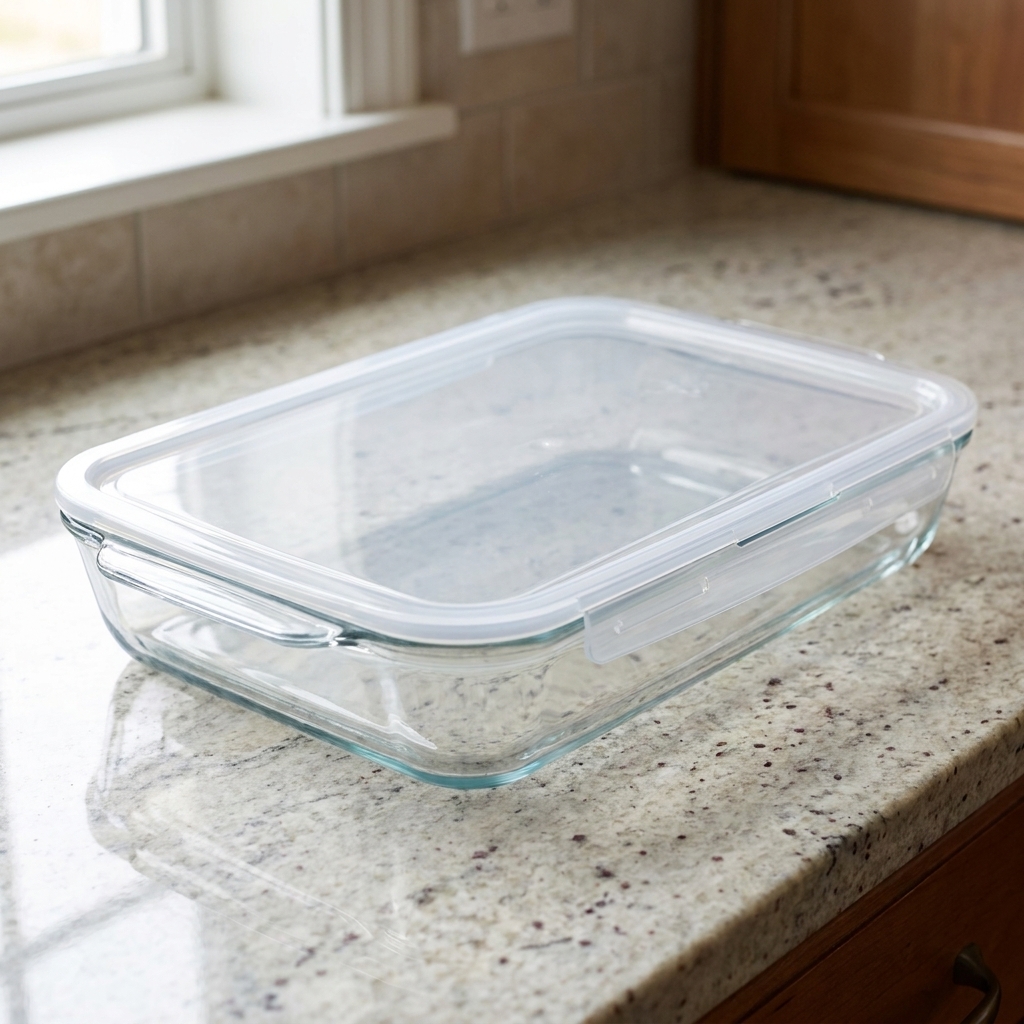
- Ceramic or glass: Gorgeous for serving, but heavier and more fragile. If you take these, plan extra stabilization and padding.
- Disposable foil pans: Fine for potlucks, but double-pan them. Slide the foil pan into a second foil pan or set it on a rimmed baking sheet for stiffness.
Lids that actually stay put
My top pick is a snap-on plastic lid made for a 9x13. If your pan set has one, use it. If not, these options work well:
- Press-and-seal plus foil: Use press-and-seal over the rim/opening (not pressed directly onto hot food), then wrap with heavy-duty foil for structure.
- Foil “crimp and fold” method: Use a single large sheet of heavy-duty foil, crimp tightly around the rim, then fold the corners like a present so they cannot peel back.
- Sheet pan cap: For casseroles with tall toppings, invert a rimmed sheet pan over the dish and secure with two to four long rubber bands or silicone bands once the dish is no longer very hot. Keep bands away from heat and faces when removing since they can snap.
Important: If the casserole is very hot, avoid tight plastic wrap or press-and-seal touching the food or sealing the dish airtight. Let it cool and stop steaming hard first so you do not trap steam, soften plastic onto the rim, or risk melting.
Control the slosh
Most spills happen because the casserole is too full or too loose when it leaves the house.
Leave headspace on purpose
If it is a saucy casserole (lasagna, enchiladas, baked pasta, breakfast strata), aim for at least 1/2 inch of space from the top to the rim. That little buffer is your shock absorber.
Let it rest before you move it
Right out of the oven, everything is bubbling and mobile. Let the casserole rest 15 to 30 minutes so it sets up. You will get cleaner slices later and far less slosh in the car.
Thicken smart for travel
If your recipe allows, use one of these gentle “travel insurance” tweaks:
- Reduce watery add-ins (like mushrooms or zucchini) by sautéing first.
- Use full-fat dairy or a slightly thicker sauce base.
- For casseroles with eggs (breakfast bakes), bake until the center is set, not just “barely jiggly.”
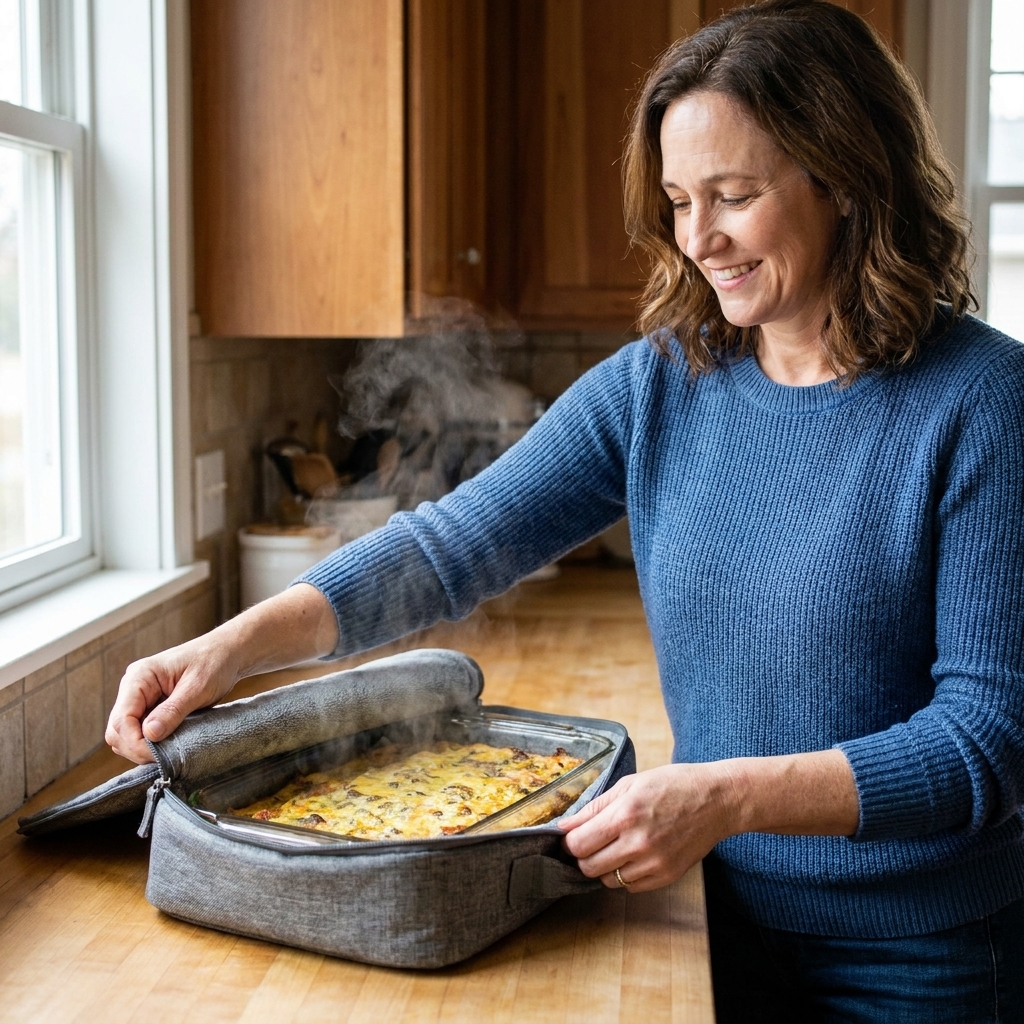
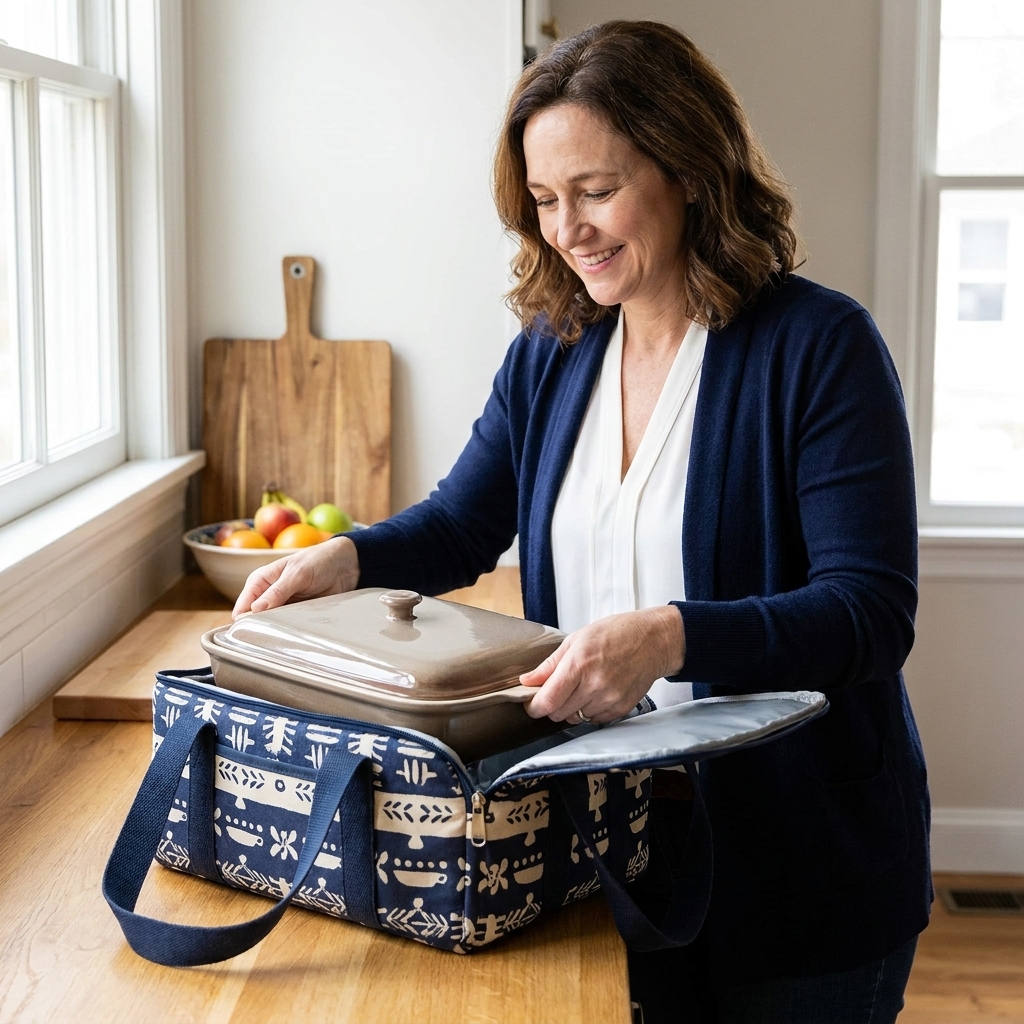
Insulated carriers
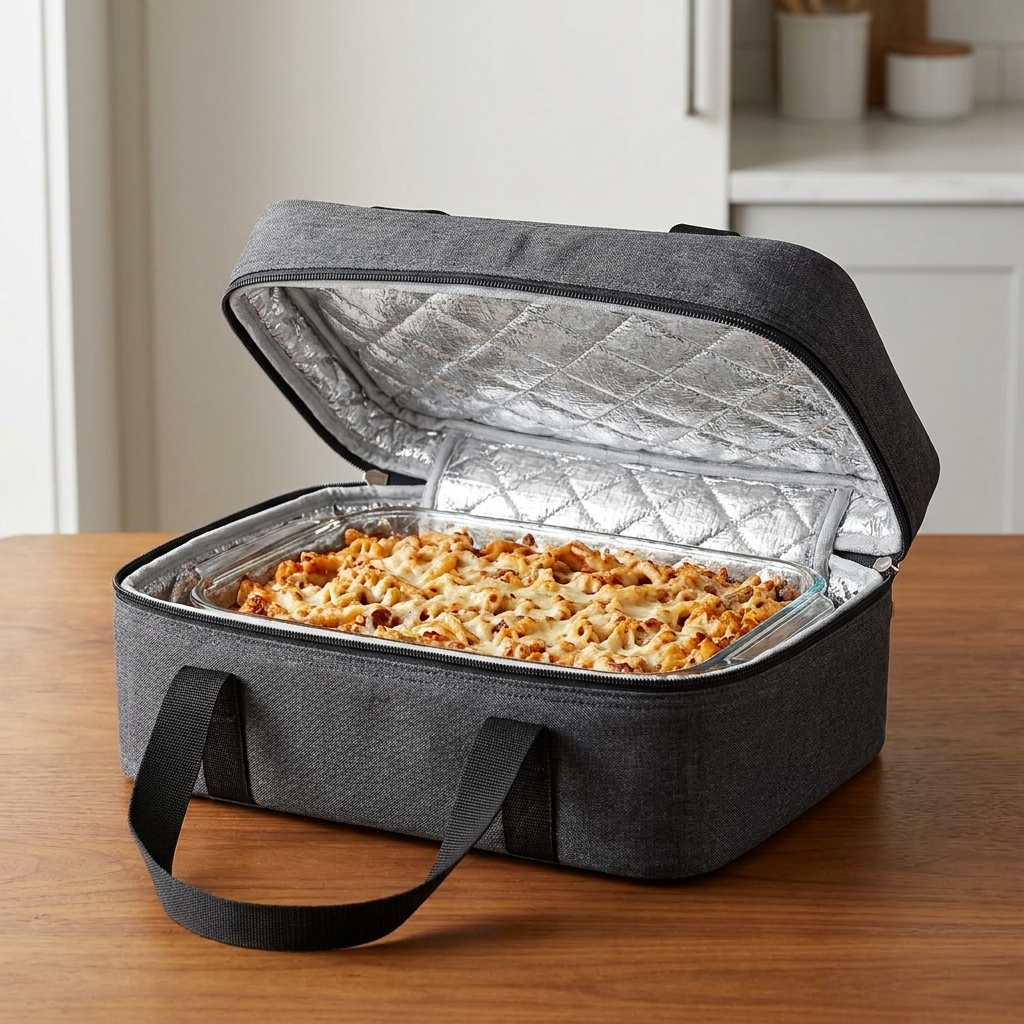
A carrier is not just for warmth. A good one also holds the pan snugly so it cannot skate around.
What to look for
- Structured sides or a firm insert so the bottom does not sag.
- Snug fit for a 9x13, not a huge tote where the dish can slide.
- Strong handles that feel secure with two hands.
- A flat base with grippy material or feet.
- Easy-to-clean liner, because life happens.
Hot vs cold rules
If you are carrying a hot casserole, pre-warming the carrier can help it hold temperature. One simple way is to place a warm towel inside for a few minutes, then remove it before loading the dish. Use a towel that is warm, not scorching, and make sure it will not damage synthetic liners. If you are carrying a chilled casserole, add a cold pack beside the dish, not on top of a delicate crust or cheese layer.
My no-spill car setup
I do the same setup every single time, even for short drives. It takes two minutes and, in my experience, prevents most messes.
The safest spot
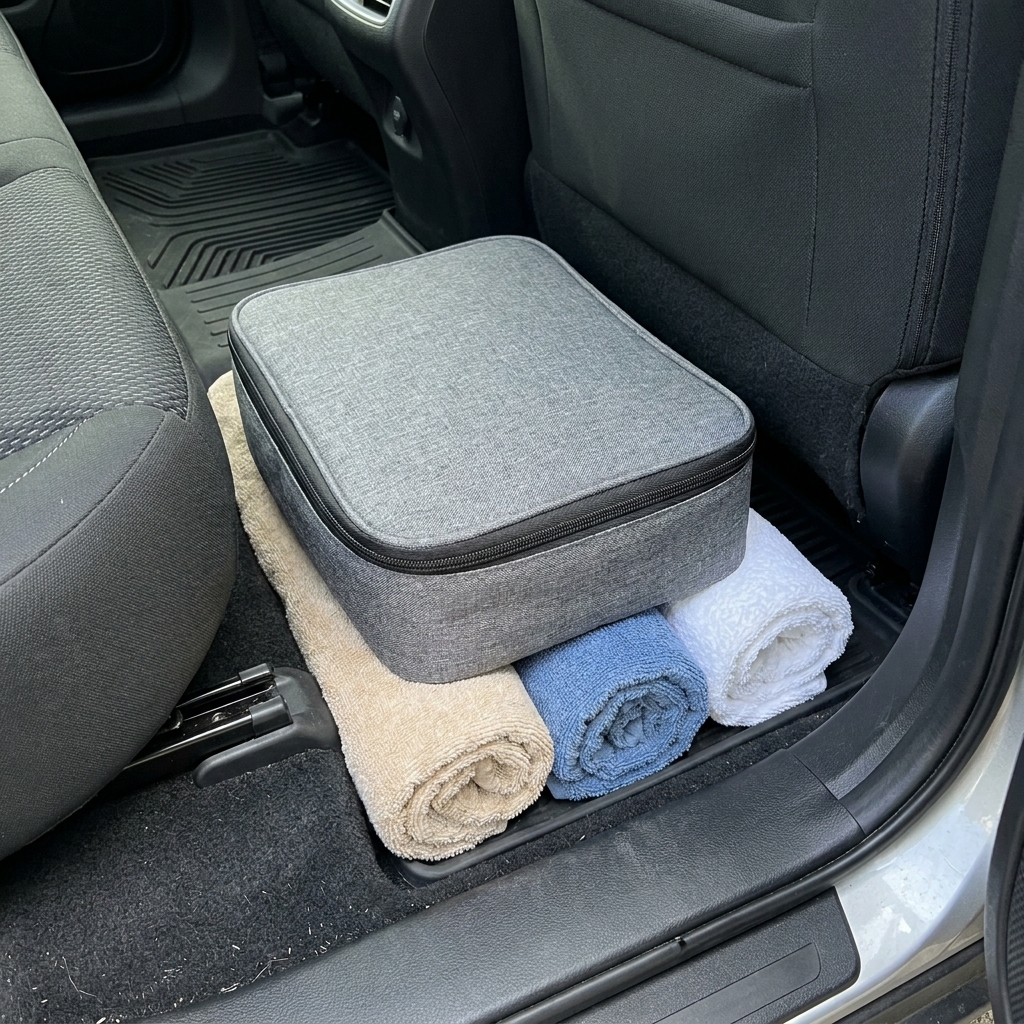
Often, the floor behind the front passenger seat is the most stable place because it is low, boxed in, and less affected by turns. That said, every vehicle is different. If your back floor has a big hump, rear vents, or an awkward slope, a flat cargo area (SUV or hatchback) or a level footwell spot works just as well. Seats are usually sloped and slick, which encourages sliding.
Level, wedge, brace
- Level: Put a folded towel, small blanket, or bath mat down first so the carrier sits level and does not tilt with the floor contour.
- Wedge: Wedge the carrier on both sides with something soft but firm, like a rolled towel, a small pillow, or a reusable grocery bag filled with dish towels.
- Brace: Slide the front passenger seat back until it gently braces the carrier so it cannot tip forward when you brake.
Hot-dish safety: Use oven mitts to load and unload, and set the dish on a heat-safe base (sheet pan, trivet, or folded towel). A hot glass or ceramic dish does not belong directly on upholstery.
If the casserole must ride on a seat, place it in a shallow laundry basket or box first, then use the seat belt to secure the basket. The basket keeps everything flat and gives the seat belt something to grab.
DIY hacks
You do not need fancy gear to transport a casserole like a pro. These are my tried-and-true pantry and linen closet tricks.
1) The rimmed sheet pan base
Set the casserole dish on a rimmed baking sheet before it goes into the carrier or box. If anything leaks, the sheet pan catches it. Bonus: it adds stiffness under foil pans.
2) The towel donut
Roll a bath towel into a thick snake, then form a ring. Nestle the dish or carrier inside the ring. It prevents side-to-side sway on turns.
3) The cooler method
A hard-sided cooler works for hot or cold dishes. Line the bottom with a towel, place the casserole inside, then pack towels around it so it cannot shift. Close the lid and you have a stable, insulated vault.
4) The cling-and-crimp backup seal
For extra messy casseroles, do a two-step seal:
- First layer: press-and-seal or plastic wrap only once the dish has cooled enough that the plastic will not soften, melt, or touch hot food.
- Second layer: heavy-duty foil crimped firmly around the rim.
This helps prevent slow leaks that you do not notice until you lift the dish out of the carrier.
Special situations
Tall toppings and bubbly cheese
If you have a dome of mozzarella or a crunchy breadcrumb layer, you do not want foil glued to your masterpiece. Use these instead:
- Toothpick tent: Insert a few toothpicks around the perimeter and drape foil over them so it does not touch the cheese. Remove toothpicks before serving.
- Pan cap: Invert a rimmed sheet pan over the top as a lid.
- Deep roaster: Place the casserole dish inside a deeper roasting pan and cover the roaster with foil.
Saucy or gravy-heavy dishes
Transport them slightly cooler and reheat on arrival. Very hot liquid is the most likely to slosh and leak. If you can, bring extra sauce or gravy in a tight container and add it right before serving.
When you arrive
A calm landing is just as important as the drive.
- Carry with two hands, even if your carrier has handles. One hand under the bottom is my rule.
- Let it sit 5 to 10 minutes before cutting. This helps everything settle again.
- Reheat safely: If it cooled off, reheat until the center is steaming hot. For leftovers and casseroles containing meat, poultry, or eggs, a safe benchmark is 165°F.
Also, I always toss a small cleanup kit in the car: paper towels, a trash bag, and a pack of wipes. It is not pessimism. It is experience.
Quick checklist
- Dish is rested and not filled to the brim
- Lid is secure (snap lid or tight foil crimp)
- Dish sits on a flat, stable base (sheet pan, carrier insert, or box)
- Car placement is low and braced (floor footwell or flat cargo area)
- Wedges in place (rolled towels on both sides)
- Cleanup kit packed (paper towels, trash bag, wipes)
- Serving utensil packed (I keep an “emergency spoon” in my glove box)
FAQ
Can I transport a casserole still hot from the oven?
Yes, but let it rest first so it firms up. Keep it covered, set it in an insulated carrier or cooler, and brace it so it cannot tip. Drive like you are holding a pot of soup on your lap, because basically you are.
Is it better to transport hot and eat right away, or transport cold and reheat?
If it is very saucy, top-heavy, or you have a longer drive, I prefer transporting cold and reheating at the destination. For a short drive and a sturdier bake (like a dense mac and cheese), hot transport is fine.
How do I keep the bottom from getting soggy during transport?
Steam is the culprit. Rest the casserole uncovered for 10 to 15 minutes before covering, and avoid sealing a piping hot dish airtight. If you need a crisp topping, re-crisp uncovered in a hot oven for a few minutes after you arrive.
What is the safest way to transport a glass baking dish?
Prevent sudden temperature changes and protect it from impact. Let it cool slightly before moving, use a padded carrier or towel-lined box, and keep it low in the car where it is less likely to fall.