
If you have ever stood in the kitchen holding your favorite 9x13 and thought, “I really do not want to lose you at the church potluck,” you are my people. I love a sturdy ceramic dish, but I also love dropping off dinner for a new baby without worrying about getting my bakeware back.
Here is the honest truth: disposable foil pans and reusable bakeware both work beautifully. They just bake a little differently. The goal is the same either way: hot, comforting casserole with a set center, a bubbly top, and no dreaded soggy bottom.
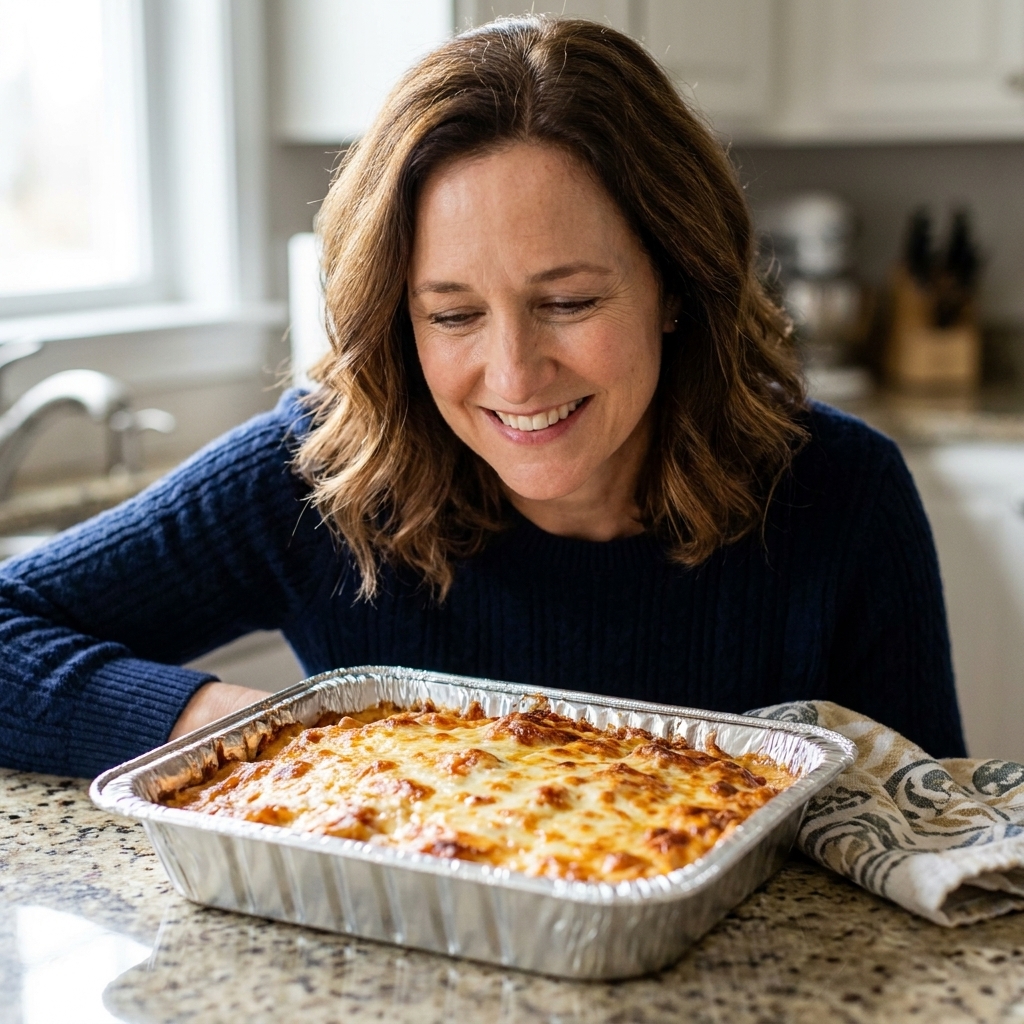
At-a-glance: which should you use?
Choose disposable foil pans when
- You are contributing to a potluck and do not want to track down your dish later.
- You are stocking a meal train where the family may not have time to wash and return anything.
- You are freezing multiples and want stackable, lightweight pans.
- You are delivering food to a place where you might not see the recipient again (hospital waiting room meals, out-of-town family, funeral receptions).
Choose reusable bakeware when
- You want the most even baking and best browning, especially for thick casseroles.
- You are serving at home or at a gathering where you can easily bring your dish back.
- You are baking something delicate like a custardy breakfast bake that benefits from steady heat.
- You want less waste and do not mind washing up.
If you are on the fence, my compromise is simple: use foil for delivery and meal trains, use your heavy dish for home. When I need to bake in foil but want sturdier performance, I double up the pan and set it on a sheet pan for support.
How foil pans bake differently
Reusable ceramic, glass, and heavy metal pans act like a heat battery. They warm slowly, then hold steady heat. Foil pans are thin and light, so they heat up quickly and cool down quickly.
What you may notice
- Edges can cook faster in foil because thin metal transfers heat quickly.
- Doneness can be less even, especially in very full pans or when the oven temperature swings (like when the door gets opened repeatedly).
- Bottom browning can be less predictable. It depends on rack position, your oven, and whether the pan is sitting on a sheet pan.
- Carryover cooking is smaller, so do not count on much additional cooking after you remove it from the oven.
None of this is a deal-breaker. It simply means you should bake by temperature and doneness, not only by the timer, and make a couple of smart adjustments.
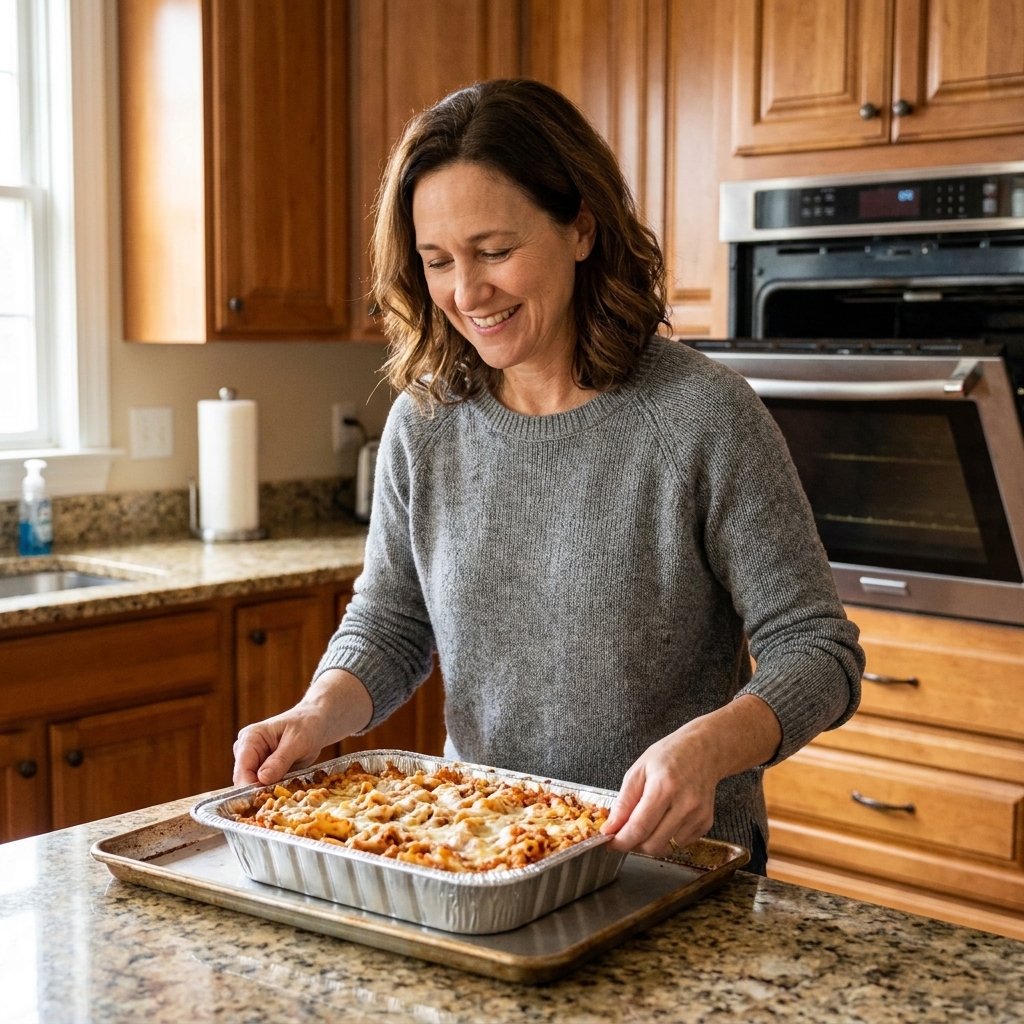
Foil pan adjustments
These are the tweaks I use most often when a recipe was written for a heavy 9x13 and I am moving it into a single-use aluminum pan.
1) Match the pan size
Not all “9x13” foil pans are created equal. Some are narrower at the base, some are deeper, and that changes bake time.
- If your foil pan is deeper than your usual dish, the casserole will likely need more time because the center is thicker.
- If the foil pan has a smaller bottom, the casserole may bake up thicker than expected, even if the top looks like the same size.
When in doubt, leave a little headspace and plan to use doneness cues instead of the exact timer.
2) Support the foil pan
Set it on a rimmed baking sheet before filling it. This prevents warping and makes it easier to move in and out of the oven. One tradeoff: a sheet pan can slightly reduce bottom browning in some ovens, so if you care about a crispier bottom, see the rack tips below.
3) Use smart rack placement
- For even baking: start on the middle rack.
- For a little more bottom heat: move to the lower third of the oven.
- Avoid extremes: too close to the bottom element can overbrown edges, and too high can brown the top before the center is hot.
If you are baking on a sheet pan and want more browning, a simple trick is to put the sheet pan in the oven while it preheats, then carefully set the filled foil pan on the hot sheet pan.
4) Watch the edges: consider lowering the oven by 25°F
If your casserole is thick, creamy, or cheese-heavy and tends to brown fast on top, drop the temperature by about 25°F and bake a bit longer. This slows down edge overcooking and gives the center time to heat through.
- Example: If the recipe says 375°F in ceramic, try 350°F in foil and start checking around the original time mark.
5) Or keep the temperature and start checking earlier
If your casserole is thin or already cooked (like a leftover turkey tetrazzini where you are mostly heating through), you can often keep the original temperature and simply start checking 5 to 10 minutes earlier.
6) Tent earlier to prevent a too-brown top
Foil pans can give you gorgeous browning fast, until it goes one minute too far. If the cheese is browning but the center is not hot yet, lay a loose piece of foil over the top.
7) Use doneness cues, not just time
- Center temp: For casseroles with raw or leftover meat, poultry, or eggs, aim for 165°F in the center. For fully cooked, vegetarian, or cheese-and-pasta style bakes, bake until it is hot throughout and bubbling.
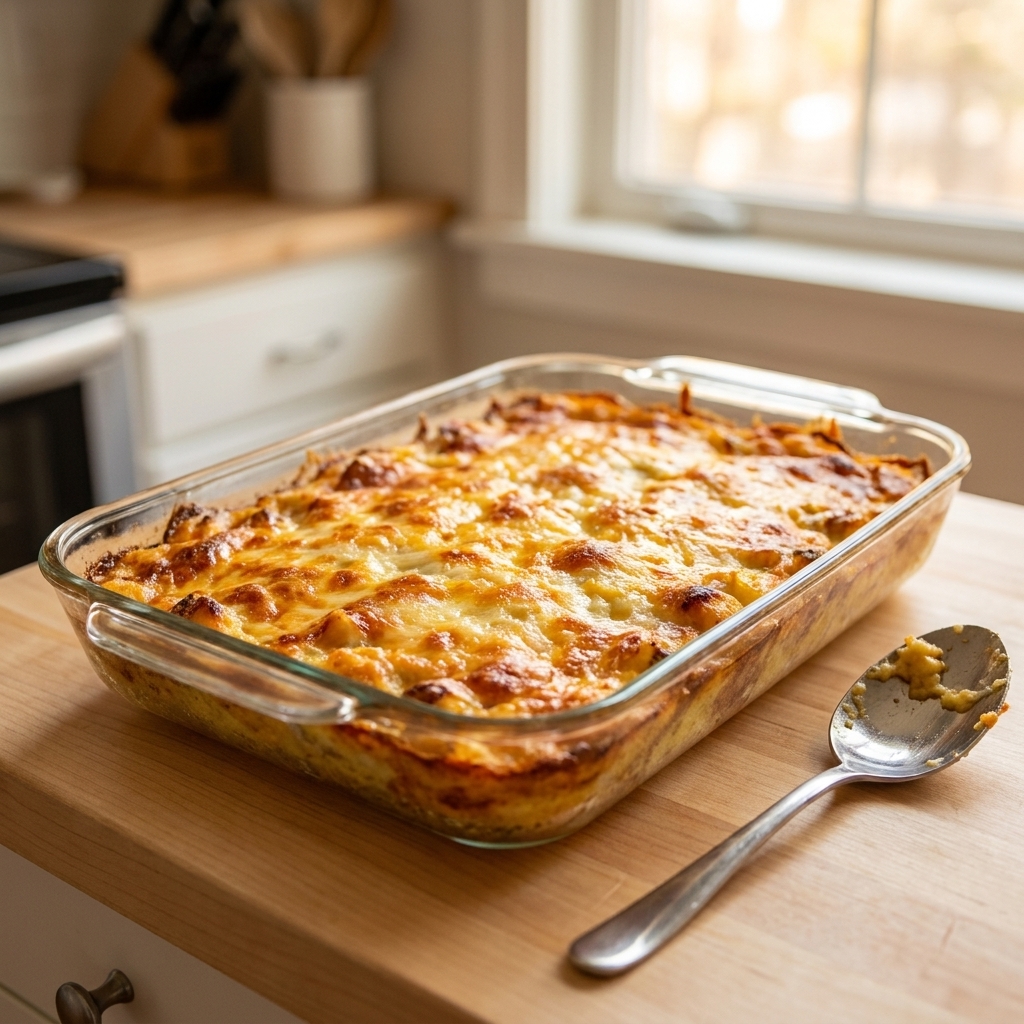
- Visual: Bubbling around the edges and a gently bubbling center.
- Texture: The middle should look set, not sloshy, when you jiggle the pan.
Switching to a heavy dish
If you are taking a recipe intended for a disposable pan and baking it in ceramic or glass, expect more even heat, plus a longer warm-up.
- Add time: Start by adding 5 to 15 minutes, depending on thickness and whether it is coming from the fridge.
- Check later: A heavy dish holds heat, so once it starts bubbling it can move quickly to the finish.
- Let it rest: Ceramic and glass give more carryover cooking, so a 10 to 15 minute rest helps the casserole set cleanly for serving.
Transport, serving, and reheating
Transport and spill control
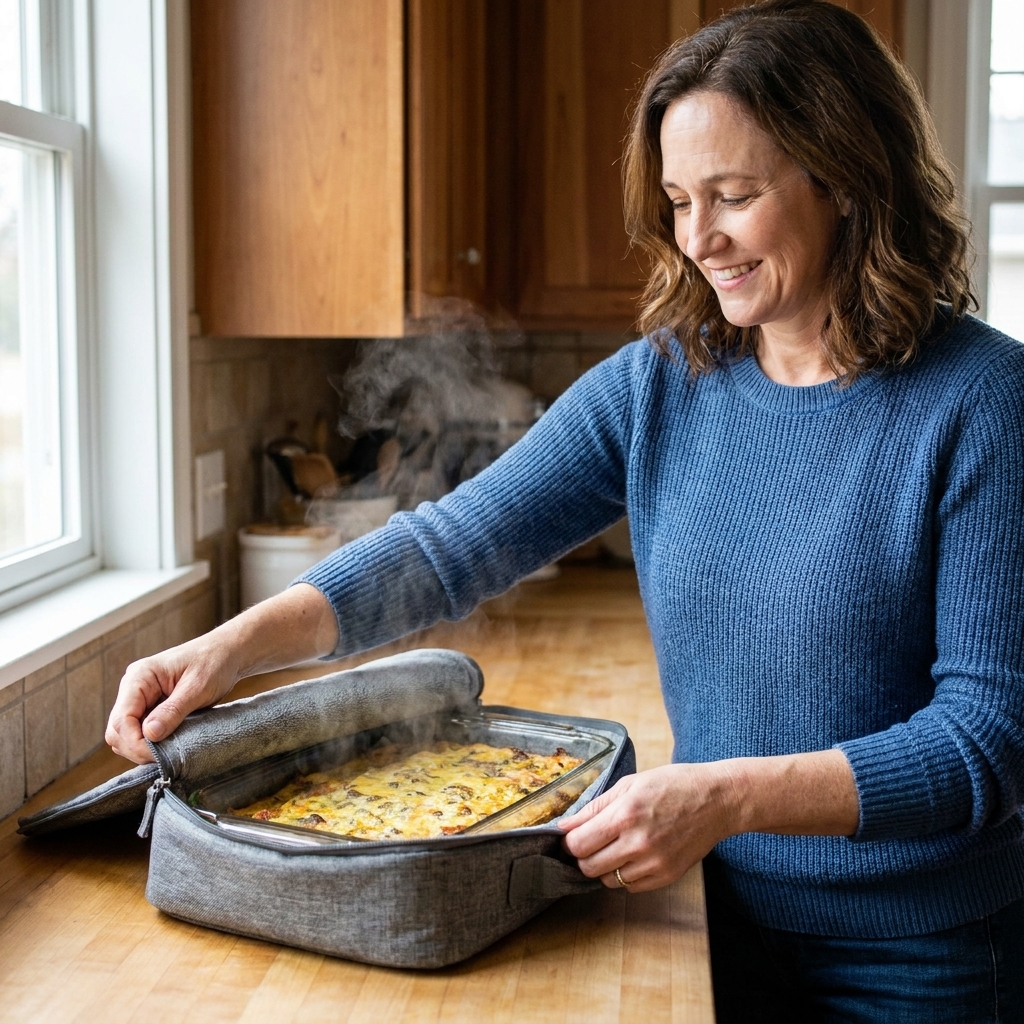
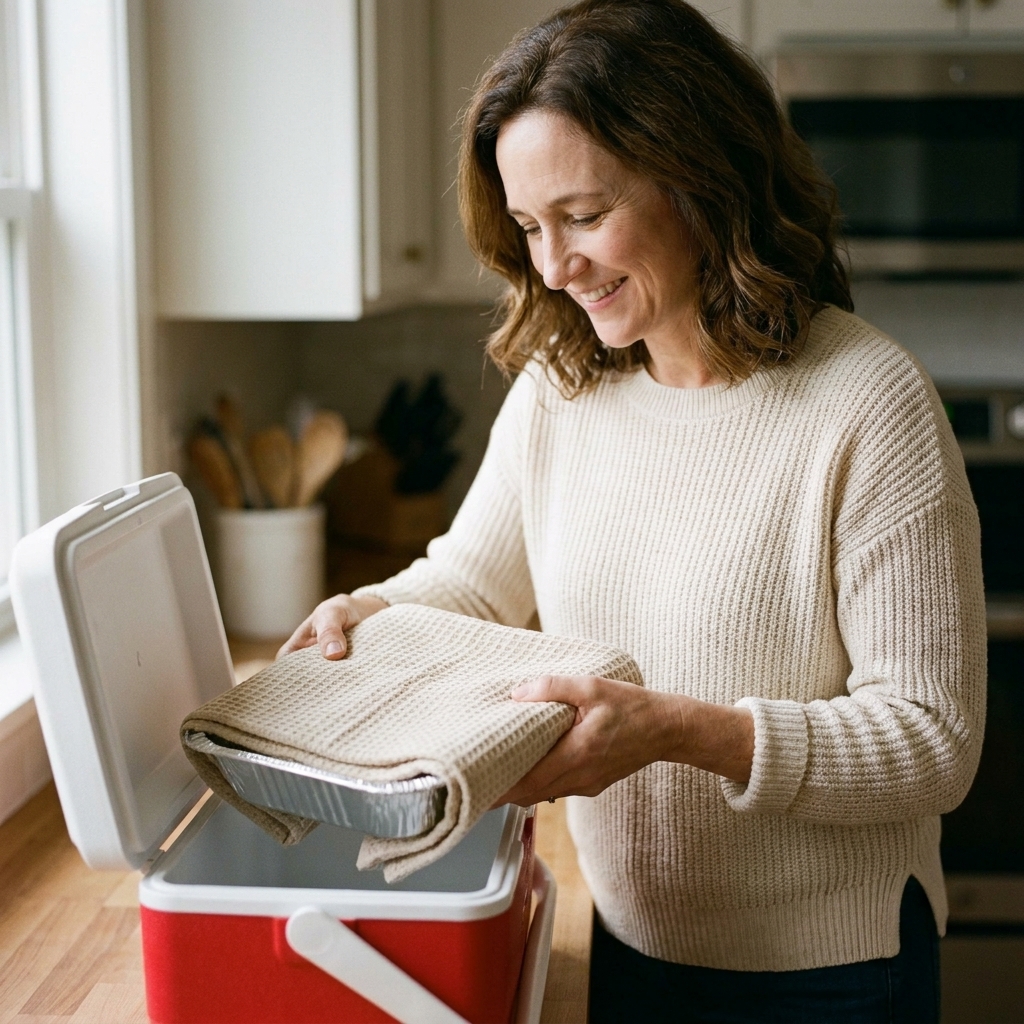
- Foil pan: Use a snug foil lid if it comes with one. If not, cover tightly with heavy-duty foil, then wrap the whole pan in a towel for insulation. Always carry it on a sheet pan or in a sturdy box so it does not flex.
- Reusable dish: A tight-fitting lid is gold. If you do not have one, plastic wrap plus a foil layer works, but remove plastic before reheating.
Keeping it hot
Foil loses heat quickly, so plan for that. If the casserole must stay hot for more than 30 minutes before serving, insulation matters.
- Wrap the covered pan in a towel and place it in a small cooler (no ice). It is my favorite potluck trick.
- If you are delivering a meal, include a note: “Reheat covered at 350°F until bubbly and 165°F in the center.”
Reheating without drying out
- Cover first: Reheat covered for most of the time. Uncover at the end to re-crisp the top.
- Add moisture if needed: For pasta bakes, a splash of broth or a few tablespoons of sauce around the edges helps prevent dry corners.
- Go gentle: 325°F to 350°F is a sweet spot for reheating casseroles.
Freezer tips
Meal train casseroles often start in the freezer, and foil pans are very freezer-friendly. The trick is protecting the surface and managing moisture.
My no-fail freeze method for foil pans
- Cool the casserole completely.
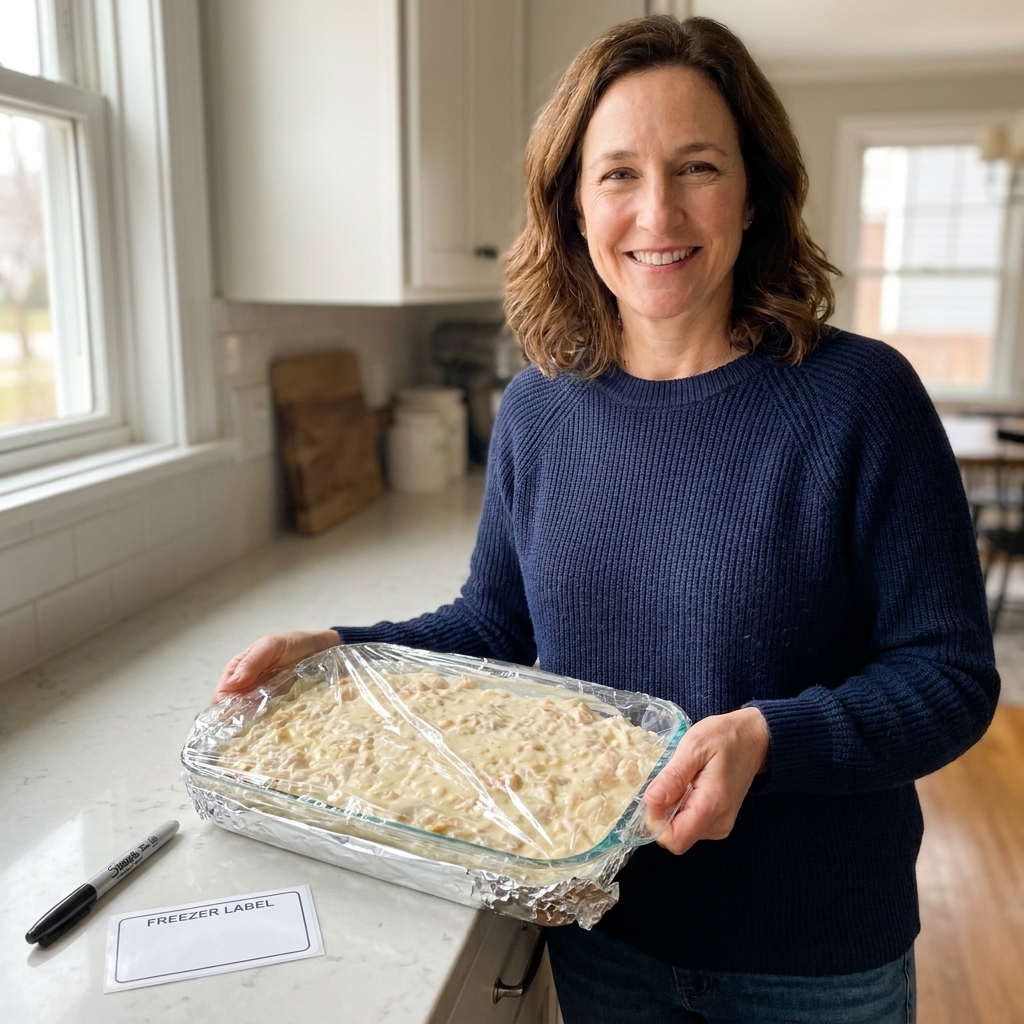
- Press a layer of parchment or plastic wrap directly onto the surface (this reduces ice crystals).
- Cover tightly with heavy-duty foil. Then add a second layer of foil for long storage.
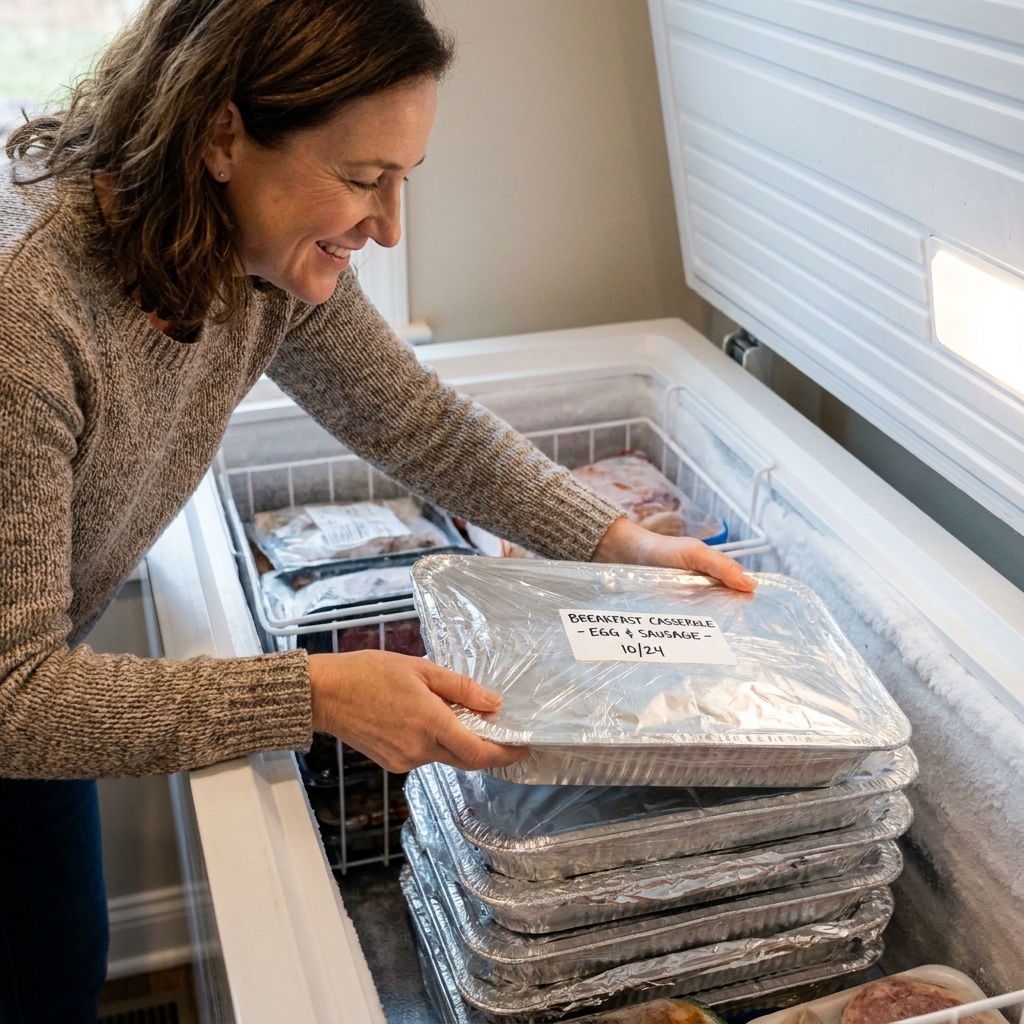
- Label with the dish name, oven temp, and a simple reheat note.
- Freeze flat on a sheet pan until solid, then stack.
Avoiding soggy bottoms after freezing
- Thicken sauces slightly before baking and freezing. Watery sauces weep as they thaw.
- Par-cook watery vegetables like zucchini, mushrooms, and spinach and drain well.
- Let it thaw in the fridge when possible. A full thaw means more even reheating and less liquid pooling.
If you must bake from frozen, plan on a longer covered bake, then uncover at the end to drive off extra moisture.
Pros and cons
Disposable foil pans
- Pros: No dish return stress, lightweight, cheap, great for freezer meals, easy for recipients.
- Cons: Flimsier, more prone to over-browned edges, loses heat fast, can bend and spill, not as pretty on the table.
Reusable bakeware (ceramic, glass, heavy metal)
- Pros: Even baking, better heat retention, sturdier for layering, prettier for serving, less waste.
- Cons: You have to get it back, heavier to carry, more expensive, can crack if shocked with temperature changes.
My go-to picks
For potlucks
If I am feeding a crowd and want stress-free cleanup, I use a thicker steam-table style foil pan (the sturdy, deeper kind sold for buffet service) and bake it on a sheet pan. I bring a serving spoon and a backup roll of foil because someone always needs it.
For meal trains
I almost always choose foil. Families are busy, dishes get lost, and nobody needs one more thing to remember. If the meal is meant to be frozen, foil is the easiest for labeling and stacking.
For baking at home
I reach for my heavy 9x13 because it bakes evenly and holds heat long enough that everyone can get seconds without reheating.
Quick FAQ
Do foil pans cook faster than glass or ceramic?
Sometimes the edges cook faster, but overall bake time depends on how full the pan is, how deep it is, and your oven. Plan to check early for browning, then confirm doneness with bubbling and, for casseroles with meat or eggs, a 165°F thermometer reading.
Should I put a foil pan directly on the oven rack?
You can, but I do not recommend it for most casseroles because it is easy to spill when the pan flexes. If you want more bottom browning, you can bake it on a sheet pan for stability, then (carefully) slide the foil pan onto the rack for the last few minutes once the structure has set.
Can I broil the top in a foil pan?
Yes, but stay close. Foil pans can go from golden to scorched quickly under the broiler.
Is it safe to bake acidic casseroles (tomato sauce) in aluminum?
For typical casserole bake times, it is generally fine. Long contact is the bigger issue. If you are storing very acidic foods in the pan for a long fridge hold, you may notice discoloration or a metallic taste. For make-ahead tomato-heavy dishes, I prefer to assemble shortly before baking, or use a reusable dish for longer storage.
Bottom line
If you are headed to a potluck or contributing to a meal train, disposable foil pans are a kindness to your future self and to the recipient. Just remember the three big rules: support the pan, watch browning early, and bake to doneness.
And if you are serving at home or want the most reliable, even bake for a special casserole, reusable bakeware is still the gold standard. Either way, you are showing up with comfort food. That is always the right choice.