
If you have one trusty 9x13 pan that does 90 percent of the work in your kitchen, I see you. Mine has hauled baked ziti to potlucks, pulled off holiday breakfasts, and saved more weeknights than I can count. The problem is simple: the second you build a freezer casserole in that pan, your best bakeware is stuck in the freezer until you need it.
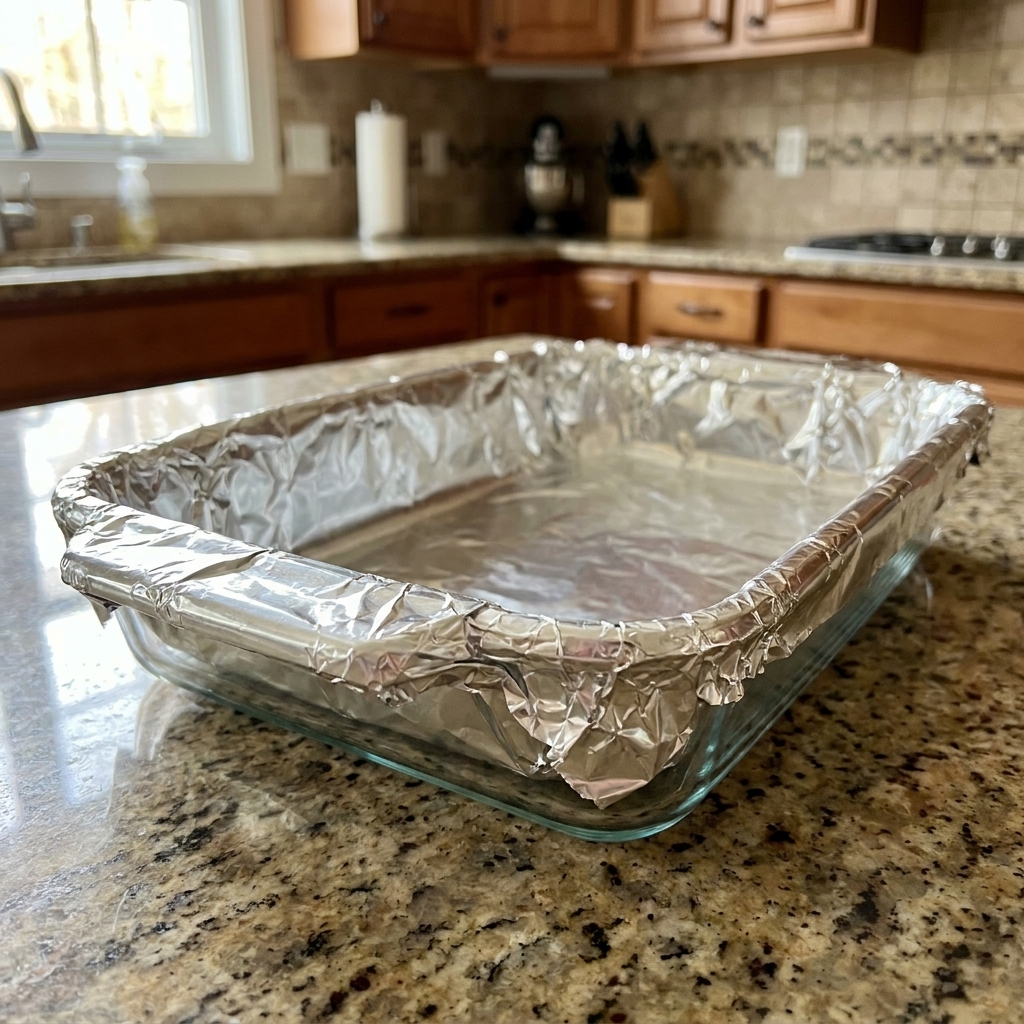
Enter my favorite little “organized mom” trick: the foil sling. You line the pan with foil (with handles), assemble your casserole right in it, freeze it until firm, then lift the whole thing out and wrap it up for storage. When you’re ready to bake, you drop that frozen block right back into the same pan like it was made for it. Because it was.
Why it works
- Your bakeware stays free. Once the casserole is frozen firm, the pan comes right back into rotation.
- Perfect fit on bake day. No guessing if a frozen dish will fit into another pan.
- Better texture. A tight wrap around a frozen block helps prevent freezer burn, ice crystals, and that dreaded watery layer.
- Easier storage. A foil-wrapped block stacks neatly, especially if you freeze it flat first.
What you need
- Heavy-duty aluminum foil (recommended) or regular foil doubled up
- Your casserole pan (9x13 is my workhorse, but this works for 8x8 and loaf pans too)
- Nonstick spray or a swipe of butter or oil
- Plastic wrap, freezer paper, or a freezer bag for the outer wrap
- Permanent marker for labeling
- A baking sheet (helpful for carrying to the freezer and keeping the bottom flat)
Foil note: If your casserole is heavy (think lasagna, enchiladas, baked pasta), heavy-duty foil is worth it. Regular foil can tear right when you’re feeling proud of yourself.
Make a foil sling
1) Line the pan two ways
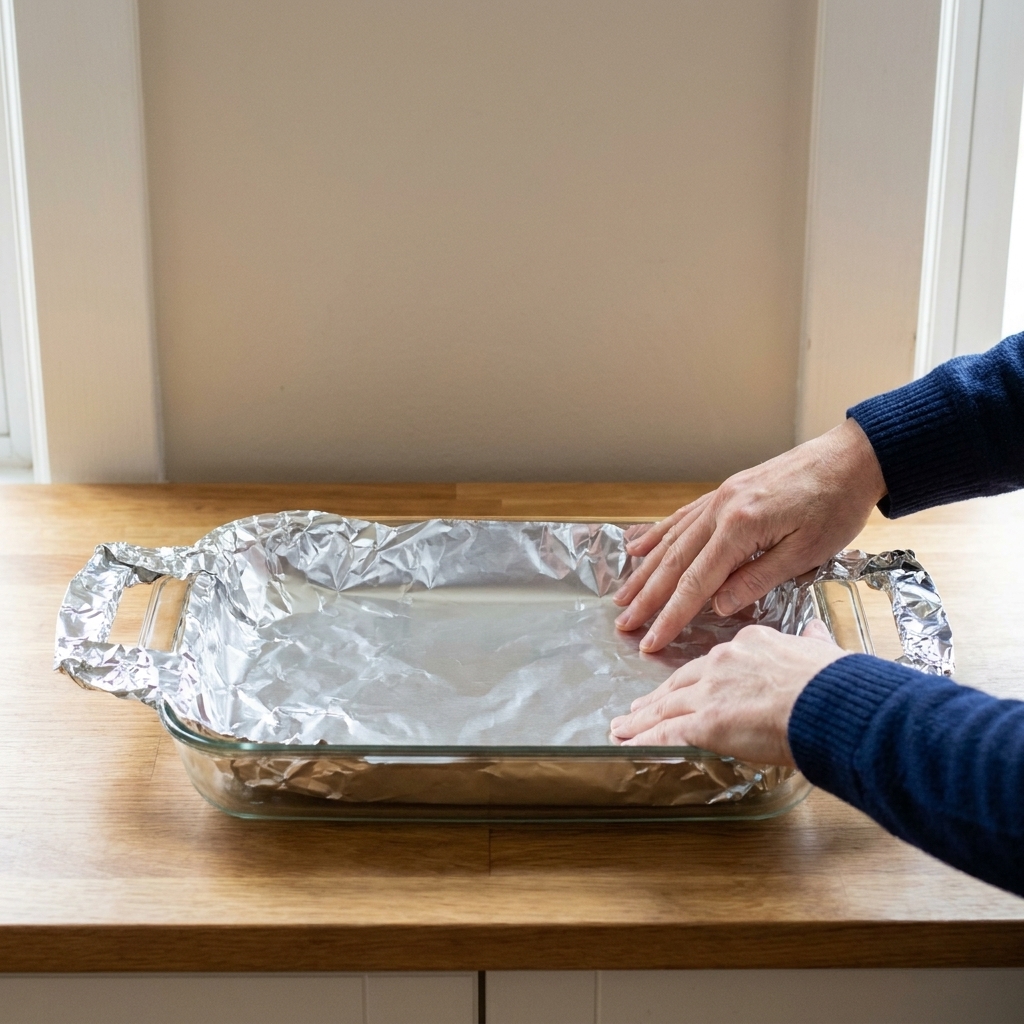
Tear off a long sheet of foil and lay it across the pan so it goes up the sides and overhangs by a few inches on two opposite sides. Press it into the corners.
Add a second sheet perpendicular to the first, again leaving overhang. You want a crisscross so the casserole has support in both directions.
2) Grease the foil
Spray lightly with nonstick spray or rub with oil. This matters most for cheesy tops and sticky sauces. It also helps the casserole release cleanly when you lift it out.
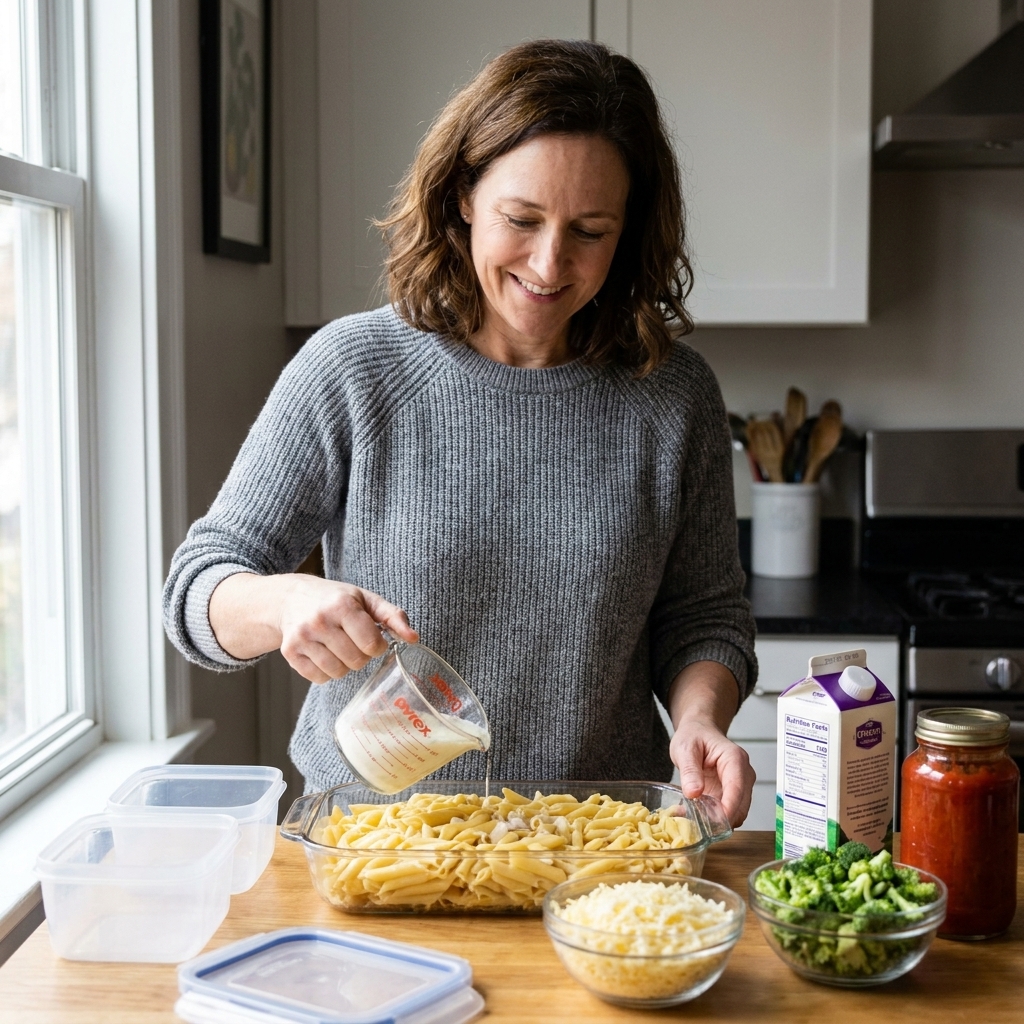
3) Assemble the casserole
Build your casserole as usual. If your recipe normally bakes uncovered, you can still freeze it covered. We’ll talk bake day adjustments in a minute.
My moisture-control habit: Cool any hot components first. Warm fillings create steam, steam turns into ice, and ice turns into extra water in the bake. That is how you get a soft, soggy base.
One more thing: Leave a little headspace. It makes wrapping easier and also gives the casserole room if it expands slightly as it freezes.
4) Freeze until firm
Set the whole pan on a baking sheet (especially if your freezer has wire shelves) and freeze until the casserole is firm all the way through. For most 9x13 casseroles, plan on overnight.
5) Lift out, wrap, and label
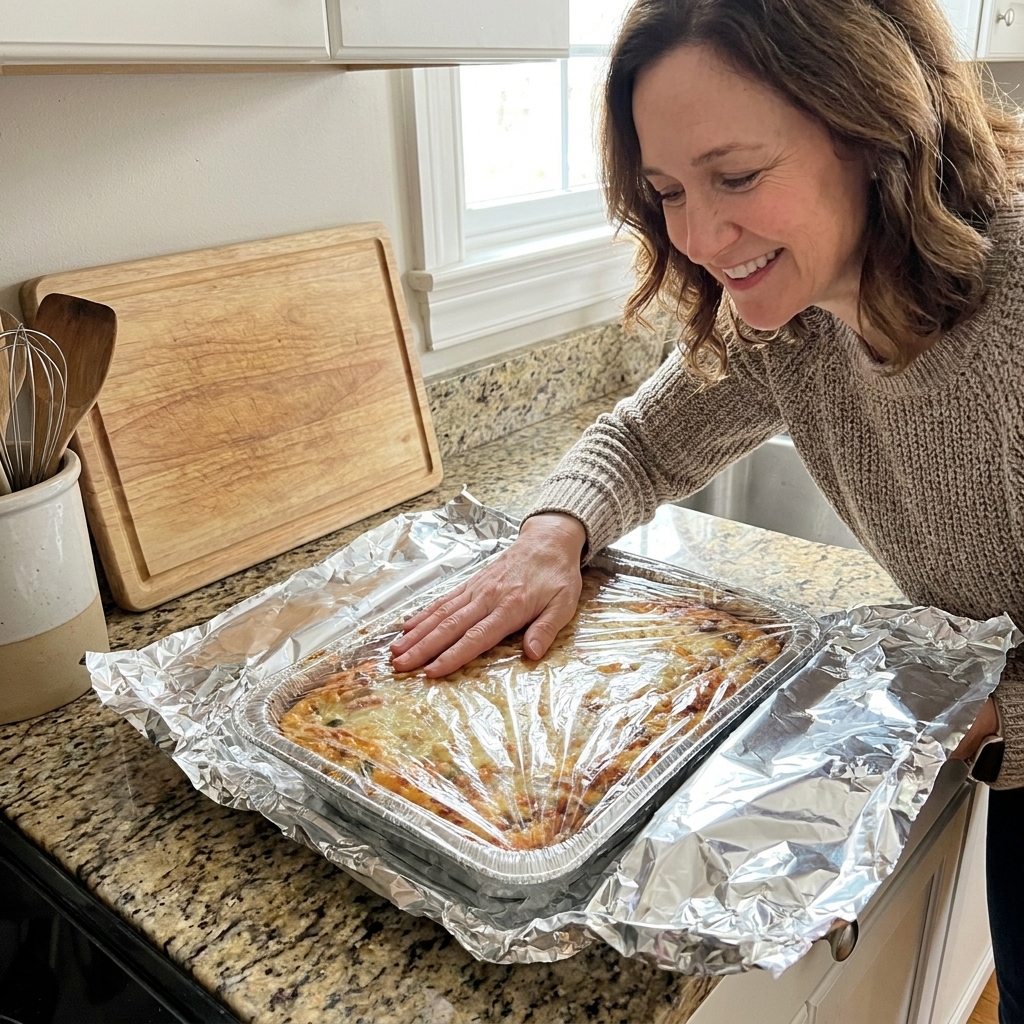
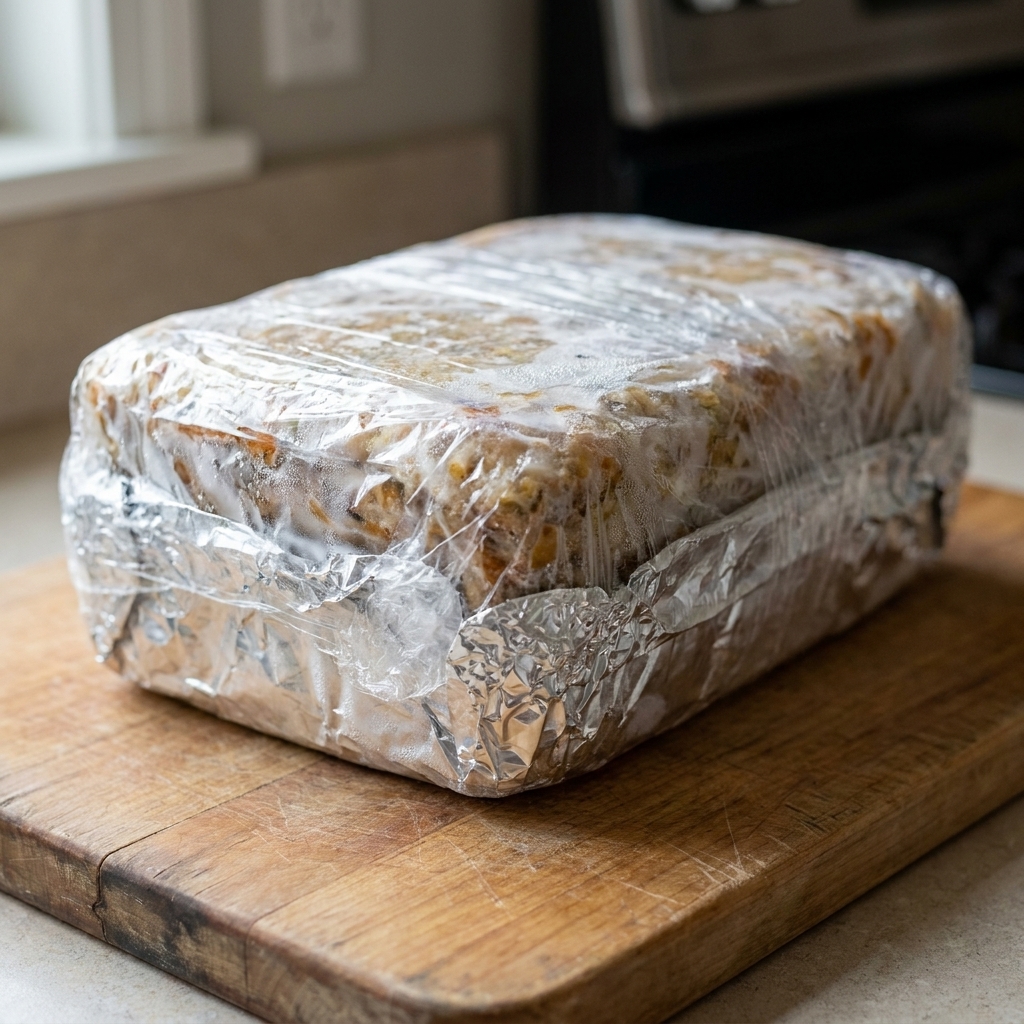
Once frozen, grab the foil “handles” and lift the block straight up and out. Set it on the counter or a cutting board.
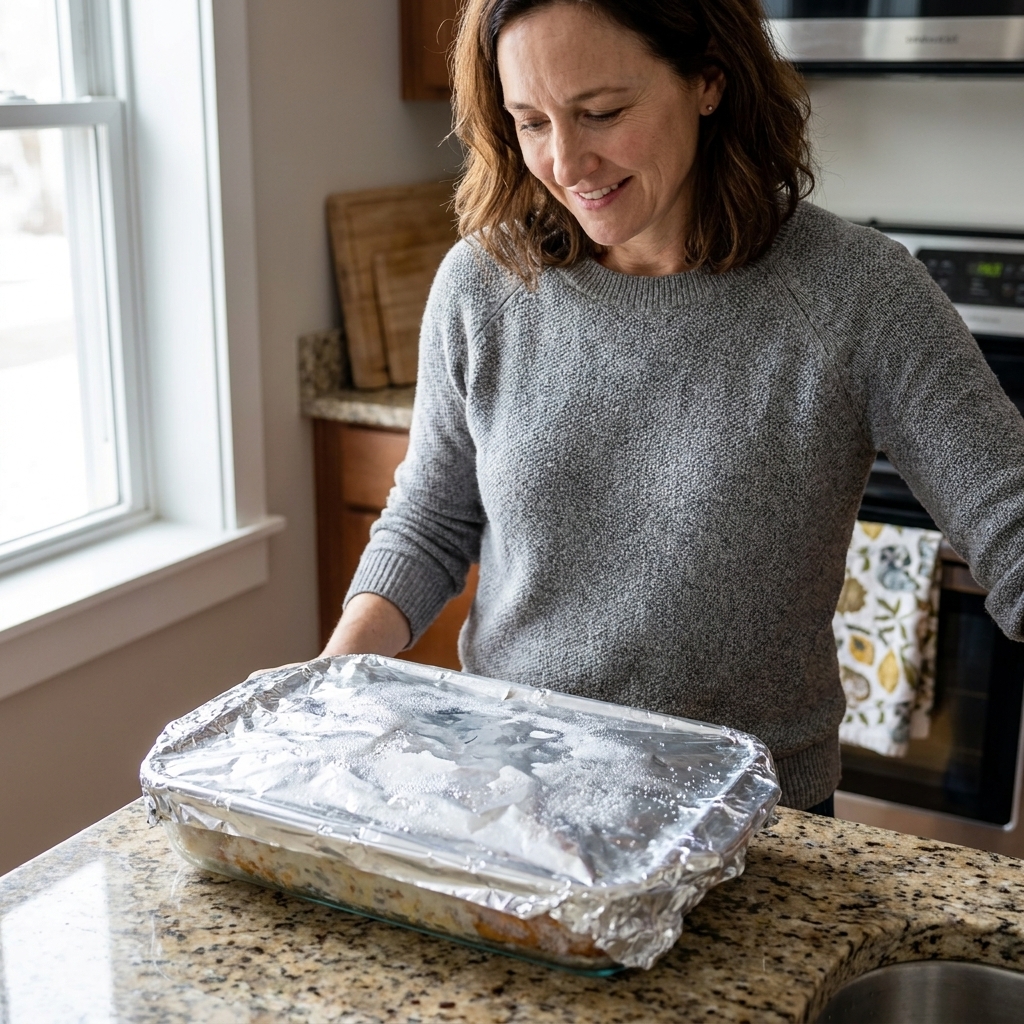
Wrap tightly in an extra layer of foil, pressing out air as you go. Then add plastic wrap or slide it into a large freezer bag for insurance. Label with:
- Name of casserole
- Date
- Baking temperature
- Covered or uncovered
- Frozen baked or unbaked
- A rough bake-time note (like “add 30 to 60 min if frozen”)
- Any add-ons (like “add cheese last 10 minutes”)
6) Put your pan away
This is the best part. Wash if needed, dry, and put that pan right back where it belongs. Future you will feel wildly capable.
Bake day
Option A: Bake from frozen
- Preheat the oven.
- Unwrap the frozen casserole block completely.
- Set it back into the same pan.
- Cover with foil (unless the recipe bakes uncovered the whole time).
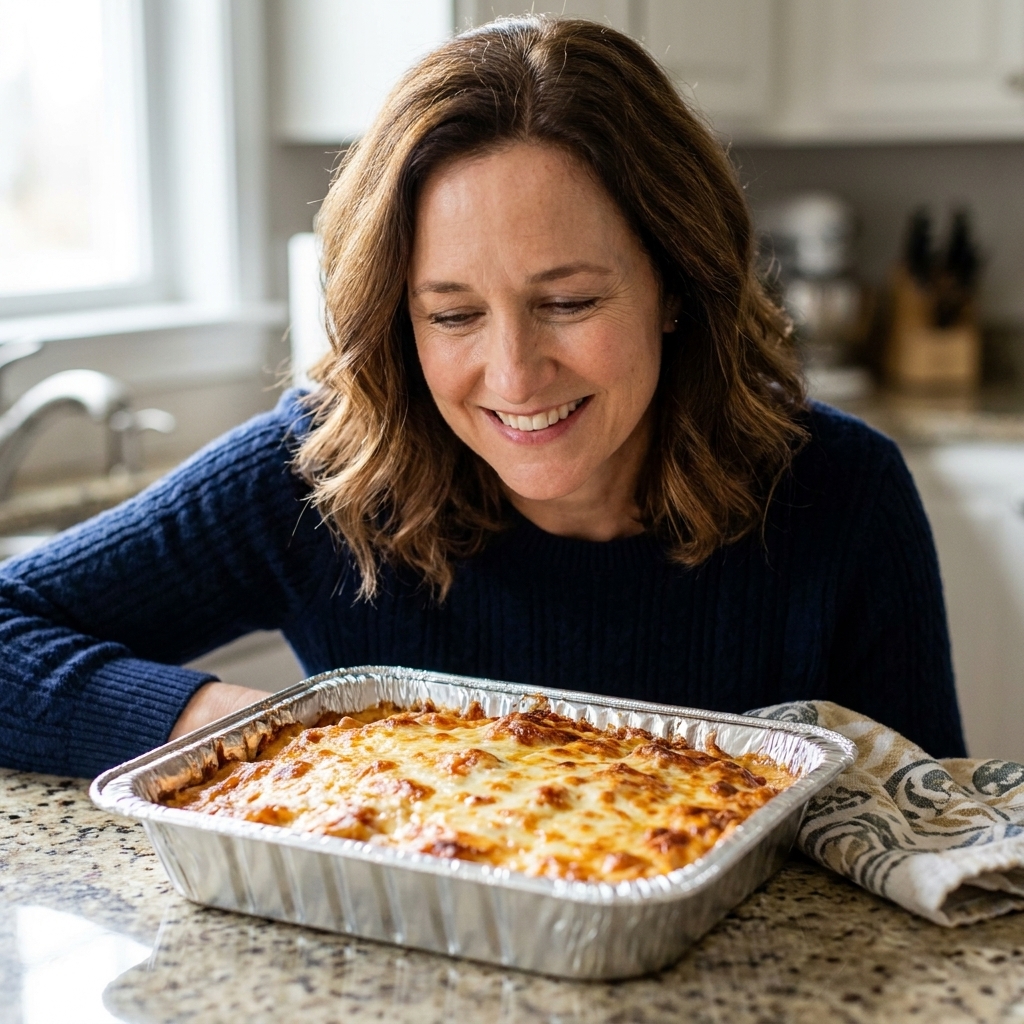
- Bake until hot in the center. Then uncover for browning near the end.
Timing guideline: Baking from frozen usually takes significantly longer than baking fresh. For a 9x13 casserole, it is often an extra 30 to 60 minutes, but it can vary a lot by thickness, how saucy it is, and what your pan is made of. The safest doneness check is temperature, not the clock.
Food safety note: For casseroles with meat, poultry, or leftovers you are reheating, aim for 165°F in the center. If it’s an all-vegetable casserole, 165°F is still a simple universal target for “piping hot,” but it is not the only way to judge doneness.
Option B: Thaw first
Thaw overnight in the refrigerator, then bake as directed. This is especially nice for egg casseroles, delicate seafood bakes, and recipes with lots of dairy that can separate if overheated from frozen.
Safety note: Thaw in the fridge, not on the counter.
Freeze baked or unbaked?
Both work, but here’s my real-life rule: if the casserole relies on a just-baked texture, freeze it unbaked. If it’s a cozy, saucy situation, freezing baked is totally fine.
- Often best unbaked: strata and breakfast bakes, enchiladas that can get soft, casseroles with biscuit or crescent toppings, anything with a crunchy topping you love.
- Often best baked: lasagna, baked ziti, mac and cheese, shepherd’s pie, most rice and chicken casseroles.
Either way, cool it down before freezing so you do not trap steam and turn it into ice.
Avoid rips and soggy bottoms
- Double up regular foil. If you only have standard foil, use two layers for each direction.
- Don’t overfill. Leave headspace so the foil can fold over without smashing your topping.
- Cool before freezing. Even 20 to 30 minutes on the counter (then into the fridge) helps reduce condensation.
- Freeze flat. That first freeze sets the shape. A tilted casserole becomes a weird wedge forever.
- Skip crunchy toppings until bake day. Fried onions, crackers, chips, and buttery breadcrumbs go on at the end for peak crunch.
- Add extra sauce for pasta bakes. Pasta drinks up liquid in the freezer. A little extra marinara or béchamel keeps it cozy.
Best casseroles for this
This hack works for almost any baked casserole, but these are the true weeknight heroes:
- Lasagna and baked ziti
- Enchiladas and stuffed shells
- Chicken and rice casseroles (especially cream-based)
- Shepherd’s pie
- Breakfast strata (freeze unbaked, thaw overnight if you can)
Casseroles with very high-water vegetables (zucchini, tomatoes, mushrooms) can still freeze fine, but they benefit from pre-cooking or draining so you do not end up with a watery bake.
Foil sling FAQ
Can I use this with glass bakeware?
Yes, with a big caveat: glass is the most likely to crack from temperature shock. The sling helps because you are not storing the glass in the freezer long-term, but bake-from-frozen is still riskier in glass than in metal.
If you can, thaw in the fridge and bake in the glass dish. If you need to bake from frozen, the lowest-stress move is to use a metal pan. If you only have glass, let the dish warm a bit at room temp while the oven preheats and avoid sudden temperature changes, but know it reduces risk, not eliminates it.
Do I freeze it covered or uncovered?
Freeze uncovered until firm if you can, then wrap tightly. If you cover immediately while the casserole is still soft, the wrap can stick to the topping and create condensation that turns into ice.
Will foil react with marinara?
Over time, yes. Acidic sauces can discolor foil or pit it a bit, and very long contact can sometimes contribute a faint metallic note. It is not usually a safety issue, but it is a quality issue. For longer freezer storage, add a layer of parchment paper between the food and foil, especially for tomato-heavy casseroles.
How long will it keep?
For best quality, I aim for 2 to 3 months. It will often be safe longer if it stayed consistently frozen, but flavor and texture slowly decline.
Can I bake it in the foil without the pan?
I do not recommend it for a full 9x13 casserole. Foil needs support, and a heavy casserole can bow, spill, or bake unevenly. The whole point is that it drops neatly back into the pan for safe, even baking.
My freezer rule
At Casserole Crate, my personal promise to myself is simple: keep two dinners in the freezer at all times. One cheesy, one saucy. When life gets loud, those meals keep us fed without the drive-thru.
The foil sling hack is how I do it without owning six 9x13 dishes. Try it once and you’ll never want to freeze casseroles any other way.