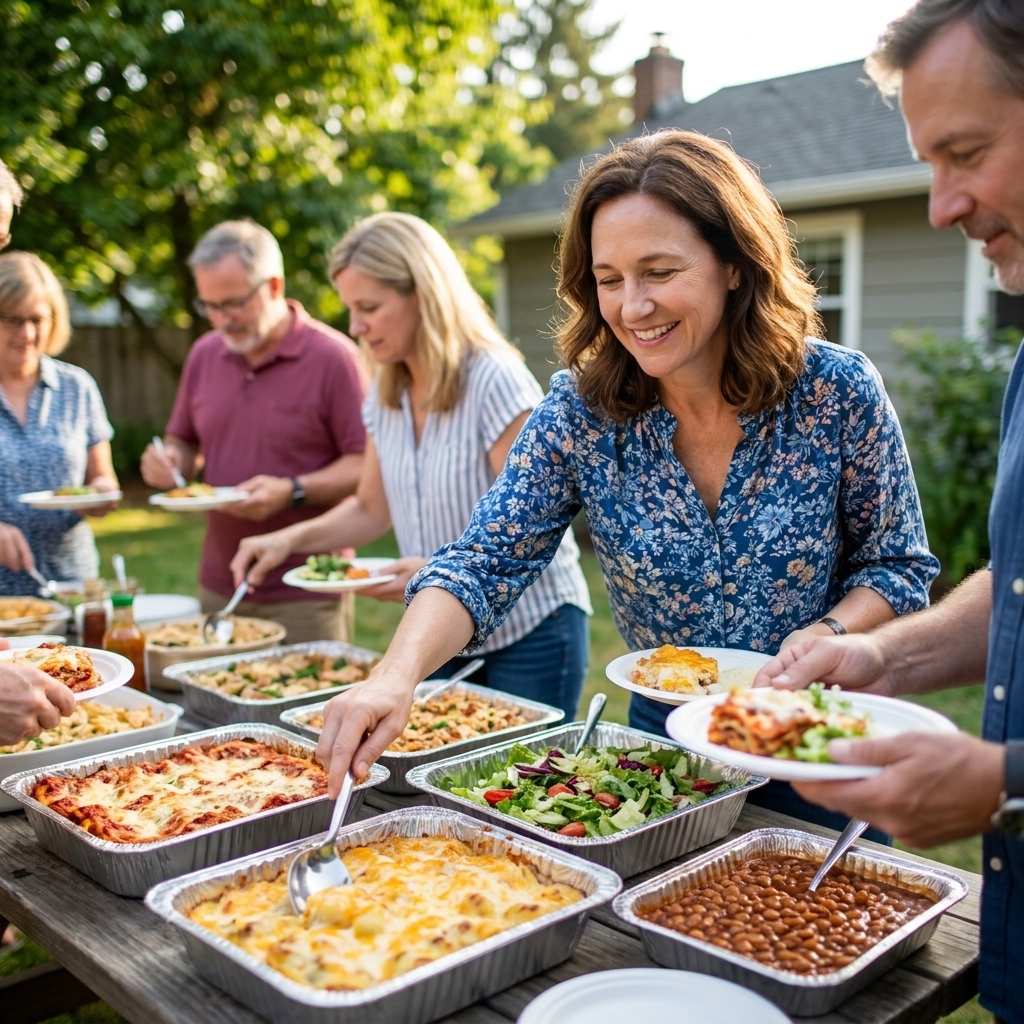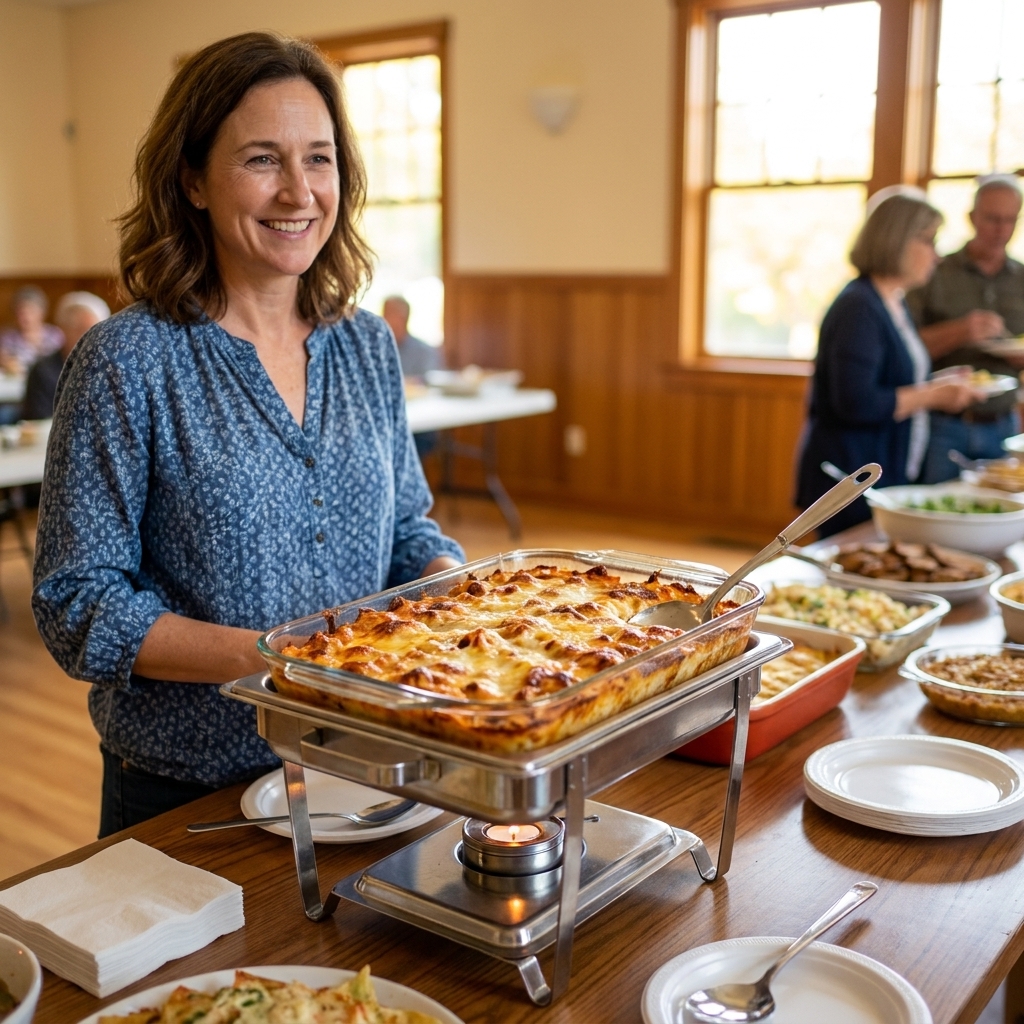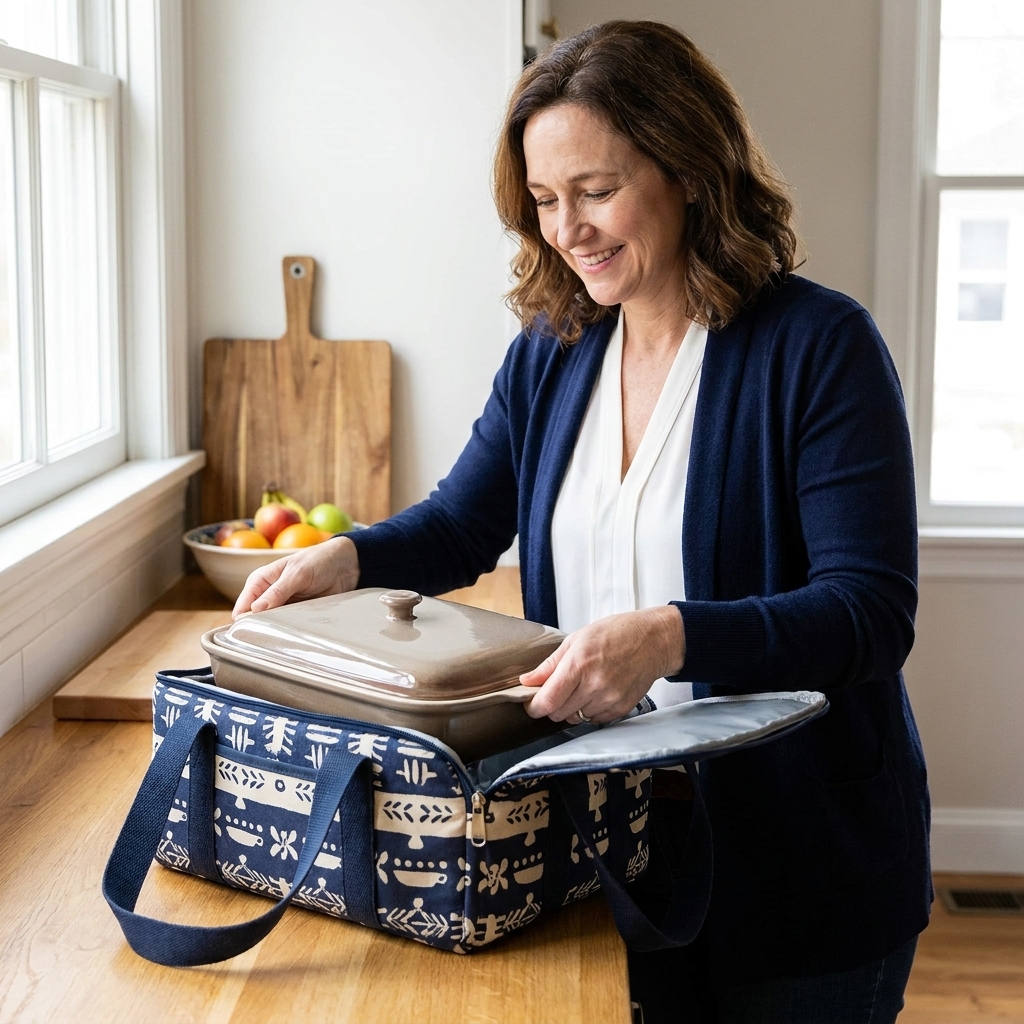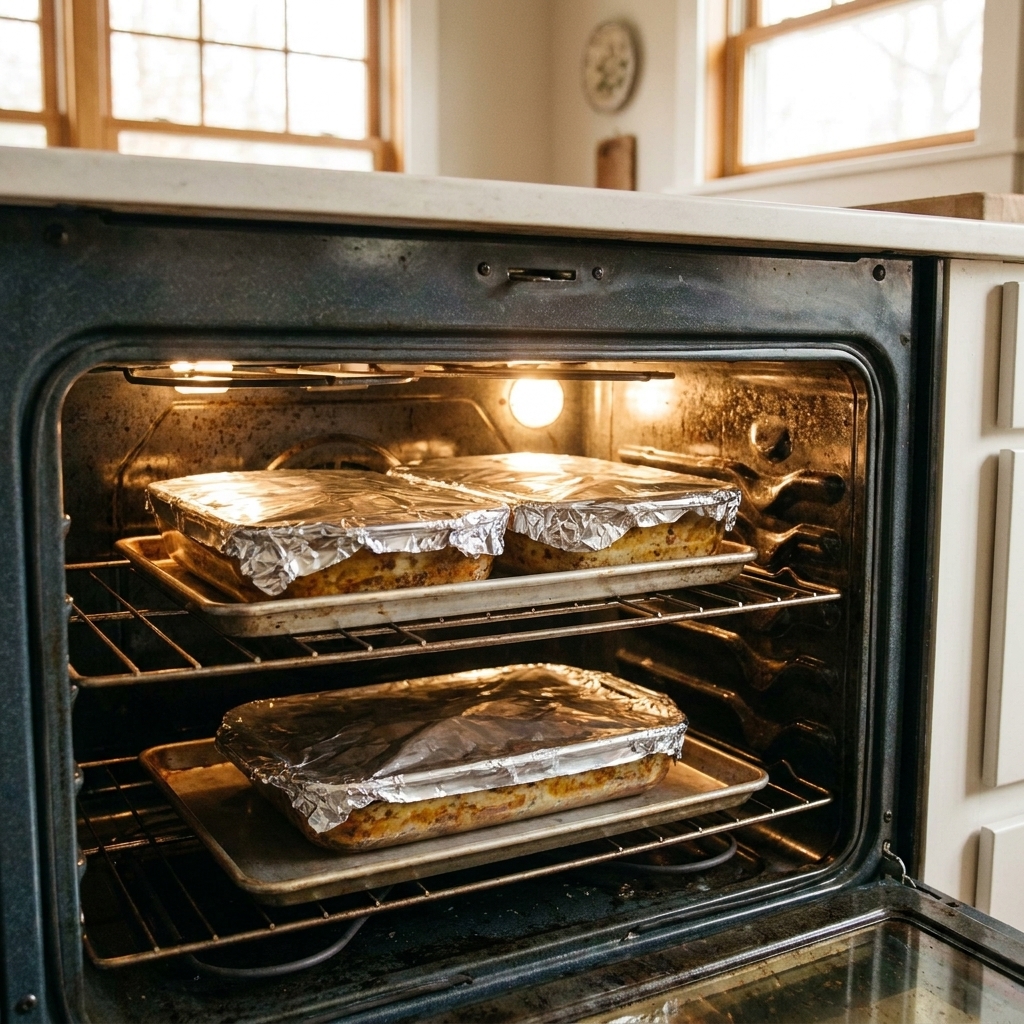

There is a special kind of potluck heartbreak that happens when you lift five foil lids in a row and realize everyone brought baked ziti. Delicious? Yes. Balanced meal? Not so much.
The good news: you do not need a spreadsheet the size of a tax return to fix this. You just need two things: clear casserole categories and a simple way to assign them so the table has a main dish anchor, a few side dish helpers, and one or two cozy wild cards.
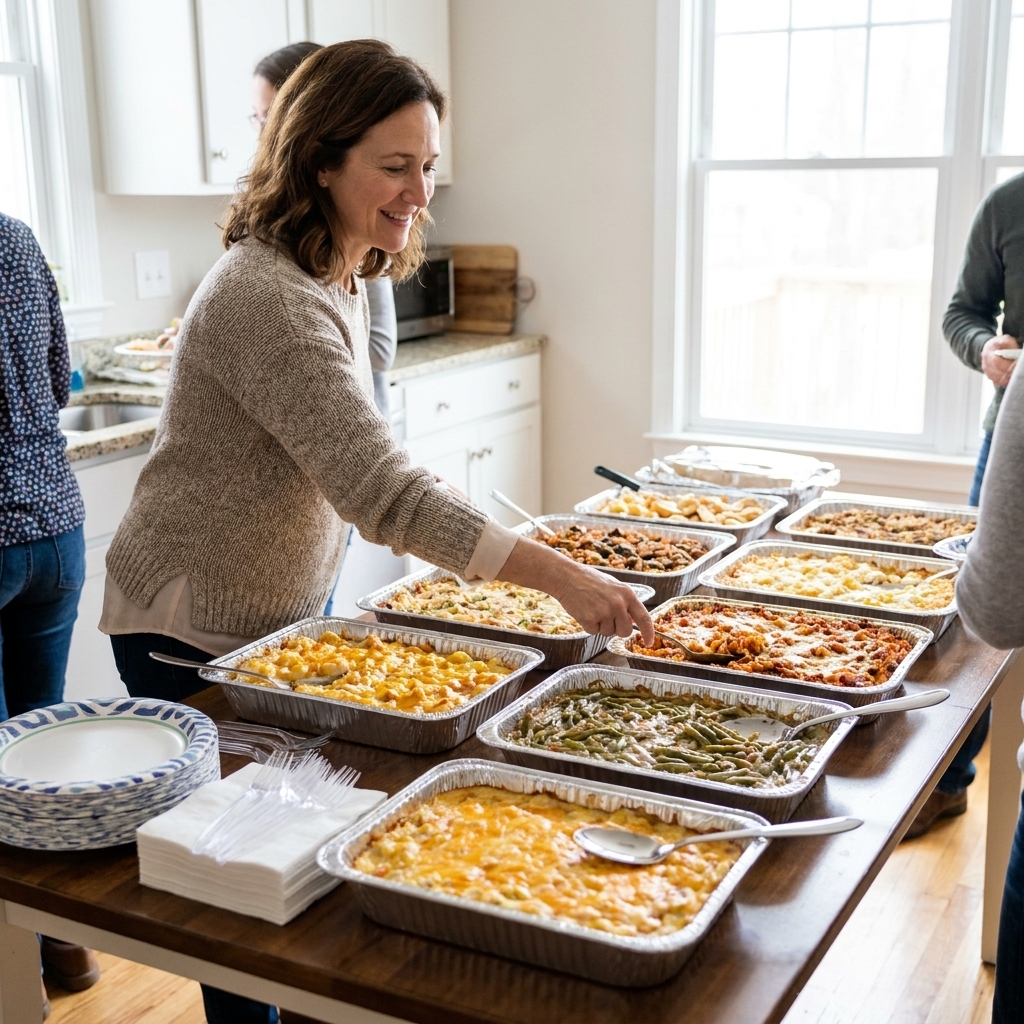
Think in casserole roles, not recipes
When I am coordinating a potluck, I stop asking, “What are you bringing?” and start asking, “What role are you bringing?” That tiny shift prevents duplicates and builds a meal that feels intentional.
Main dish casseroles
Main dish casseroles are the center of gravity. They are filling, protein-forward, and scoopable enough that one serving can stand on its own if needed.
- Typical features: meat, beans, lentils, eggs, or substantial dairy; sturdy starches like pasta, rice, potatoes, tortillas
- Examples: chicken and rice bake, enchilada casserole, shepherd’s pie, breakfast strata, tuna noodle casserole (still a classic)
Side dish casseroles
Side dish casseroles are your balance crew. They bring vegetables, brightness, crunch, and lighter portions that round out the mains.
- Typical features: vegetables, vegetable-forward bakes, lighter starches, tangy sauces, crispy toppings
- Examples: green bean casserole with a fresher twist, broccoli rice bake (vegetable-forward), roasted vegetable gratin, sweet potato casserole, corn pudding
Support acts that matter
Not every dish needs to be a casserole, but thinking in “support roles” keeps the whole spread from feeling heavy.
- Fresh element: big salad, fruit tray, slaw, sliced tomatoes with herbs
- Crunch element: rolls, garlic bread, crackers, toasted nuts, crispy onions
- Sauce element: salsa, chimichurri, hot sauce, gravy, ranch, herb yogurt
The potluck balance formula I use every time
Here is my no-fuss rule of thumb for a potluck where casseroles are the stars. This works for everything from a church basement to a living room full of hungry teenagers.
For 8 to 10 people
- 2 main dish casseroles
- 2 side dish casseroles (at least one vegetable-forward)
- 1 fresh item (salad or fruit)
- 1 bread or crunch item
- 1 dessert
For 12 to 16 people
- 3 main dish casseroles
- 3 side dish casseroles (two vegetable-forward, one comfort side)
- 1 to 2 fresh items
- 1 bread or crunch item
- 2 desserts
For 18 to 25 people
- 4 main dish casseroles
- 4 side dish casseroles (at least three vegetable-forward)
- 2 fresh items
- 2 bread or crunch items
- 2 to 3 desserts
My quiet secret: if kids are the majority, bump mains by one. If adults are the majority, bump veggie sides by one. It keeps everyone happier than you would think.
Quick serving reality check: a standard 9x13 main dish casserole often feeds about 8 to 12 people as part of a potluck (smaller scoops, more choices). If it is the only main, plan closer to 6 to 8. Vegetable sides can stretch further, especially if you have bread and salad.
How to assign categories so you do not get five pasta bakes
You can absolutely keep this friendly and casual while still guiding the menu. The trick is to offer choices within guardrails.
Step 1: Set the categories before you invite anyone
When you send the invite, include 5 to 7 “slots” people can claim. Fewer slots means less confusion.
- Main casserole (protein)
- Main casserole (protein)
- Veggie side casserole
- Veggie side casserole
- Comfort side casserole (starch or cheesy veg)
- Fresh salad or fruit
- Dessert
Step 2: Give examples, but do not dictate
I like to write a single line under each slot so people know what you mean. Example: “Veggie side casserole: broccoli, Brussels sprouts, zucchini, green beans, cauliflower, mixed roasted veg.”
Step 3: Use the “choose one of two” method for picky crowds
If you know your group leans heavily toward pasta, give two main options and ask folks to choose one lane.
- Main lane A: chicken, turkey, ham, beef, or sausage casseroles
- Main lane B: vegetarian mains like enchilada bake with beans, lentil shepherd’s pie, or egg-based strata
This single step adds variety without making anyone feel policed.
Step 4: Assign the “hard to get” categories to your most reliable people
Every potluck has the friend who always shows up with exactly what they promised, still hot. That is who gets the big salad, the roasted vegetable casserole, or the gluten-free option.
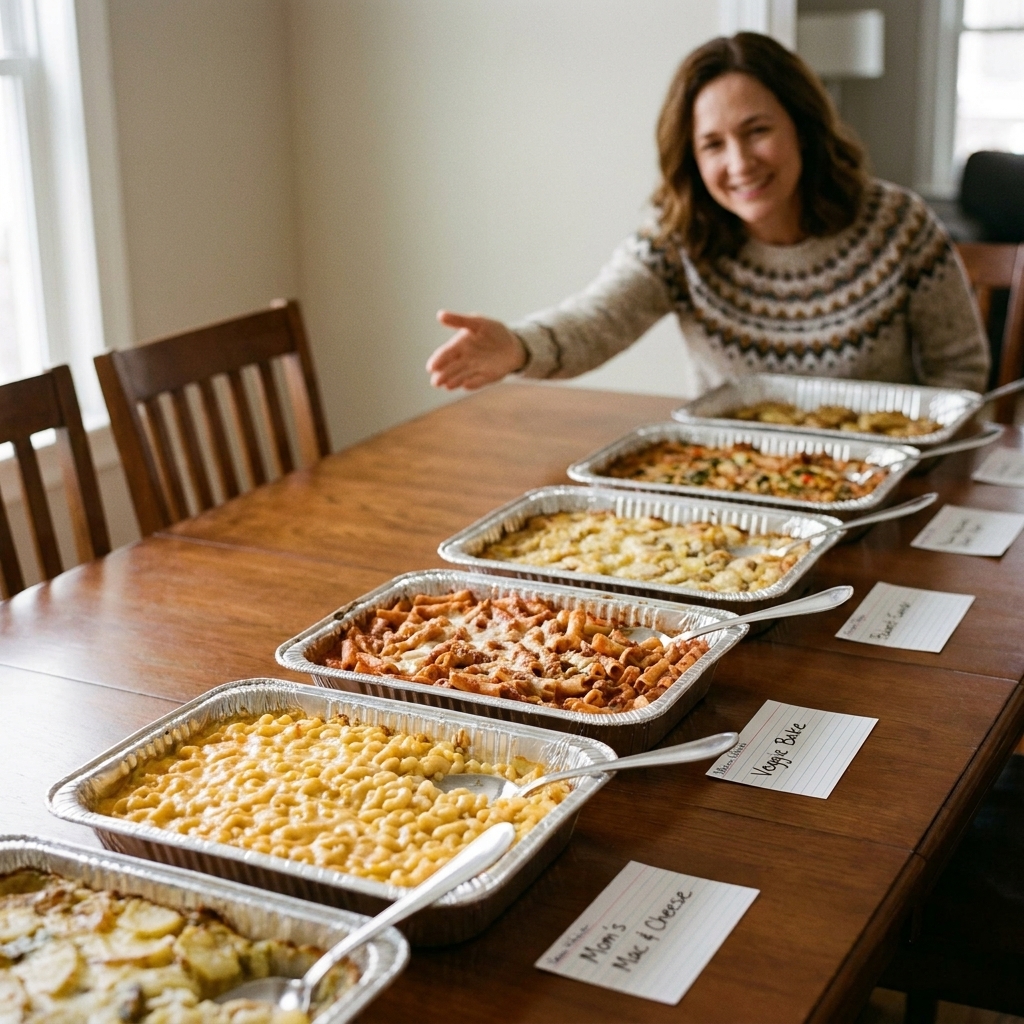
Balance flavors, textures, and heaviness
Even when categories are covered, a potluck can feel one-note if everything is creamy and beige. Here is how I balance the table fast.
1) Watch the cream pileup
If your mains are both creamy (say, chicken Alfredo bake and tuna noodle), steer your sides toward roasted vegetables, tomato-based sauces, or vinegary freshness.
- Balance creamy mains with: roasted veggie casserole, green salad, slaw, marinated cucumbers
- Balance spicy mains with: cheesy corn bake, mild rice casserole, fruit salad
2) Make sure someone brings crunch
Casseroles are cozy, but they can blur together texture-wise. Crunch wakes up the whole bite.
- Easy crunch toppers: buttered panko, crushed crackers, tortilla strips, crispy onions, toasted nuts
- Easy crunch sides: simple salad with croutons, garlic bread, veggie tray
3) Pair a bright dish with a deep dish
I like one casserole with tangy or herby notes and one that is pure comfort.
- Bright ideas: lemony chicken and rice, salsa verde enchilada bake, spinach and feta bake
- Deep ideas: baked mac and cheese, scalloped potatoes, meatball sub casserole
4) Build in at least one lighter scoop
Not everyone wants a full square of something rich. A vegetable-forward side casserole gives folks a way to build a plate that feels good.
Match casseroles to the setup
Potluck success is not just what you serve. It is how it holds.
If the food will sit out for a while
- Choose casseroles that stay pleasant at “warm” temperatures: baked pasta, enchilada bakes, stuffing, scalloped potatoes
- Avoid ultra-delicate textures: rare fish, super-crisp toppings that will steam under foil
- Send toppings separately when possible (crispy onions, chips, herbs)
If oven space is tight
Assume you will not have room to bake or re-crisp four dishes at once. I plan like this:
- Host bakes: one main and one side
- Guests bring: dishes fully cooked and ready to reheat, plus at least two dishes that can be served room temp (salad, fruit, bread)
If you only have slow cookers and warmers
Not every casserole loves a slow cooker. Ask for casseroles that can be held warm without separating.
- Great for warm holding: saucy enchilada casserole, meatball bake, breakfast strata (kept warm after baking), bean-based vegetarian bakes
- Trickier: cream sauces that can break, anything topped with fried items you want crisp
Dietary planning and dish labels
This is the part people forget until someone is standing by the table holding a paper plate and looking worried. A tiny bit of planning makes your potluck feel welcoming without turning it into a whole project.
- Pick one or two priorities: one vegetarian main, and one gluten-free friendly side is a solid baseline for most groups.
- Ask about top allergens: nuts, dairy, eggs, wheat, and shellfish are the big ones I watch.
- Label simply: a sticky note is enough. Write the dish name and quick flags like “contains dairy,” “contains nuts,” “GF,” or “veg.”
- Keep toppings separate when you can: croutons, crispy onions, and nuts on the side lets more people participate.
My freezer-first strategy for hosts (and the guests who ask)
I keep two emergency meals in my chest freezer for a reason: potlucks happen fast. If you are hosting, a freezer-friendly main dish casserole is your safety net.
What freezes best for potlucks
- Lasagna and baked ziti (yes, even though we are trying to avoid five of them, one is still welcome)
- Enchilada casseroles
- Shepherd’s pie
- Breakfast strata
- Chicken and rice bakes with a little extra sauce
How to avoid the dreaded soggy bottom
- Cool completely before wrapping and freezing
- Double wrap (plastic wrap tight to surface, then foil) or use a freezer lid
- Thaw in the fridge overnight when possible for more even reheating
- Re-crisp toppings at the end, uncovered, for 10 to 15 minutes
Reheating timing that works in real life
The only truly reliable cue is temperature, not time. Use the times below as a starting point, then bake until the center hits 165°F. That is a safe internal temperature target for reheating leftovers and casseroles.
For most 9x13 casseroles:
- From the fridge: 350°F for about 30 to 50 minutes, depending on depth, pan material, and how cold it started. Cover with foil for the first half if the top browns too fast.
- From frozen (fully cooked): it usually takes 60 to 90+ minutes at 350°F, often longer in a glass dish. Keep it covered with foil until the last 10 to 15 minutes. If you can thaw overnight in the fridge, you will get more even results and a shorter bake.
- From frozen (assembled but unbaked): expect roughly 70 to 100 minutes at 350°F, covered for most of the bake, then uncover to brown.
You are looking for a hot center and an even temperature throughout. If you do not have a thermometer, check the middle with a knife and make sure it comes out piping hot, not just warm.
Quick assignment scripts you can text
If coordinating makes you feel bossy, borrow my friendly wording. It keeps things light while still steering the menu.
Script 1: Simple slot list
“I am trying to balance the potluck table so we have a full meal. Can you pick one slot? Main casserole, veggie side casserole, fresh salad/fruit, bread/crunch, or dessert.”
Script 2: Prevent the pasta avalanche
“We already have one pasta bake claimed, so could you bring a veggie-forward side casserole or a main that is not pasta? Anything with broccoli, green beans, zucchini, or roasted veggies would be perfect.”
Script 3: Kid-friendly crowd
“We will have a lot of kids, so I am aiming for two hearty mains and at least two veggie sides. Want to be one of my veggie heroes, or should I put you down for a main?”
Potluck menu examples
Classic comfort potluck
- Main: chicken and stuffing casserole
- Main: meatball sub casserole
- Side: green bean casserole (extra mushrooms, crispy onions added at the end)
- Side: roasted broccoli bake with lemon and parmesan
- Fresh: garden salad with vinaigrette
- Bread: dinner rolls
Taco-night potluck (casserole edition)
- Main: beef enchilada casserole
- Main: vegetarian black bean and sweet potato enchilada bake
- Side: corn casserole
- Side: zucchini and pepper bake with cumin and cheddar
- Fresh: crunchy slaw
- Sauce: salsa and sour cream
Holiday morning potluck
- Main: ham and cheese breakfast strata
- Main: veggie breakfast casserole with peppers and spinach
- Side: hash brown casserole (served in smaller scoops)
- Fresh: fruit salad
- Sweet: cinnamon roll bake or coffee cake
FAQ
How many casseroles do I need for a potluck?
For 10 people, plan on 4 casseroles total (2 mains, 2 sides) plus something fresh and something crunchy. For 15 people, 6 casseroles total (3 mains, 3 sides) works beautifully.
What is the difference between a main dish casserole and a side dish casserole?
Main dish casseroles are protein-forward and filling enough to be the “meat and potatoes” of the plate. Side dish casseroles support the meal with vegetables, lighter portions, and contrast in flavor or texture.
How do I prevent duplicate dishes without being rude?
Assign categories instead of recipes. Ask guests to claim a slot (main, veggie side, comfort side, fresh, dessert). If you already have one pasta main, simply say you are trying to round out the table and ask the next person to choose a different slot.
What are the best side dish casseroles when everyone brings heavy mains?
Go vegetable-forward and bright: roasted mixed vegetables, broccoli with lemon and parmesan, a zucchini bake, or a lighter green bean casserole. Also add one fresh item like slaw or a big salad to cut the richness.
Should I ask guests to bring casseroles cooked or unbaked?
For most potlucks, ask for fully cooked casseroles that only need reheating. Oven space is usually the bottleneck, and reheating is far easier than baking several dishes from scratch while guests arrive.