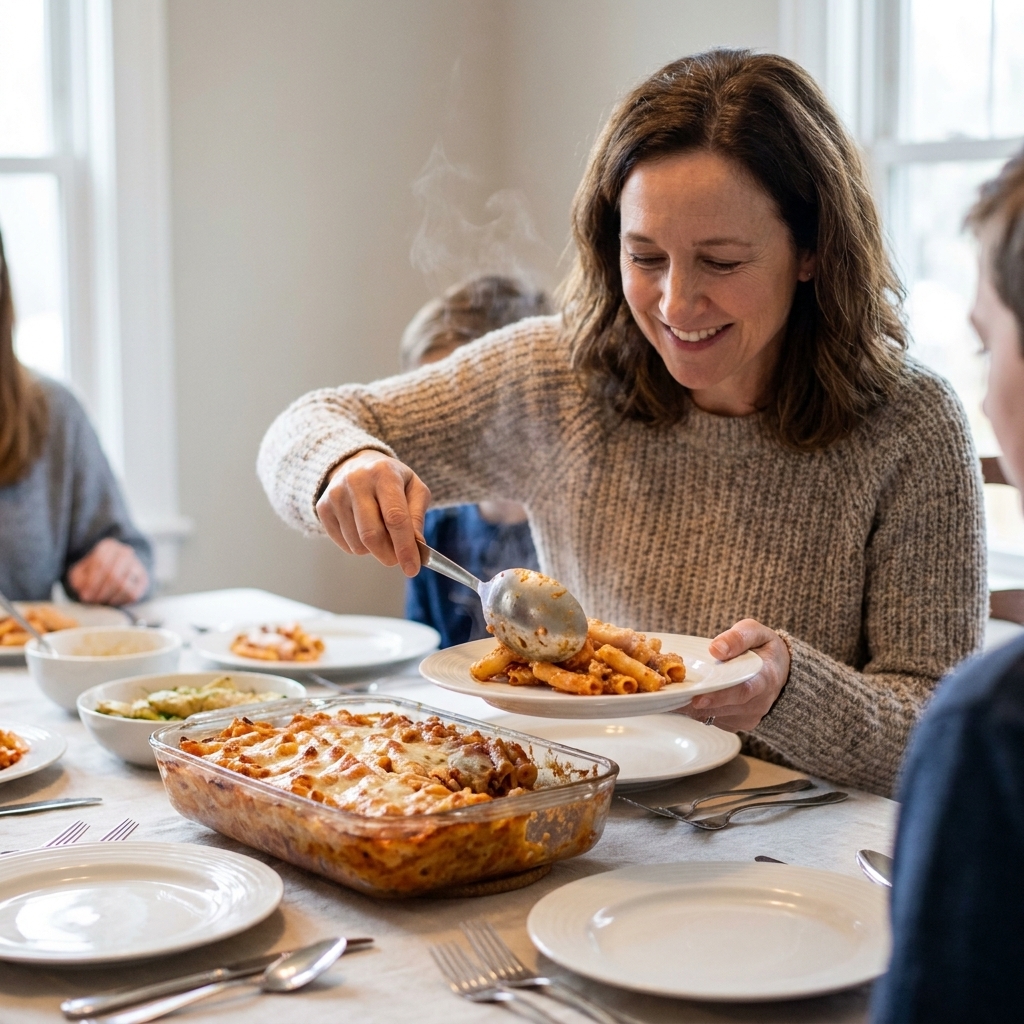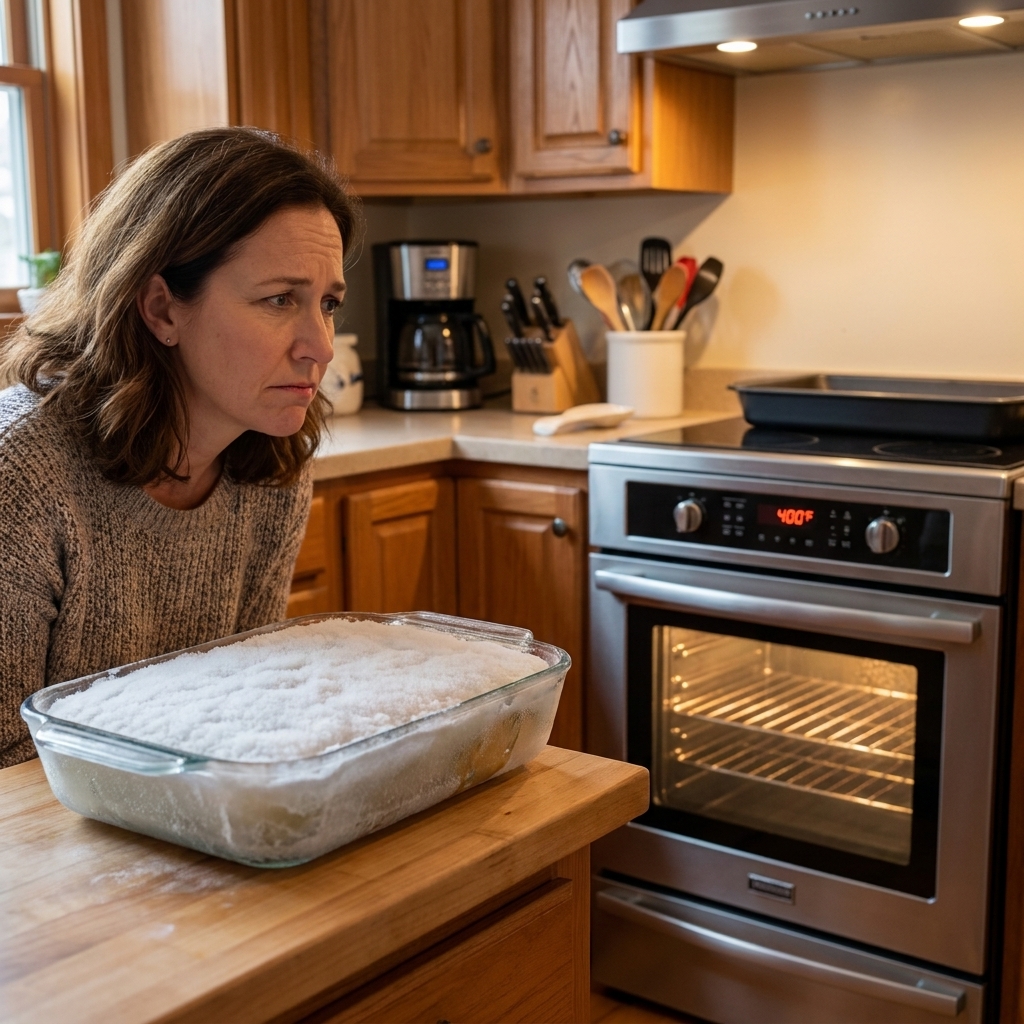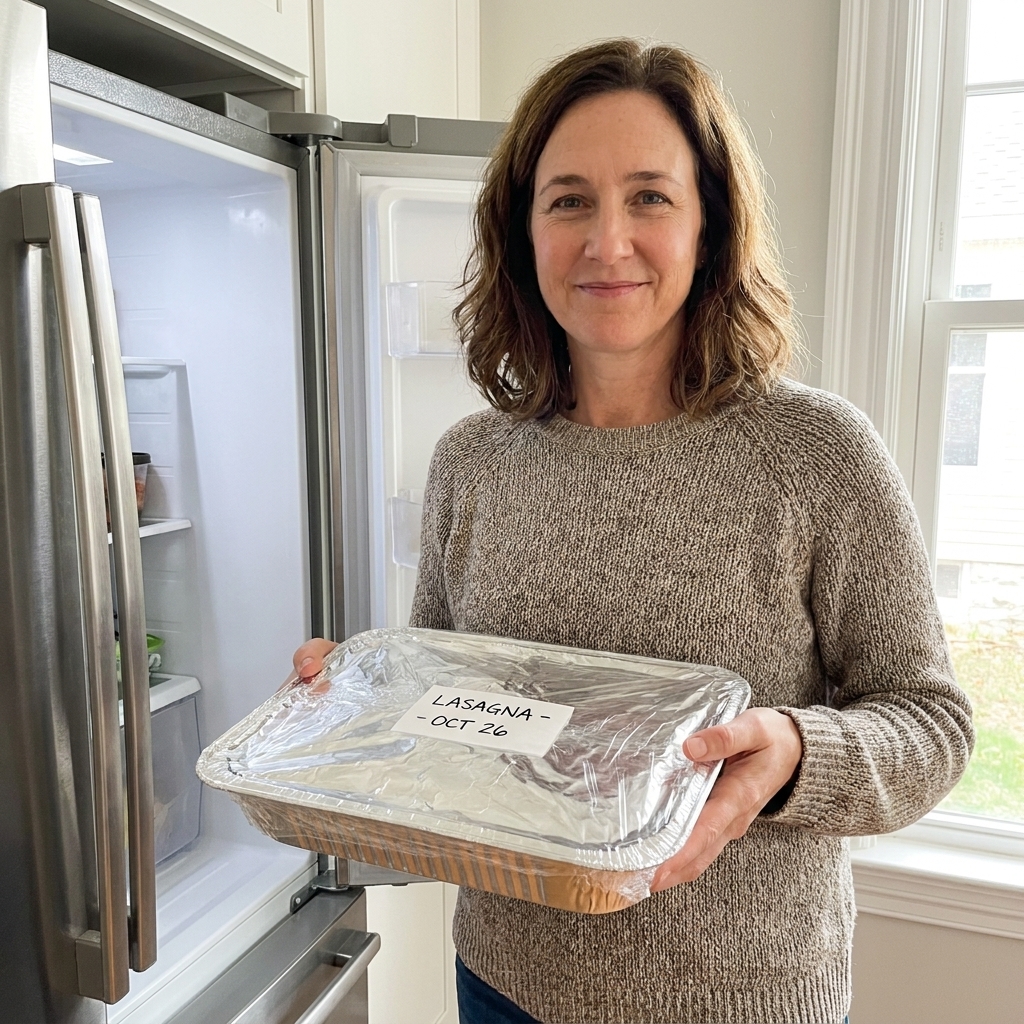

I love a freezer casserole as much as anyone, but I love not giving my family a stomachache even more. A frozen 9x13 is basically a delicious brick, and the way it thaws matters because the outside can warm up into the danger zone while the center is still icy.
Here are three FDA and USDA-recommended ways to defrost a frozen casserole, plus the one method I tell every neighbor to skip, no matter how tempting it is on a busy weeknight.
Quick note on what I mean by “casserole” here: any big, dense baked dish you froze in a pan, whether it was fully baked first (leftovers) or assembled and frozen to bake later. The thawing safety rules are the same either way. The baking time can change.
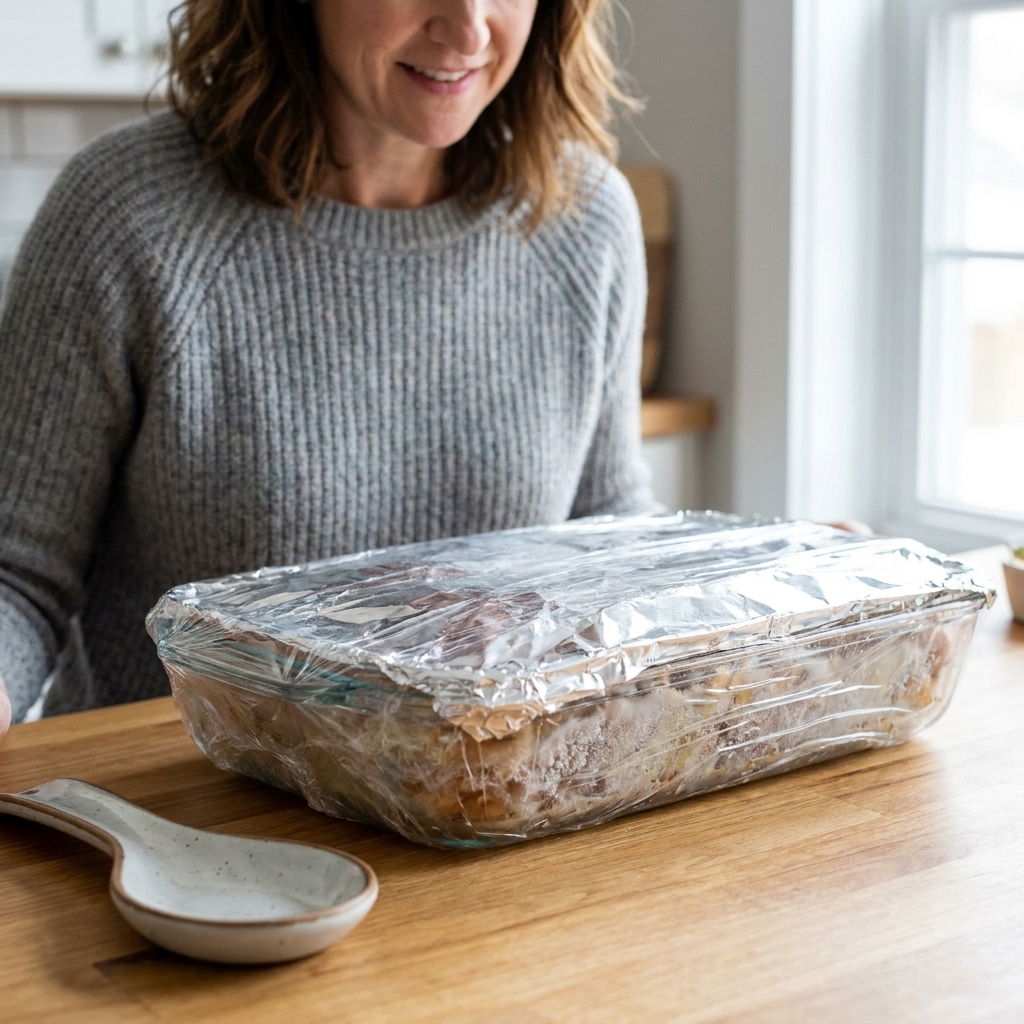
First, a quick safety rule
Most casseroles include ingredients that need careful handling: cooked meat, poultry, seafood, eggs, cooked rice or pasta, and dairy. The key is keeping them out of the temperature danger zone where bacteria grow fastest: 40°F to 140°F. In real-life terms, your goal is to keep food at 40°F or below until it goes into the oven.
- Never let your casserole sit out at room temperature for more than 2 hours total. If your kitchen is hot (above 90°F), that drops to 1 hour.
- When in doubt, thaw it cold and cook it hot. The safest finish is an oven bake until the center is piping hot.
- If you are reheating a fully cooked casserole or baking one that includes meat, poultry, eggs, seafood, or dairy, aim for an internal temperature of 165°F in the center. That is my non-negotiable for casseroles.
Method 1: Refrigerator thaw
If you can plan ahead, this is the gold standard. Slow thawing keeps the whole casserole at a safe temperature, and it helps prevent that dreaded watery layer after baking.
How to do it
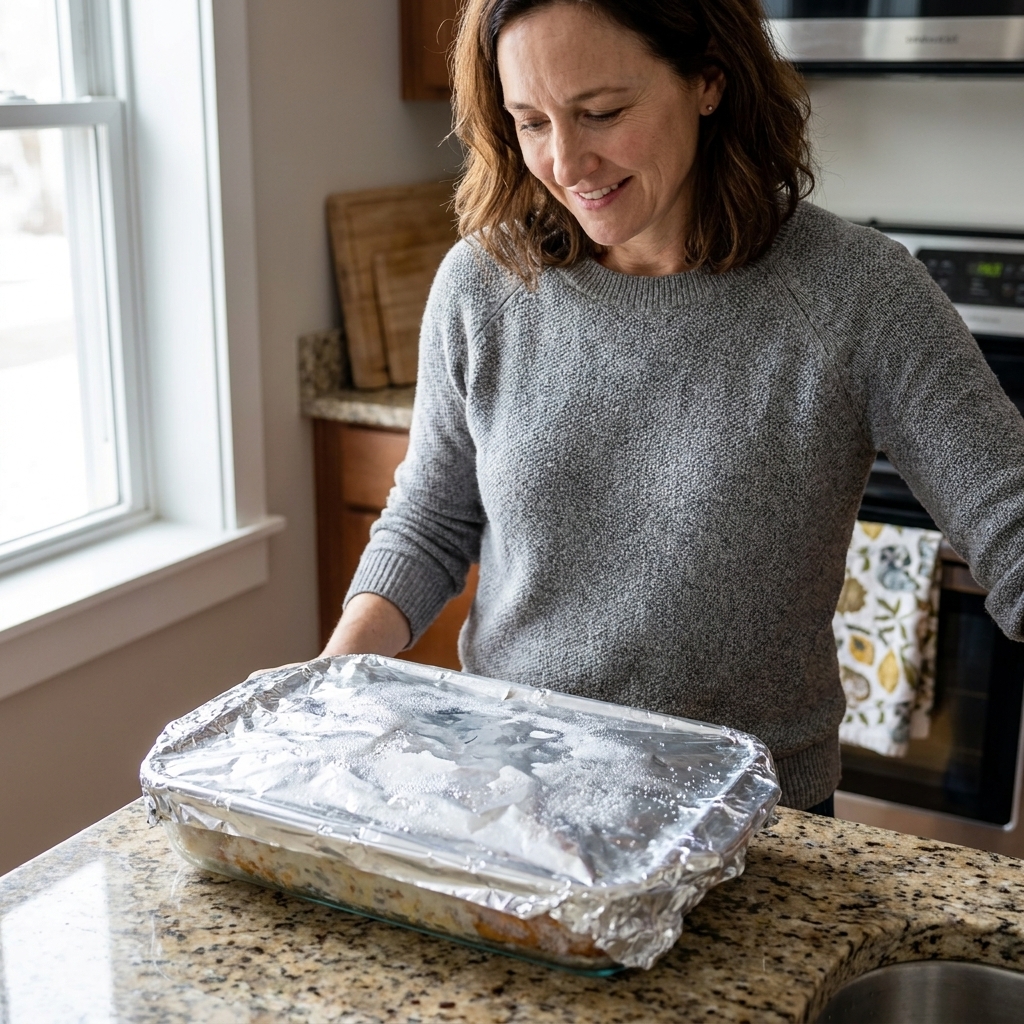
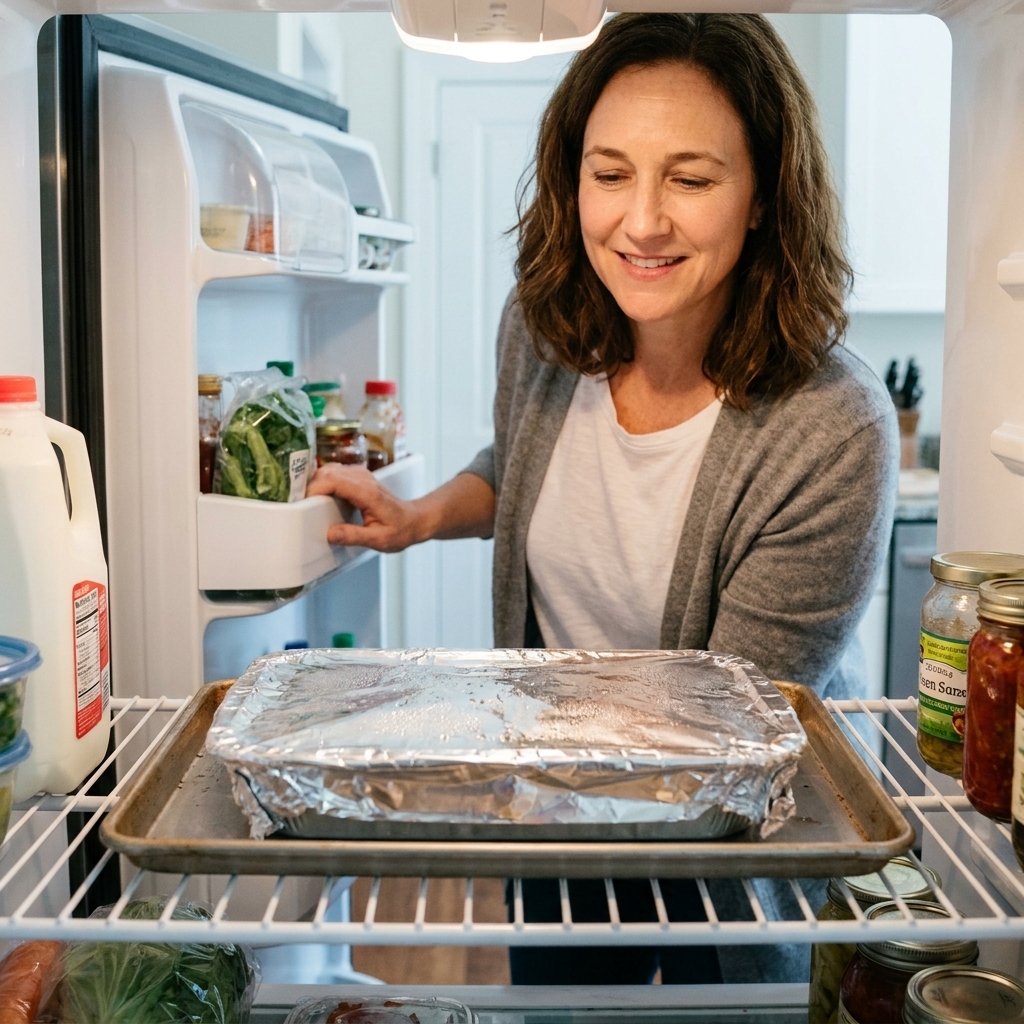
- Keep it wrapped. Leave the casserole in its freezer wrap or an airtight container.
- Put it on a rimmed tray or baking sheet in the fridge to catch any drips.
- Plan for 24 to 48 hours for a 9x13. It can take more or less depending on thickness, how tightly it is wrapped, and whether it is in glass or disposable foil.
Clara’s timing cheat sheet
- 8x8 or 9x9: often 18 to 24 hours
- 9x13 (average thickness): often 24 to 48 hours
- Extra-thick casseroles (stuffed shells piled high, layered lasagna, deep enchiladas): plan closer to 48 hours
How long can it stay in the fridge?
Once thawed, keep it refrigerated (40°F or below) and try to bake it within 1 to 2 days for best quality and safety. If anything smells off or has been sitting out, do not risk it.
After it’s thawed
Most casseroles bake more evenly if you let them sit on the counter 15 to 20 minutes while the oven preheats, but do not leave it out much longer than that. Then bake as directed, and if it looks like the top is browning before the center is hot, tent loosely with foil.
Method 2: Cold-water thaw
Cold-water thawing is my go-to when I forgot to move dinner to the fridge. It is faster than refrigerator thawing, but still safe because the food stays cold.
This works best for casseroles frozen in a leak-proof bag or wrapped so well that water cannot sneak in. If your casserole is frozen in a disposable foil pan with a loose lid, I would skip this unless you can seal it extremely well.
How to do it
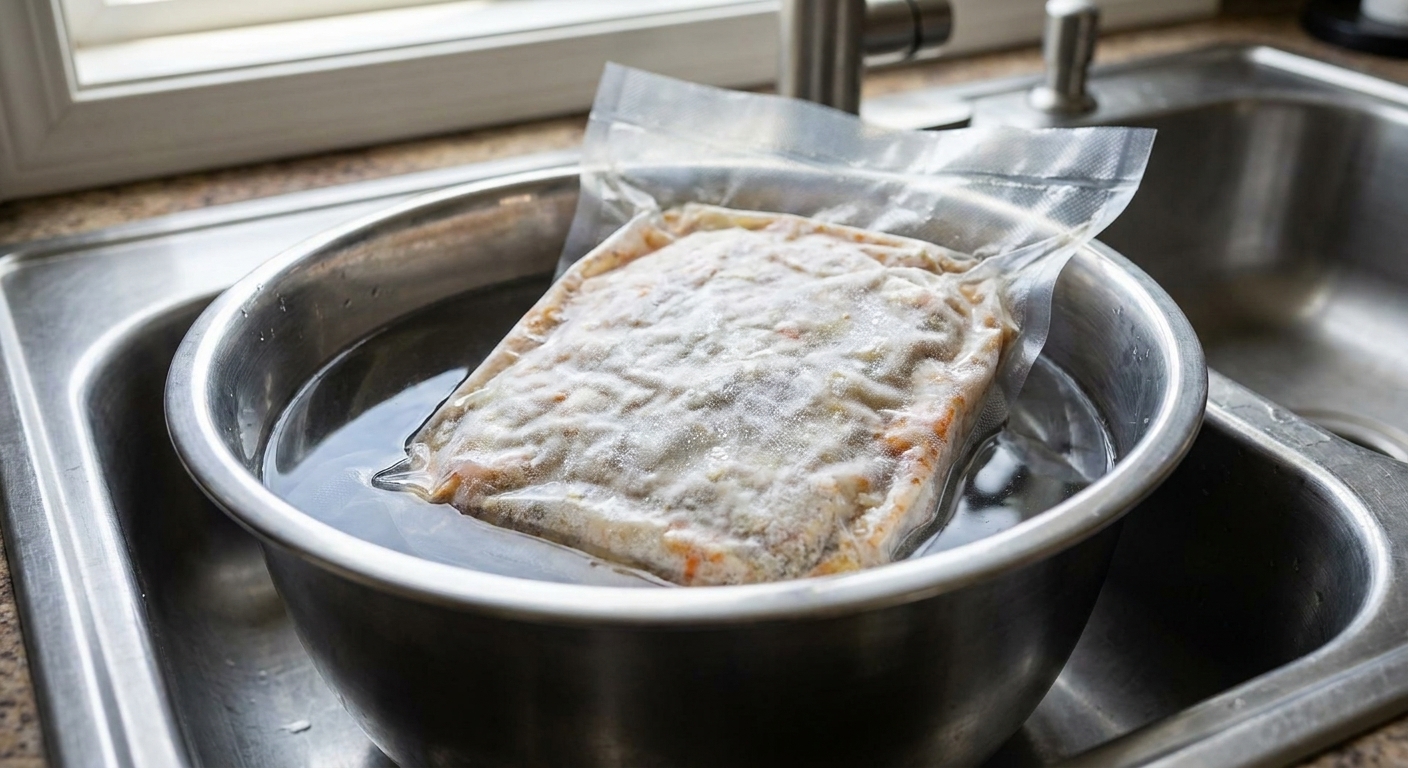
- Make sure it is watertight. If it is in a pan, wrap it tightly in plastic wrap and then foil. Better yet, double-bag the whole thing in heavy-duty zip-top bags.
- Remove absorbent freezer paper before submerging. Anything that soaks up water can turn into a mess.
- Submerge in cold tap water in a clean sink or a large tub.
- Change the water every 30 minutes to keep it cold.
- Cook immediately after thawing. Cold-water thawing is not a thaw-and-hold situation. Once it is thawed, it goes straight into the oven.
How long will it take?
It depends on thickness, your freezer temperature, and how densely it is packed, but many family-size casseroles thaw in about 2 to 4 hours using cold water. You are aiming for “pliable but still cold.” If the middle is still a hard ice block, keep going and keep changing that water.
Method 3: Microwave thaw
I will be honest: microwave thawing is not my favorite for casseroles. It can create hot spots, it can mess with creamy sauces, and it can partially cook the edges while the center stays frozen. But it is still a safe option if you do it correctly.
How to do it safely
- Use a microwave-safe dish. Do not microwave a metal foil pan.
- Unwrap completely. Remove plastic wrap, foil, and cardboard lids. (Plastic wrap should never go in the oven either, so get it off now.)
- Use the defrost setting in short increments. Rotate if your microwave does not do it automatically.
- Plan to finish in the oven immediately. This is critical. Parts of the casserole will warm during microwave thawing, so you must cook it right away.
A workaround that can help
If your casserole is frozen solid in a glass baking dish, a practical approach is to microwave just long enough to loosen it from the dish, then (carefully) transfer the frozen block into a lightly greased, room-temperature baking dish, cover with foil, and bake.
Use oven mitts, support the block with a wide spatula or two, and do not force it. If the glass is stressed or the casserole is stuck, stop and let it thaw more in the fridge instead.
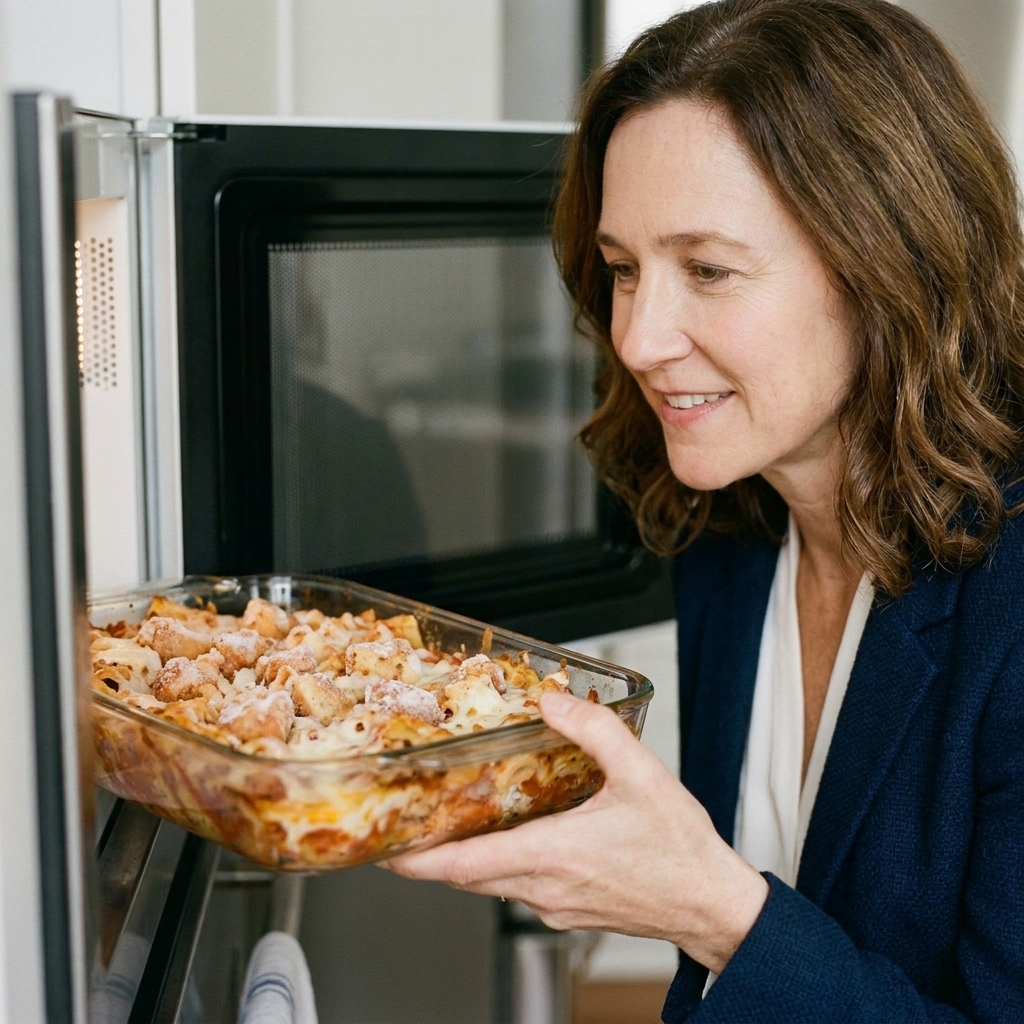
Always avoid: Counter thaw
This is the one I want you to remember: do not thaw a casserole on the kitchen counter.
Here is why it is risky, especially for big, dense baked dishes:
- The outside warms up first, often into the 40°F to 140°F danger zone, while the center stays frozen.
- Heavy casseroles thaw slowly. That can mean hours where the edges are warm enough for bacteria to multiply.
- Baking later does not undo the risk. Cooking can kill many bacteria, but some toxins that can form when food sits too long at unsafe temperatures are not reliably destroyed by heat (one example is toxins associated with Staphylococcus).
I know counter thawing feels old-school and harmless. But for casseroles loaded with meat, dairy, and cooked starches, it is simply not worth the gamble.
Pick the best method
If you are standing at the freezer right now, here is the quick decision tree I use in my own kitchen:
- You have 1 to 2 days: refrigerator thawing
- You have a few hours: cold-water thawing, then cook immediately
- You are truly down to the wire: microwave thawing, then bake immediately
Tips for better results
1) Freeze it flat
Even thickness means even thawing. If I am freezing something like enchiladas or baked ziti, I press everything into an even layer before freezing.
2) Wrap it well
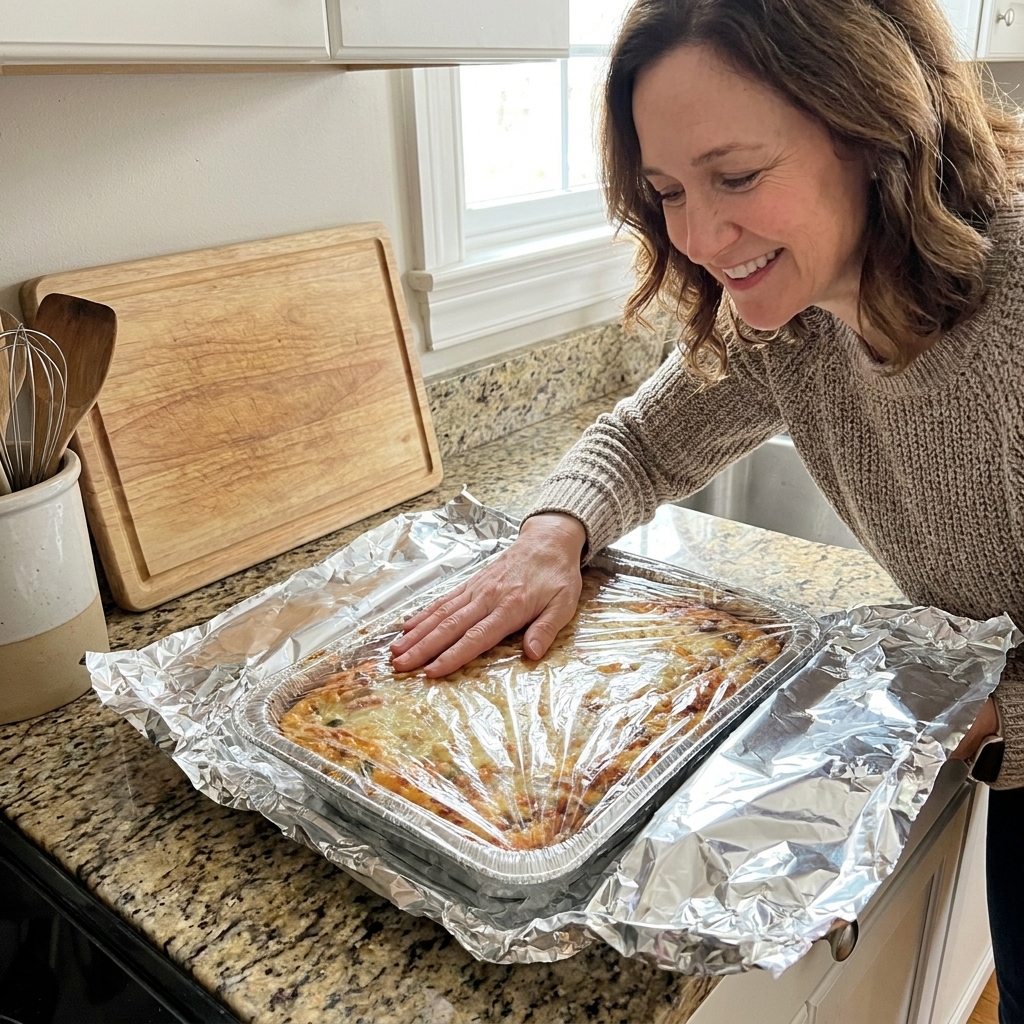
I like plastic wrap snug to the surface, then a tight foil wrap. If it is going into the deep freeze for more than a month, I slide the whole pan into a large freezer bag too.
3) Use foil strategically
From thawed, most casseroles do best covered for the first half of baking to protect moisture, then uncovered at the end to brown and bubble.
4) Temp it like you mean it
For a big casserole, check the temperature in the center and the thickest spot. Try not to touch the pan with the thermometer tip, and if it is a deep 9x13, take readings in two places. You are looking for 165°F where it is coldest.
FAQ
Can I cook a casserole from frozen?
Often, yes. It usually takes about 50 to 100 percent longer than the original bake time, and you will want to keep it covered with foil for a good chunk of that time. The safest move is to check the center with a thermometer and aim for 165°F.
Is it safe to refreeze a thawed casserole?
If you thawed it in the refrigerator and it stayed cold, you can generally refreeze it, though texture may suffer. If you thawed it in cold water or the microwave, cook it first before refreezing.
Why is my casserole watery after thawing?
This is usually moisture migration. Pasta and rice can release water, veggies can weep, and some sauces split a bit. Refrigerator thawing helps. So does baking covered at first, then uncovering to let extra moisture evaporate at the end.
How do I avoid cracking a glass baking dish?
Big temperature swings are the enemy. Do not move a frozen glass dish straight into a hot oven. Thaw in the fridge first when possible, or transfer the frozen casserole block into a room-temperature baking dish before baking.
A freezer-friendly closing
My whole goal with make-ahead meals is to make life easier without cutting corners that matter. If you take nothing else from this, take this: fridge, cold water, or microwave then cook. Skip the counter thaw. Your future self will thank you at dinnertime.