
If chicken and rice casserole has ever come out with rice that is soft on top and gluey underneath, you are not alone. In a 9x13 pan, rice is doing a three-part juggling act: it has to absorb liquid, cook evenly, and not get drowned by steam and juicy add-ins.
The good news is that mushy rice is most often caused by a few fixable things: too much total liquid, the wrong rice, a baking temperature that is too low, or adding ingredients that release water at the wrong time. Let’s get you that fluffy, tender bite where each grain still has a little backbone.

The mushy rice checklist
Before we talk ratios, here are the usual culprits I see when someone tells me their rice turned to mush:
- Too much total liquid (broth + soup + sour cream + “a splash more” adds up fast).
- Using quick-cooking rice when the recipe was written for uncooked long-grain white rice.
- Baking too cool, which tends to steam the rice instead of simmering it properly.
- Keeping the pan tightly sealed the whole time, trapping too much steam and pushing the top layer past tender.
- Watery vegetables (mushrooms, zucchini, frozen veg) added without accounting for what they release.
- Overstirring, which breaks rice grains and turns the casserole creamy in a not-so-great way.
- Letting it sit too long before baking with raw rice in liquid, so it starts absorbing early and goes past tender.
Most fixes come down to controlling liquid, temperature, and timing.
Use the right rice
Not all rice behaves the same in a casserole. The starch level and grain shape make a huge difference once you add creamy ingredients and trap heat in a covered pan.
Best choice for fluffy rice
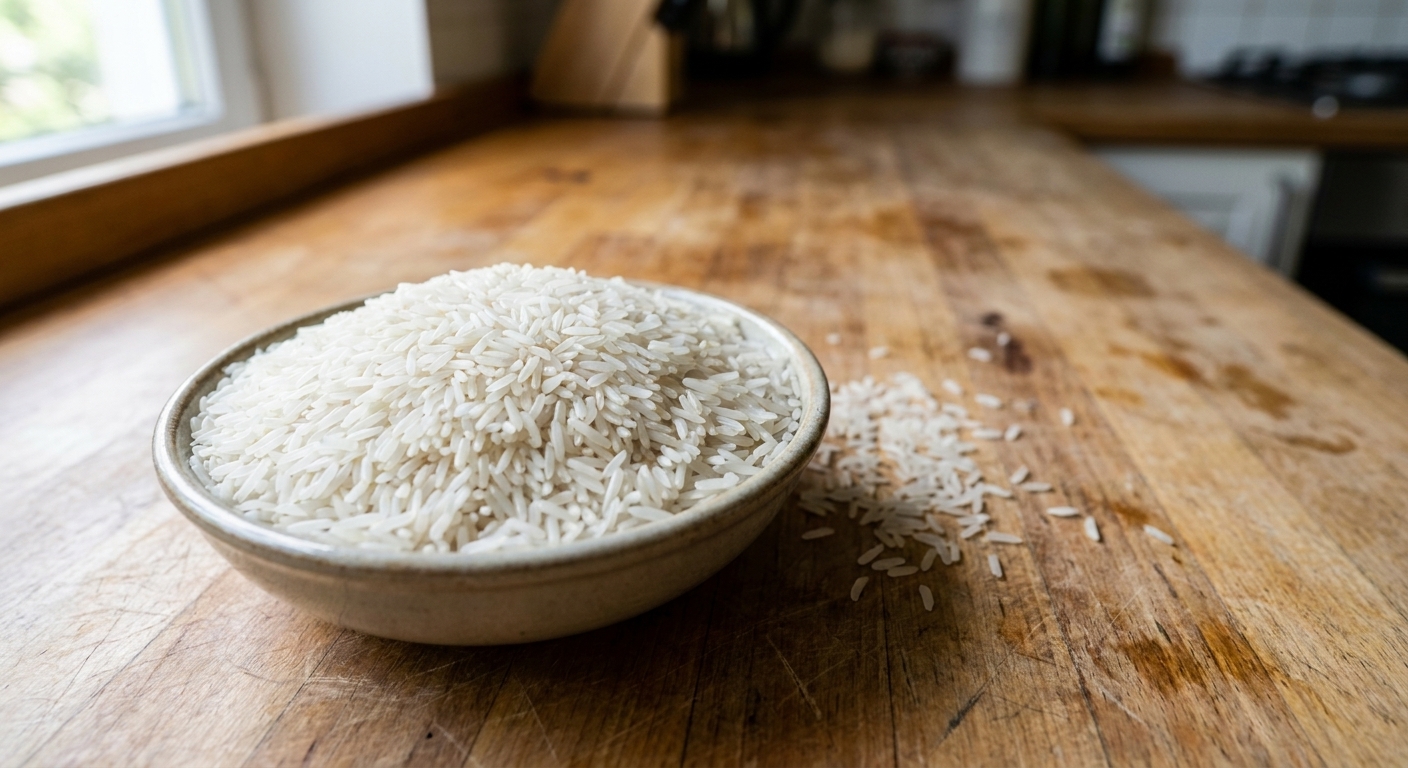
- Long-grain white rice: The workhorse. It stays separate and gives you that classic casserole texture.
Good choices with adjustments
- Basmati or jasmine: Still long-grain, still pretty separate. Expect a more fragrant flavor. Start with the same liquid range.
- Medium-grain white rice: More starch, more creaminess. If you tend to get mushy results, I would skip this.
- Brown rice: Works, but needs more liquid and a longer bake. If you try to force it into a white-rice method, you can get crunchy or uneven rice.
Rice types that need special handling
- Instant or quick-cooking rice: It is partially cooked already, so it can go soft fast in the oven. Use an instant-rice recipe, or add it near the end (I give a clear method in the FAQ).
- Parboiled (converted) rice: Often more resistant to mush, but it absorbs differently than regular long-grain white rice. In casseroles, that can turn into rice that is too firm, too soft, or just a little “off” if the liquid and timing are not matched to it. Use it if your recipe calls for it, or be ready to tweak.
My neighborly rule: If a recipe just says “rice,” assume it means uncooked long-grain white rice.
Ratios that are a solid start
On the stovetop, rice is pretty straightforward. In a casserole, you have extra variables: covered baking, creamy add-ins, and moisture from chicken and vegetables. That is why “2 cups liquid to 1 cup rice” can turn into a swamp once you add soup and sour cream.
Quick recap (skim-friendly)
- Best rice: uncooked long-grain white rice
- Total liquid range (2 cups rice): 3 1/2 to 4 cups, counting soup and other liquids
- Oven temp: 375°F
- Method: covered first, then uncovered to vent steam
Base ratio for a 9x13
For 2 cups uncooked long-grain white rice in a 9x13 casserole:
- 2 cups uncooked long-grain white rice
- 3 1/2 to 4 cups total liquid (counting broth, water, and the liquid portion of canned soups)
How to choose 3 1/2 vs 4 cups: Start closer to 3 1/2 cups if you are adding watery vegetables, using juicy chicken thighs, or including dairy like sour cream. Start closer to 4 cups if your add-ins are drier (cooked chicken breast, minimal vegetables, and little to no creamy dairy). Then adjust next time based on what your oven and pan do.
How to count canned soup
Here is the common issue: cream soups are not just “thick flavor,” they still count toward your liquid.
- One 10.5-ounce can of cream soup is roughly 1 1/4 cups by volume. (Brands and thickness vary a bit, so treat this as an estimate.)
Example: If you use 2 cans of soup (about 2 1/2 cups by volume), you only need about 1 to 1 1/2 cups additional broth or water to land in that 3 1/2 to 4 cup starting range.
If your family likes it extra creamy, add creaminess with a little cheese or a small dollop of sour cream after baking, not by pouring in more broth upfront.
Brown rice ratio
For 2 cups uncooked brown rice, plan on:
- 5 to 5 1/2 cups total liquid
- Longer bake time (more on temps and timing below)
Brown rice also benefits from a tighter seal during the first part of baking so it can soften properly.
Temp and timing
Mushy rice happens when the casserole spends too long in the steamy middle zone. In my kitchen, chicken and rice does best with a hotter oven so the liquid comes up to a true simmer relatively quickly.
Best oven temp
- 375°F is my go-to for dependable, tender rice.
- 400°F can work if your dish is very full or you want a slightly faster bake, but watch browning on top.
Cover, then vent
This is one of my favorite fixes for soggy, mushy rice:
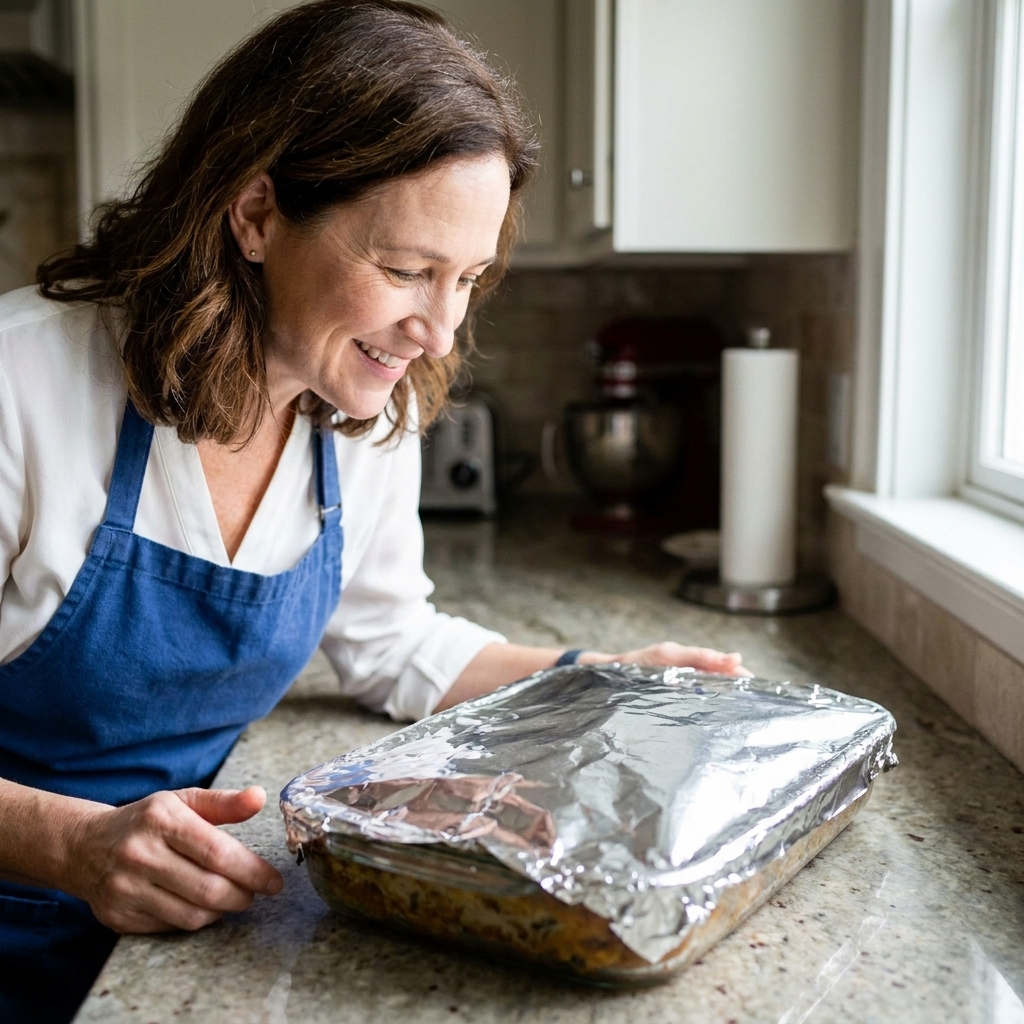
- Stage 1: Cover tightly with foil and bake until the rice is almost tender.
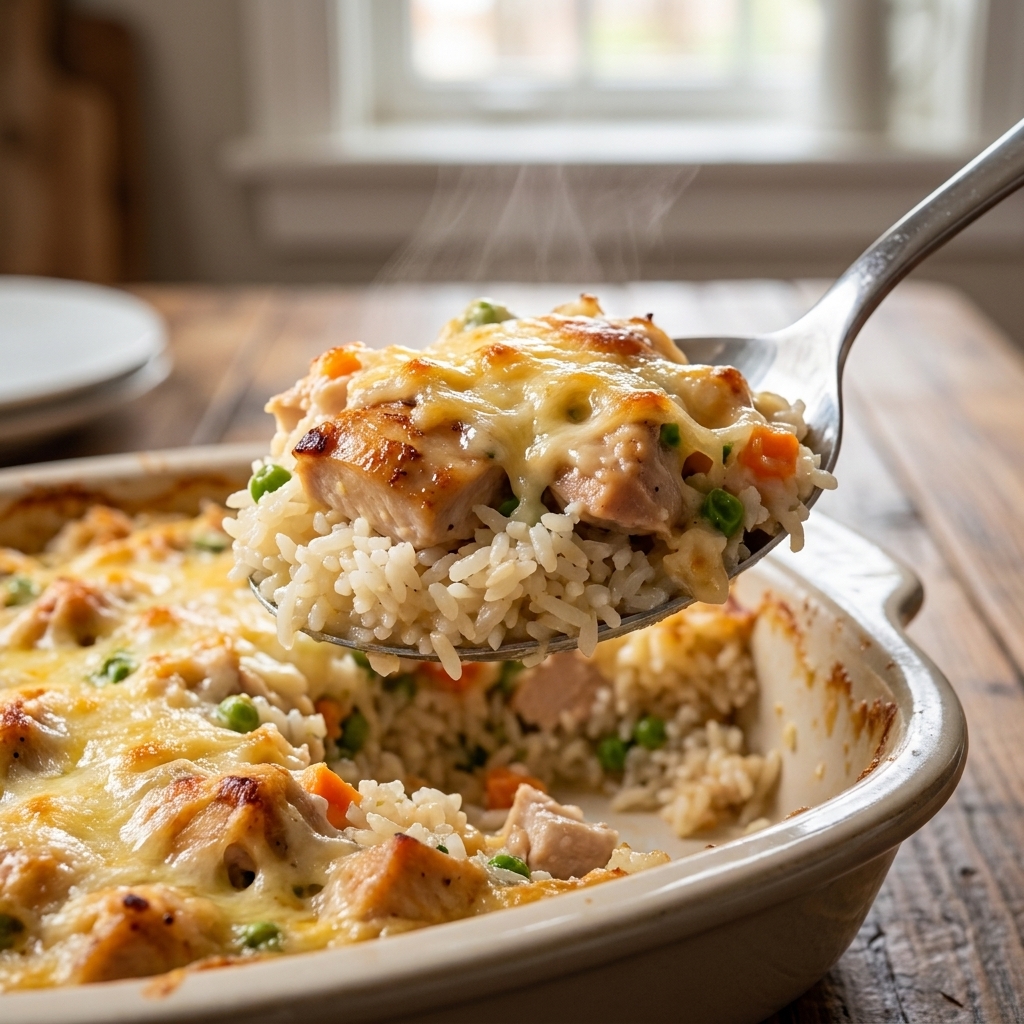
- Stage 2: Uncover and bake 10 to 15 minutes to let excess steam escape and the top dry out just enough.
That uncovered finish is where a lot of casseroles go from wet and heavy to just right.
Typical bake times
- White rice: 45 to 60 minutes total at 375°F (uncover for the last 10 to 15 minutes).
- Brown rice: 75 to 95 minutes total at 375°F (uncover for the last 15 minutes).
Ovens vary, rice ages vary, pan materials vary, and how cold your ingredients are matters too. The best doneness test is simple: taste a spoonful from the center. If the rice is tender and most liquid is absorbed, you are there.
Pan choice matters
If you have done everything “right” and still get uneven rice, your pan may be the quiet troublemaker.
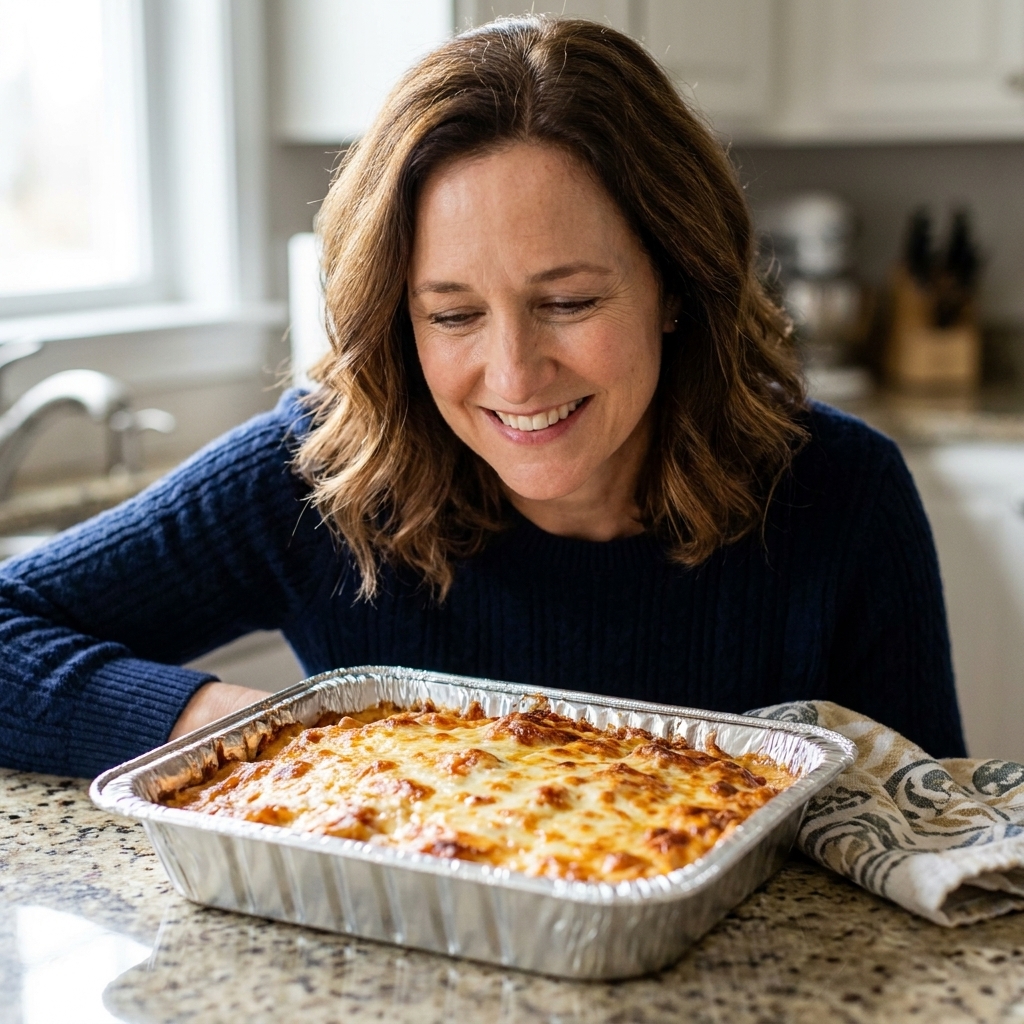
- Metal pans heat quickly and can cook the rice more evenly. They are often the easiest path to fluffy rice.
- Glass pans heat more slowly and hold heat longer. That can mean longer bake times and, sometimes, a softer bottom layer if the casserole stays steamy.
- Deeper dishes (or a very heaped 9x13) take longer for heat to reach the center, which can lead to overcooked edges and undercooked middle.
If you switch from metal to glass, plan on checking doneness later and relying on the taste test in the center. If you switch from glass to metal, start checking a bit earlier.
Prep moves that prevent gumminess
Rinse the rice
Rinsing removes some surface starch, which helps grains stay separate. It is not mandatory, but if your casseroles often lean sticky, it is an easy win.
- Rinse in a fine mesh strainer under cool water until the water runs mostly clear.
- Drain well so you are not sneaking extra water into your ratio.
Use hot broth
Starting with warm or hot broth helps the casserole get to a simmer faster. Faster simmer means more even cooking and less time sitting in trapped steam.
Do not let raw rice sit in liquid
If you assemble and then get pulled into a homework crisis or a phone call, raw rice will keep soaking. That is how you end up with rice that is overhydrated before it even hits the oven.
- If you need to prep ahead, keep rice and liquid separate until right before baking.
Stir gently, once
Mix enough to distribute ingredients, then stop. Overmixing breaks grains and releases starch, which can tip a casserole from fluffy to paste-like.
Sauté aromatics for flavor
If you like onion, celery, garlic, or mushrooms in your casserole, a quick sauté does two helpful things: it boosts flavor and drives off moisture.
- Onion and celery: 5 minutes in a bit of butter or oil is plenty.
- Mushrooms: sauté until they stop giving off liquid, then add.
This does not usually require a big liquid adjustment, but it can help prevent surprise water in the pan.
Moisture control
Rice is only half the story. The other half is everything else in the pan releasing liquid while the rice cooks.
Chicken tips
- Cooked chicken: Great for predictability. Shred or cube, then add. You are mainly cooking the rice, not the meat.
- Raw chicken: It releases juices as it cooks. That can be fine, but reduce your added liquid slightly, especially if using thighs.
- Thighs vs breasts: Thighs tend to be juicier. If you love thighs (I do), aim closer to 3 1/2 cups total liquid for 2 cups rice.
Vegetable tips
- Frozen vegetables: Thaw and drain, or expect extra water. Peas, mixed veg, and broccoli can add a surprising amount of moisture.
- Zucchini and spinach: High water. Use lightly cooked and squeezed, or use less.
Creamy ingredients
These are delicious, but they change how the rice absorbs liquid.
- Sour cream and cream cheese: Add richness, but they can make the casserole seem looser while hot. Keep amounts modest, or stir them in after baking.
- Cheese: Adds body without adding water. If you want comfort-food creaminess without soup overload, cheese is your friend.
A dependable no-mush method
If you want a simple baseline that behaves well in most kitchens, start here and adjust flavors from there.
Method
- Heat oven to 375°F. Lightly grease a 9x13 pan.
- Rinse and drain 2 cups long-grain white rice (optional but helpful).
- Whisk together 3 1/2 cups warm chicken broth (start here) plus seasonings. If using cream soup, count it toward the 3 1/2 to 4 cups total liquid.
- Add rice to the pan, then stir in your chicken and any quick-cooking add-ins.
- Cover tightly with foil and bake 40 to 50 minutes.
- Uncover and bake 10 to 15 minutes.
- Rest 10 minutes before serving. Rice finishes absorbing and the texture sets up.
Little trick from my Sunday-potluck days: If the casserole looks perfect but tastes a bit bland, fix flavor with a sprinkle of salt, a squeeze of lemon, or a shake of poultry seasoning at the table. Do not fix it by adding more broth after it bakes.
Troubleshooting
Mushy rice with liquid in the pan
- That usually means too much liquid and, sometimes, not enough heat.
- Fix now: Uncover and bake 10 to 20 minutes more at 375°F to help evaporation. Stir very gently one time, then stop.
- Fix next time: Reduce total liquid by 1/2 cup, or switch to long-grain white rice if you used medium-grain or quick rice.
Mushy rice but the casserole looks dry
- That is commonly overbaking or rice that started absorbing too early.
- Fix now: Stir in a small splash of hot broth (a few tablespoons at a time) and cover for 5 minutes to soften without turning it soupy.
- Fix next time: Do not let assembled casserole sit before baking. Pull it when rice is tender, then rest it.
Great top, soggy bottom
- Classic soggy bottom usually comes from too much liquid plus staying covered too long, and it can be more noticeable in glass pans.
- Fix next time: Uncover for the last 10 to 15 minutes, and make sure you are not exceeding the liquid range once soup and dairy are counted.
Crunchy rice in the middle
- That is undercooking or uneven heat, often from a loose foil cover or a very cold mixture going into the oven.
- Fix now: Add 1/4 to 1/2 cup hot broth, cover tightly, and bake 15 minutes more.
- Fix next time: Seal foil tightly and keep oven at 375°F. Consider using warm broth.
Freezer and make-ahead tips
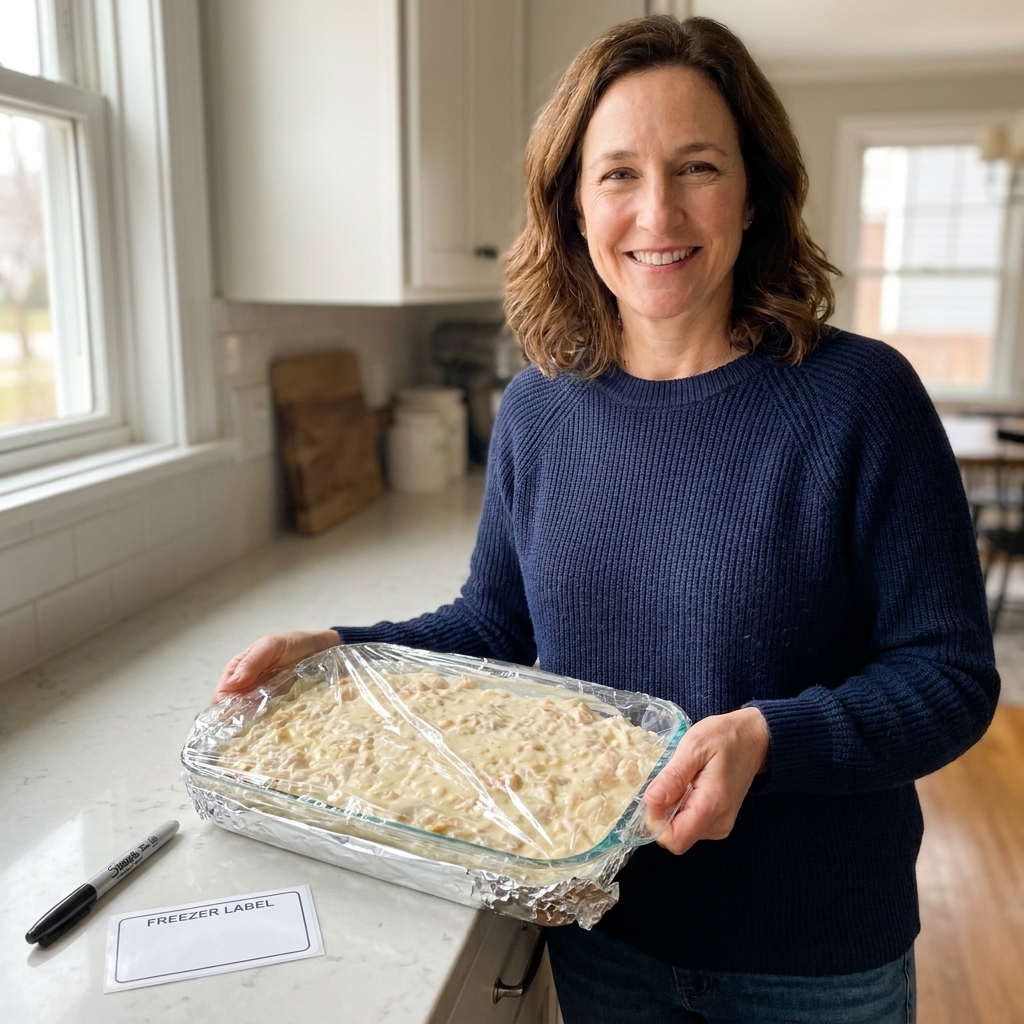
Chicken and rice casserole is one of my favorite “two in the freezer” meals, but rice can go soft if you freeze it the wrong way.
Best way to freeze for good texture
- Option 1 (best texture): Bake fully, cool completely, then freeze. Reheat covered at 350°F until hot, then uncover 10 minutes to dry the top slightly.
- Option 2 (assemble ahead): Use cooked rice instead of raw if you plan to freeze unbaked. Raw rice can absorb liquid unevenly as it thaws and bake up gummy.
Cool it safely
Do not wrap and freeze a steaming-hot casserole. Trapped steam turns to ice crystals and leads to watery reheats.
- For food safety, refrigerate cooked casseroles within 2 hours of cooking (within 1 hour if your kitchen is very warm).
- To speed cooling, portion into smaller containers or spread the casserole into a thinner layer before chilling.
- Once fully cold, wrap tightly and freeze.
And yes, I label mine. Future Clara deserves that kindness.
FAQ
Should I cook the rice first?
You can, and it is a great option for make-ahead or freezer meals. If a recipe is written for uncooked rice, do not swap to cooked without adjusting liquid and bake time. Cooked rice needs much less liquid and less time, or it will go soft.
Do I need to rinse rice for casseroles?
Not always, but rinsing helps if you want distinct grains and you have had mushy results before. Drain well so you do not throw off your liquid ratio.
Why did mine turn gummy with cream of chicken soup?
Most often it is because the soup was treated like a seasoning instead of liquid. Count each can as roughly 1 1/4 cups by volume, then reduce added broth accordingly.
Can I use instant rice?
You can, but the most reliable move is to follow a purpose-built instant-rice casserole recipe. If you are determined to adapt a regular recipe, here is the least fussy approach:
- Bake the casserole filling (chicken, soup, vegetables, seasonings, and only enough liquid to keep it saucy) covered at 375°F until hot and bubbling, about 20 to 25 minutes.
- Stir in instant rice, starting with the amount on the box for the volume of liquid you have.
- Cover again and let it sit 5 to 10 minutes, then check texture. Add a small splash of hot broth only if needed.
Instant rice goes from firm to too soft quickly, so the rest time matters more than extra oven time.
What is the best temperature?
For most 9x13 chicken and rice casseroles with white rice, 375°F is the sweet spot for even cooking and good texture.