
There are casseroles you make because they are easy, and then there are casseroles you make because they show up and do the job. Funeral potatoes live in that second category. They feed a crowd, soothe a tough day, and taste like somebody cared, even if you mixed them up between school pickup and the grocery run.
In my world, funeral potatoes are the unofficial potluck currency. You bring a warm 9x13, the top is crunchy, the middle is creamy, and suddenly you are the person everyone quietly wants to sit near.
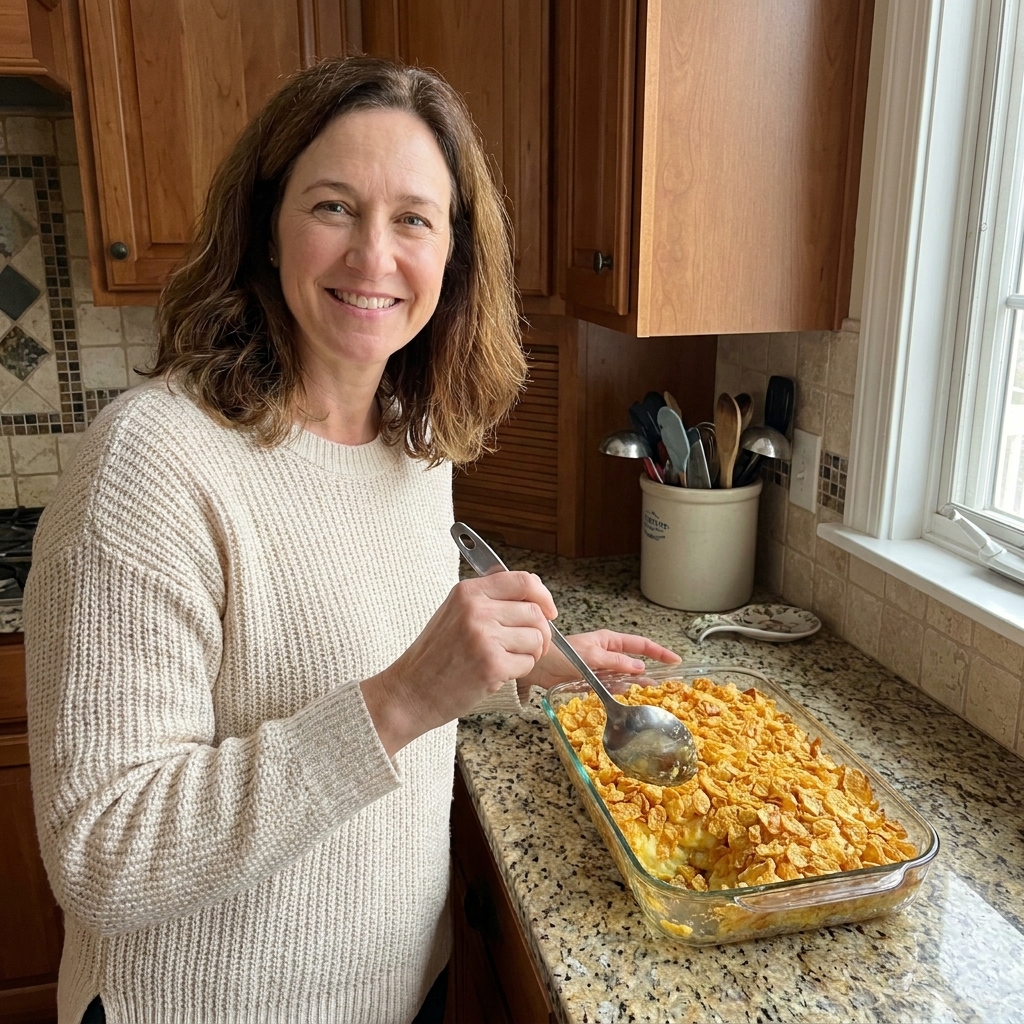
Where they came from
The nickname is blunt, but the story is tender. This casserole is widely associated with funeral luncheons and community meals because it checks every box you need on a hard day: inexpensive, filling, friendly to make ahead, and mild enough for picky eaters and grieving appetites.
In many parts of the Intermountain West, especially Utah and surrounding states, funeral potatoes are often linked to Latter-day Saint ward gatherings and relief society kitchens. You will also find versions everywhere under different names: cheesy hash brown casserole, party potatoes, church potatoes, or simply “that potato thing.” The details shift, but the mission stays the same.
The exact origin is tough to pin down, which is honestly part of the point. This is a community cookbook classic built to be shared, stretched, and repeated until the method became muscle memory.
The perfect pan
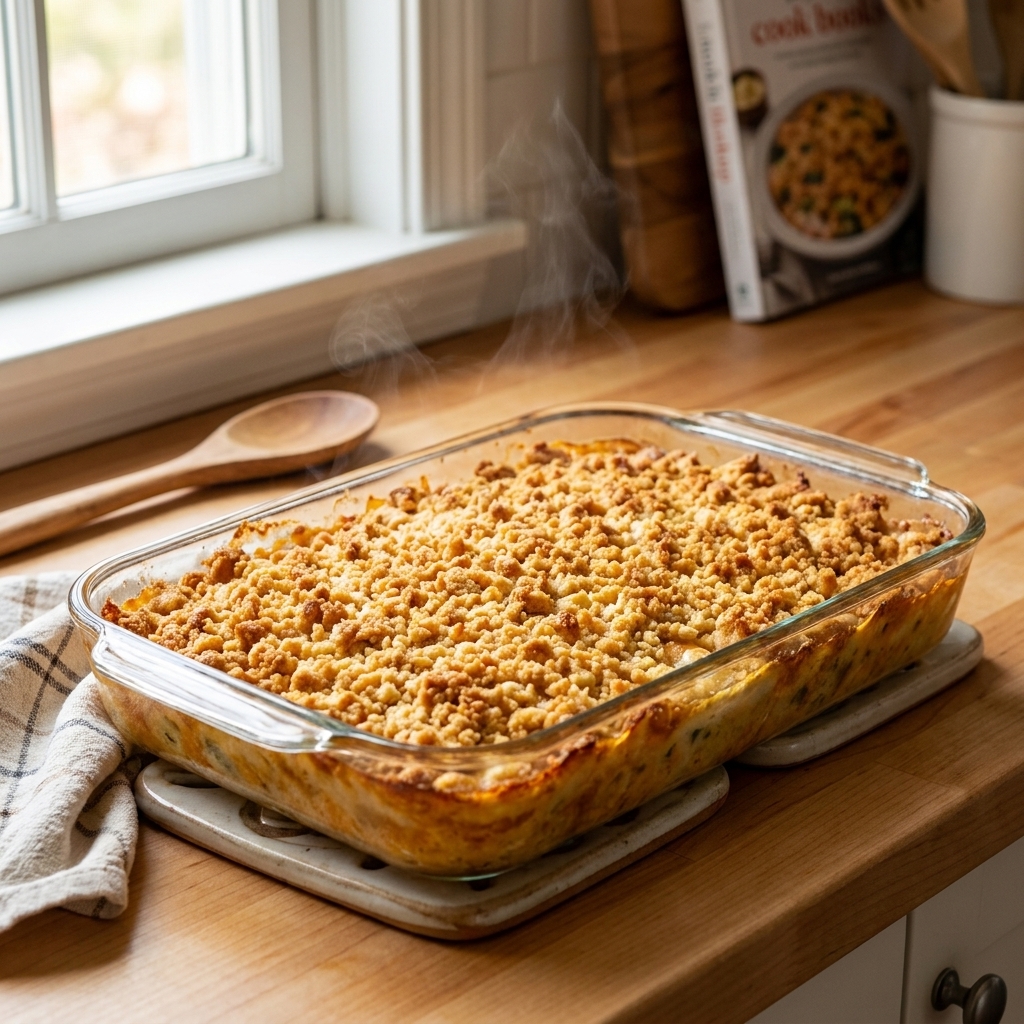
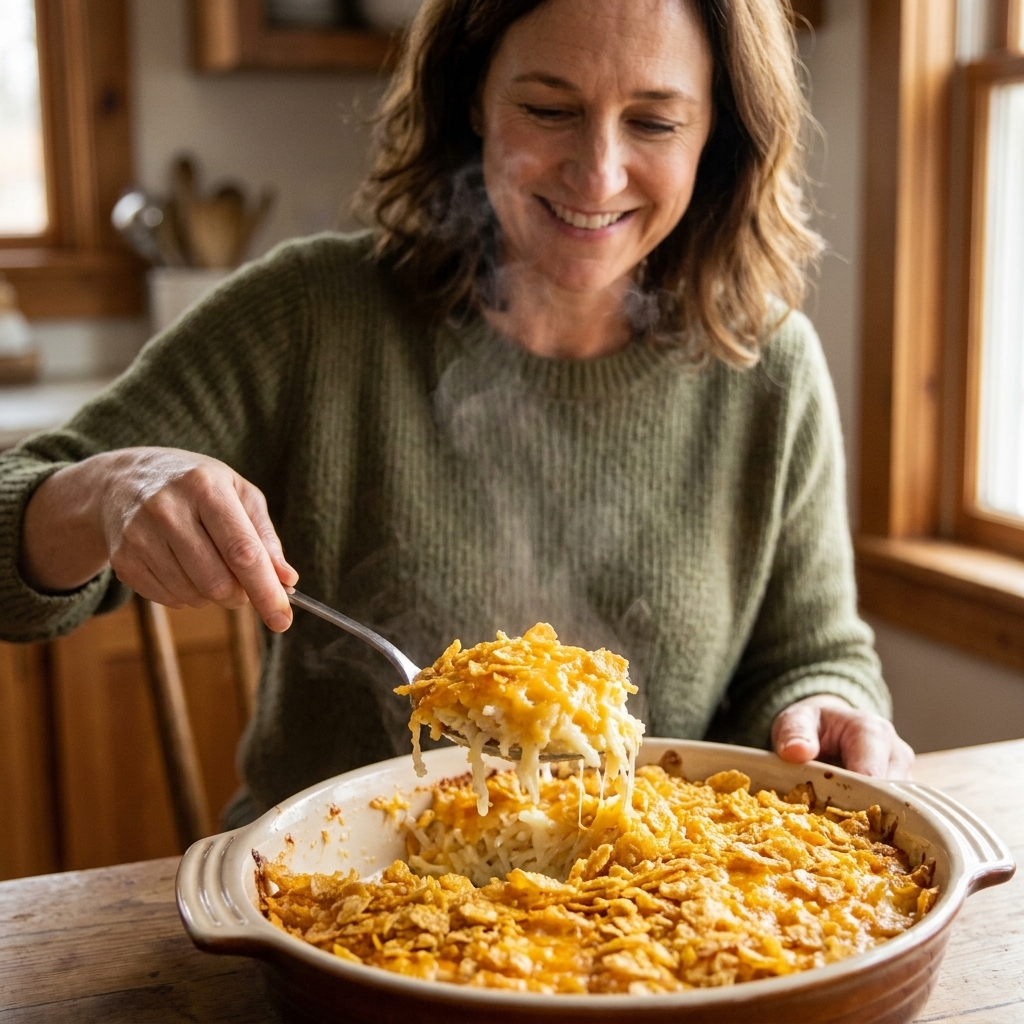
When funeral potatoes are just okay, they are heavy and a little wet. When they are great, they are creamy and spoonable inside, with a top that crackles a bit when your serving spoon breaks through.
Here is what makes the classic version work, piece by piece.
1) The potatoes
Most traditional recipes use frozen shredded hash browns. They are consistent, fast, and they bake into that familiar, cohesive casserole texture.
- Shredded hash browns: Softer, more unified texture. The casserole slices and scoops neatly.
- Diced hash browns: Chunkier bite and a little more structure. Great if you like distinct potato pieces.
- Fresh potatoes: Totally doable, but you need to control moisture. Shred, rinse quickly, squeeze dry very well, then par-cook or microwave briefly so they are not crunchy in the center.
My moisture rule: Frozen potatoes should be thawed enough to break apart, then patted dry. Extra water is the fastest route to a soggy bottom.
2) The creamy binder
The classic binder is a combination of sour cream and condensed cream soup, most often cream of chicken. This is where the nostalgia lives. It is also where you can make smart adjustments without changing the funeral potato vibe.
- Sour cream: Tang and richness. It keeps the filling creamy instead of gluey.
- Condensed soup: Seasoning, body, and that silky set once baked.
- Butter: Flavor and moisture balance. It helps the potatoes bake up tender.
If you have ever wondered why they are called funeral potatoes even when they are served at Christmas brunch: because this flavor combo became the reliable, repeatable standard. People stick with what works.
3) The cheese
Sharp cheddar is the classic choice because it brings enough flavor to stand up to potatoes and dairy. Mild cheddar is gentler but can taste flat if your soup and sour cream are low-sodium.
- Sharp cheddar: Best all-around flavor.
- Colby Jack: Extra melty and kid-friendly.
- Pepper Jack: Great if you want a little personality without changing the whole dish.
My practical tip: Shred your own if you can. Pre-shredded cheese is often coated with starches or cellulose to prevent clumping, which can keep it from melting as smoothly.
4) The topping
The topping is not a garnish. It is the crunch that makes people go back for seconds. Without it, funeral potatoes can feel one-note.
Most versions land in one of these topping families:
- Cornflakes + melted butter: The iconic top. Light, crispy, and classic.
- Crushed Ritz or buttery crackers: Richer, more cohesive crunch.
- Panko breadcrumbs: A drier, toasty crunch that holds up well for longer buffet times.
- Potato chips: Salty and fun, but can brown fast. Add later in the bake if needed.
My topping rule: Mix the topping with butter thoroughly so it browns evenly. Dry spots burn before the rest turns golden.
The method
Funeral potatoes are simple, but they are not mindless. The difference between fine and legendary is usually moisture control and bake timing.
Thaw and dry
If you stir rock-hard frozen shreds into the mix, you get uneven baking and extra liquid as they thaw in the pan. I like to thaw in the fridge overnight, then spread them on a clean towel and blot.
Season on purpose
Condensed soup brings salt, but it is not always enough. Potatoes drink seasoning. A little onion (powdered or sautéed), black pepper, and a pinch of garlic goes a long way. If your cheese is mild, add a touch more salt.
Use the right pan
A 9x13 is the sweet spot because it gives you enough surface area for topping and browning. A deeper pan can trap steam and soften the top.
Bake time and temp
For a standard 9x13 pan, bake at 350°F until the edges are bubbling and the center is hot, usually 45 to 60 minutes.
- If your topping is browning fast, loosely tent with foil for part of the bake.
- If you are baking a cold, make-ahead pan straight from the fridge, add 10 to 15 minutes.
Let it rest
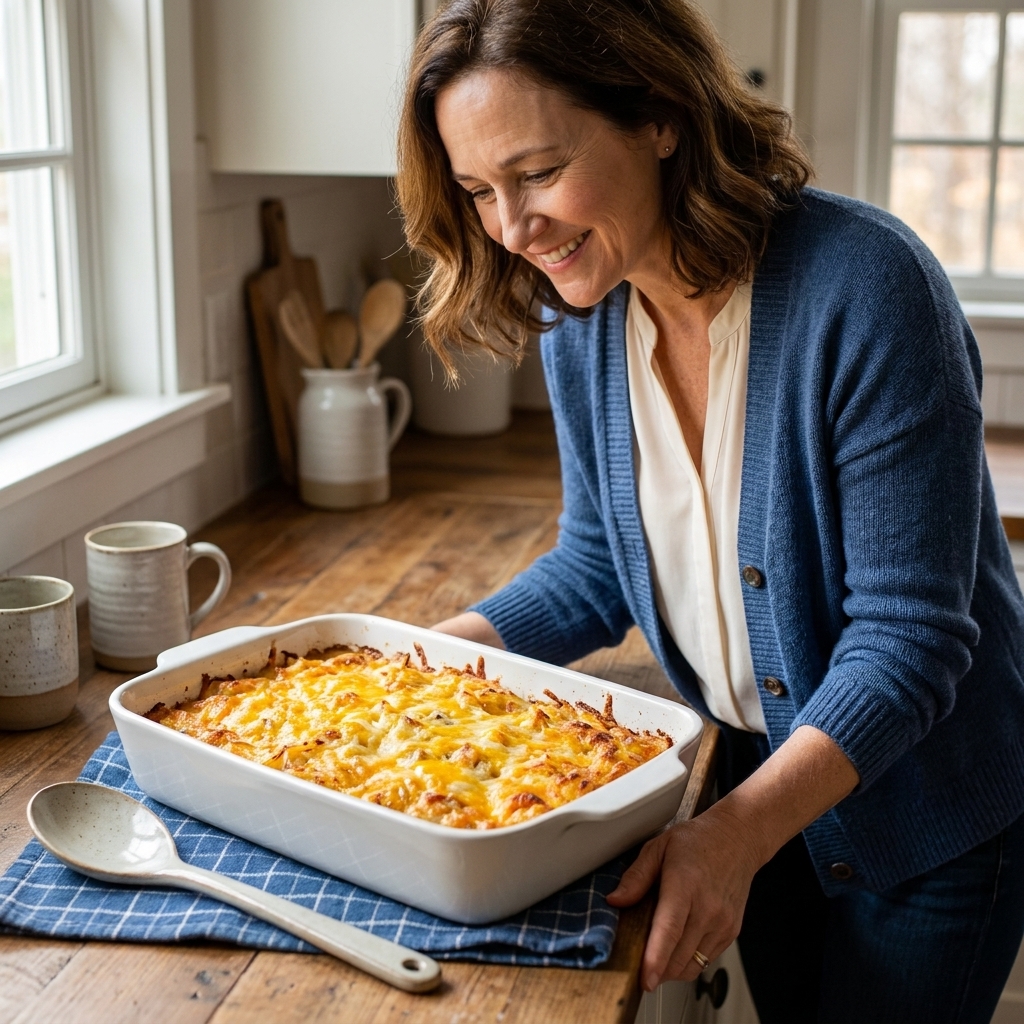
Give it 10 to 15 minutes on the counter. The filling thickens slightly and becomes easier to scoop cleanly. This is especially helpful for potlucks where the first scoop sets the tone.
Variations you will see
If you have eaten funeral potatoes in three different states, you have probably eaten three different casseroles with the same name. Here are the most common variations, and what they do to the final pan.
Intermountain West classic
Shredded hash browns, sour cream, cream of chicken soup, cheddar, cornflakes. It is comforting, mild, and designed to please everybody from toddlers to grandpas.
Midwest party potatoes
Often a little richer, sometimes with extra butter, sometimes with diced potatoes for more texture. Toppings can lean cracker-heavy. You may also see a hint of onion or a shake of seasoned salt.
Southwest spin
Green chiles show up here, and I love them. A small can of mild diced green chiles (drained) adds warmth without turning it into a totally different dish. Pepper Jack also makes sense in this lane.
Brunch version
Served alongside ham and fruit salad, sometimes with a little extra cheese on top and a softer topping. Some families fold in diced ham, but at that point you are very close to a whole meal casserole, which is not a bad thing.
From-scratch sauce
Instead of condensed soup, some cooks make a quick white sauce with butter, flour, broth, and milk, then stir in sour cream and cheese. It is delicious and gives you more control over salt and thickness.
Make-ahead and freezing
This is the part I care about deeply, because funeral potatoes are built for real life. The goal is to keep the interior creamy and the topping crisp, even if you make it ahead or stash it in the freezer.
Make-ahead for tomorrow
- Assemble the casserole base (everything except the topping) in the baking dish.
- Cover tightly and refrigerate up to 24 hours.
- Store the topping separately in a container or zip-top bag.
- When ready to bake, add the topping right before it goes in the oven.
Why: Topping left on overnight pulls moisture and turns soft before it ever hits heat.
Freezing
You can freeze funeral potatoes successfully. The key is separating what freezes well from what does not.
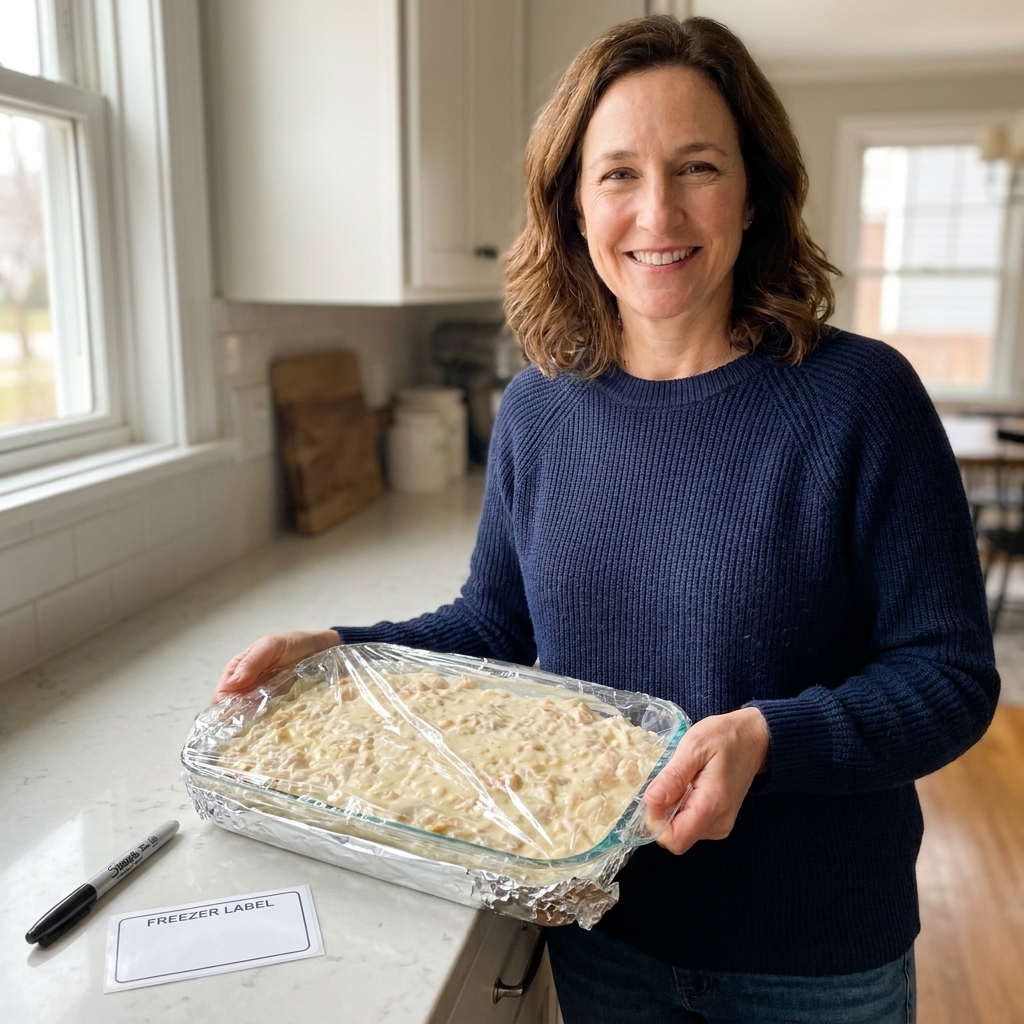
- Best approach: Freeze the casserole base without the topping.
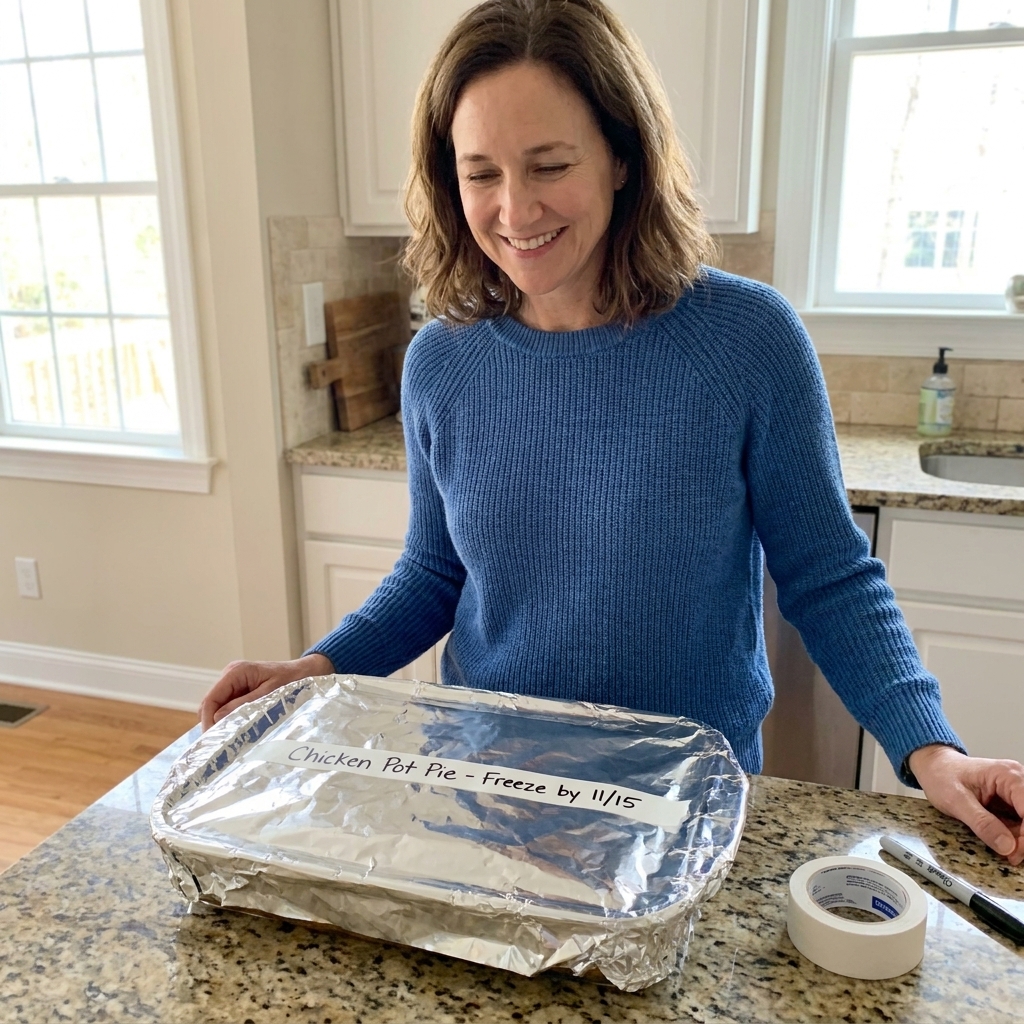
- Wrap well: Press a layer of plastic wrap directly against the surface, then add foil. This limits freezer burn and ice crystals that later melt into water.
- Label it: Date it and add bake instructions. Future you will be grateful.
Plan on baking from thawed when possible. Thaw in the fridge for 24 to 48 hours, then add topping and bake. If you must bake from frozen, expect a longer bake and a softer texture in the center. Cover with foil for the first stretch, then uncover to brown.
Reheating
- Oven is best: 325°F, covered for 15 to 25 minutes, then uncover for 5 to 10 to re-crisp the top.
- Microwave works: It will be creamy, but the topping will soften. If you care about crunch, microwave portions then finish under the broiler for a minute or two.
If the top is browning too fast: Loosely tent with foil. If the top is pale and the casserole is hot, a quick broil can fix it, but stay right there. It goes from golden to burnt in a blink.
Potluck safety basics
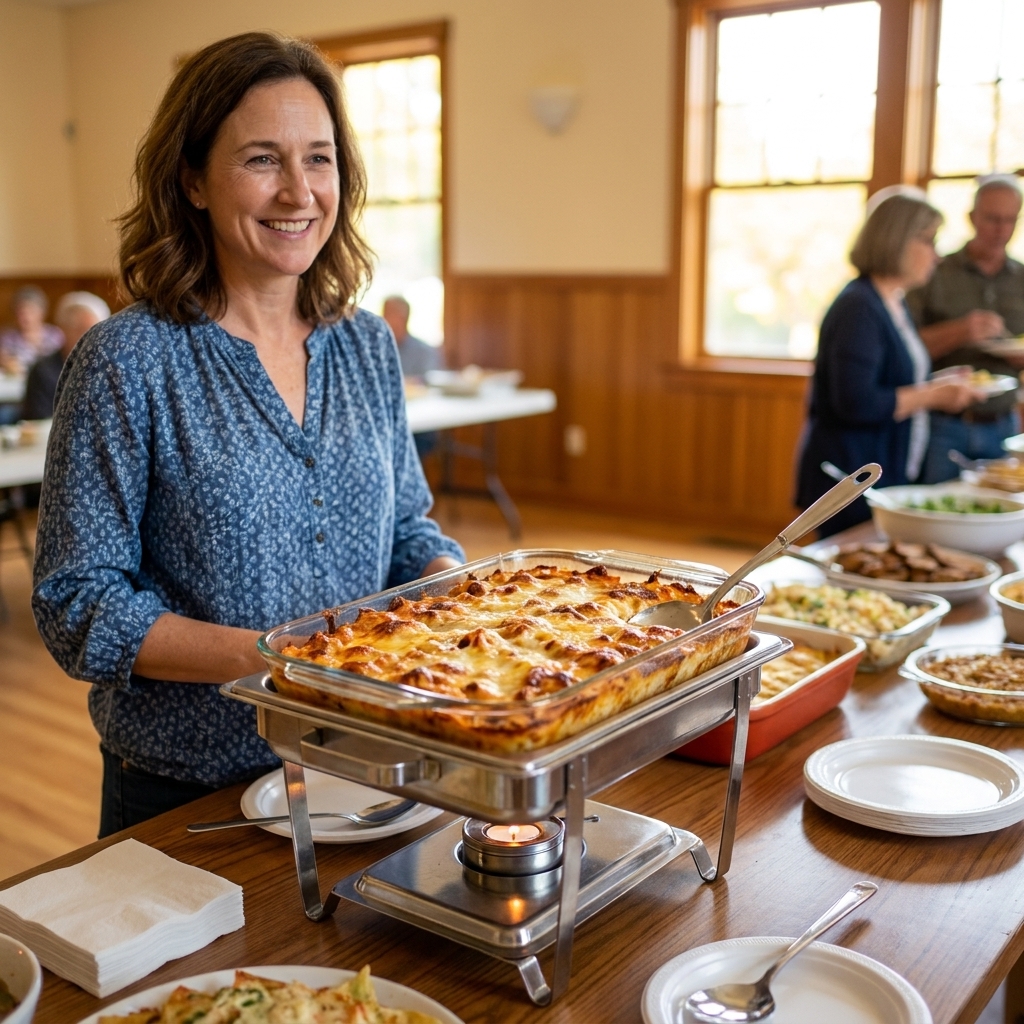
If you are taking funeral potatoes on the road, treat them like any other hot, dairy-rich casserole. Keep them hot in a low oven or insulated carrier, and do not let the pan sit out for hours at room temperature. When in doubt, reheat until steaming hot before serving.
Problems and fixes
Mine turned watery
- Thaw and blot hash browns.
- Do not add topping until baking time.
- If you can, use full-fat sour cream. Lower-fat versions can be more likely to loosen as they heat.
- Let it rest before serving so it can set.
The middle is hot but the potatoes feel undercooked
- Hash browns were likely too frozen going in, or the bake was too short.
- Cover with foil and bake a little longer to soften the potatoes without scorching the top.
The top got too dark
- Your oven may run hot, or the rack was too high.
- Next time bake on the middle rack, and add foil if it browns early.
- Consider a slightly thicker topping layer mixed well with butter for more even browning.
It tastes bland
- Add black pepper and onion (powder or sautéed) to the base.
- Use sharp cheddar, or blend sharp cheddar with a little Monterey Jack.
- Taste the mixture before baking and adjust salt. It should taste a touch bold cold, because potatoes mellow everything once baked.
Why it belongs
Funeral potatoes are not fancy. They are dependable. They are the casserole you can hand to a teenager to stir, the pan you can double without a math headache, and the dish that looks right at home next to ham, fried chicken, brisket, or a stack of paper plates at the community center.
And if you are anything like me, you keep the ingredients on hand because it is comforting to know you can produce a warm 9x13 of pure kindness whenever life asks for it.
FAQ
Why are they called funeral potatoes?
Because they became a go-to casserole for funeral luncheons and community meals where food needs to be filling, mild, affordable, and easy to make ahead. The nickname stuck, even though they show up at holidays and potlucks all year.
Do I have to use cream of chicken soup?
No. Cream of mushroom is common, and cream of celery shows up often too. You can also use a homemade white sauce if you prefer, but the classic condensed soup taste is part of the traditional flavor.
Shredded or diced hash browns?
Shredded gives you that classic cohesive casserole texture. Diced gives a chunkier bite. Both work. Just thaw and blot either way.
Can I make them without cornflakes?
Yes. Crushed buttery crackers, panko, or even crushed potato chips can stand in. The important thing is adding a crisp topping right before baking.
Can I freeze funeral potatoes?
Yes. Freeze the base without the topping, wrap tightly, thaw in the fridge, then add topping and bake. That is the best way to avoid a watery texture and a soft topping.