
If you have ever carried a bubbling 9x13 to a potluck and watched it turn into a “help yourself” crater within minutes, you are in good company. Casseroles are comfort food, not fine dining, but I still want each serving to land on a plate looking like a real portion, not a ladle situation.
The secret is not a fancier recipe. It is the same set of tricks caterers use: rest, set, portion, then serve with the right tools. Once you get the rhythm, you can slice clean squares even on a crowded buffet table with a line forming behind you.
Start with the right texture
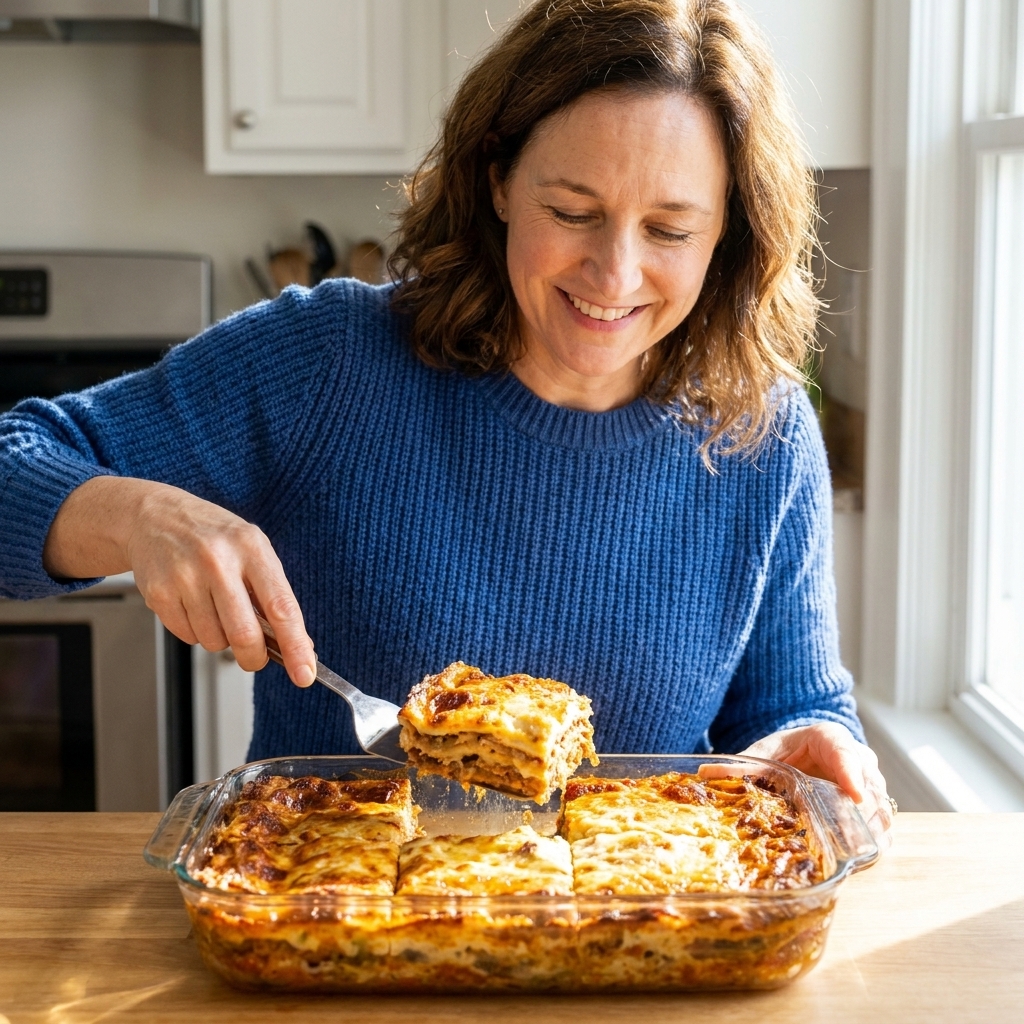
Clean slices start at bake time. If a casserole is too loose, no cutting method will magically turn it into tidy squares. These small choices help your casserole set up like it is supposed to.
Watch the moisture balance
- Thicken your sauce. Gravies, cream sauces, and enchilada fillings should coat a spoon before baking. If your sauce is thin in the pot, it will be thinner once the pasta or veggies release water.
- Drain cooked add-ins well. Ground beef, spinach, mushrooms, zucchini, and frozen veggies are the usual culprits. Squeeze spinach dry and let browned meat sit a minute, then drain.
- Undercook pasta slightly. Pasta continues to absorb liquid as it bakes and rests. If you cook it fully first, it can swell and throw off the balance of sauce to pasta.
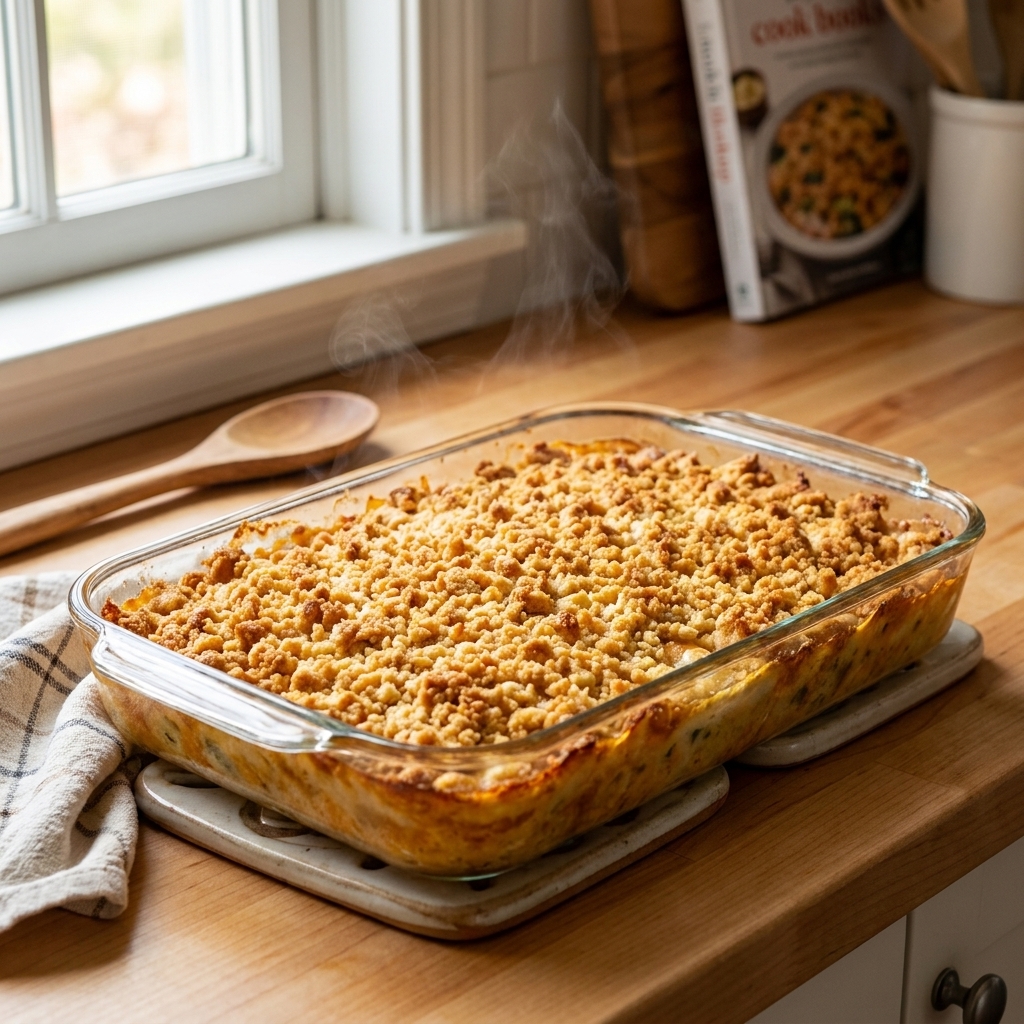
- Use the right cheese layer. A top layer of melted cheese helps hold heat, but it can slide if the casserole is very saucy underneath. A mix of cheese plus a light crumb topping can help create a more sliceable top.
Pick a pan that helps you
For the cleanest edges, I like a straight-sided metal 9x13 for potlucks. Glass works fine too, but it holds heat longer and may need a longer rest before it slices cleanly.
The real secret: rest it
Most casseroles look messy because we cut them too hot. Right out of the oven, the filling is still bubbling and fluid. Give it time to calm down and set.
Resting times that work
- Cheesy pasta bakes (mac and cheese, baked ziti): 15 to 25 minutes
- Meat and potato casseroles (shepherd’s pie, layered bakes): 20 to 30 minutes
- Breakfast casseroles (egg-based): 10 to 15 minutes
- Very saucy casseroles (enchilada bakes, lasagna-style layers): 25 to 45 minutes
If your potluck is the type where people dig in the second you arrive, do yourself a favor: bake a little earlier, rest at home, portion, then rewarm for the buffet. That one change is what makes your dish look “catered.”
Food safety while it rests
A short rest on the counter to help it set is fine. After that, do not let a perishable casserole linger in the temperature danger zone (roughly 40 to 140°F, or 4 to 60°C). As a practical rule, keep the total time at room temperature to 2 hours or less (or 1 hour if it is very warm where you are), including serving time. For longer events, either keep it hot-held at 140°F (60°C) or above, or cool and refrigerate promptly.
Pre-portioning: the potluck move
If you want clean slices on a crowded buffet, portioning ahead of time is the move. It removes the awkward moment where someone bumps your elbow while you are trying to cut straight lines.
Method 1: Slice in the pan, then reset the grid
- Rest the casserole until the center is set.
- Cut a full grid with a thin knife (more on tools below).
- Run the knife again along those same cuts, straight down, to make sure you reached the bottom.
- Nudge the portions apart slightly by gently pressing the knife along the cut lines. That tiny separation helps keep edges from re-fusing as the casserole sits warm.
This sounds fussy, but it takes less than a minute and makes each lift-out cleaner.
Method 2: The two-spatula lift
For soft casseroles like baked mac and cheese or creamy chicken bakes, use two tools: a thin metal spatula plus a spoon or a second spatula. Slide the metal spatula underneath, then use the second tool to stabilize the top as you lift. Less wobble equals fewer crumbles.
Method 3: Pre-slice, then chill briefly
This is the trick I use for lasagna-style casseroles when I want sharp edges:
- Rest, then cut.
- Cool at room temperature 20 to 30 minutes.
- Refrigerate 30 to 60 minutes until the portions are firm.
- Transport cold, then reheat (covered) if you can, or warm gently before serving.
A slightly chilled casserole slices like a dream, then reheats beautifully. It is also less likely to slosh in the car.
Tools that make it easy
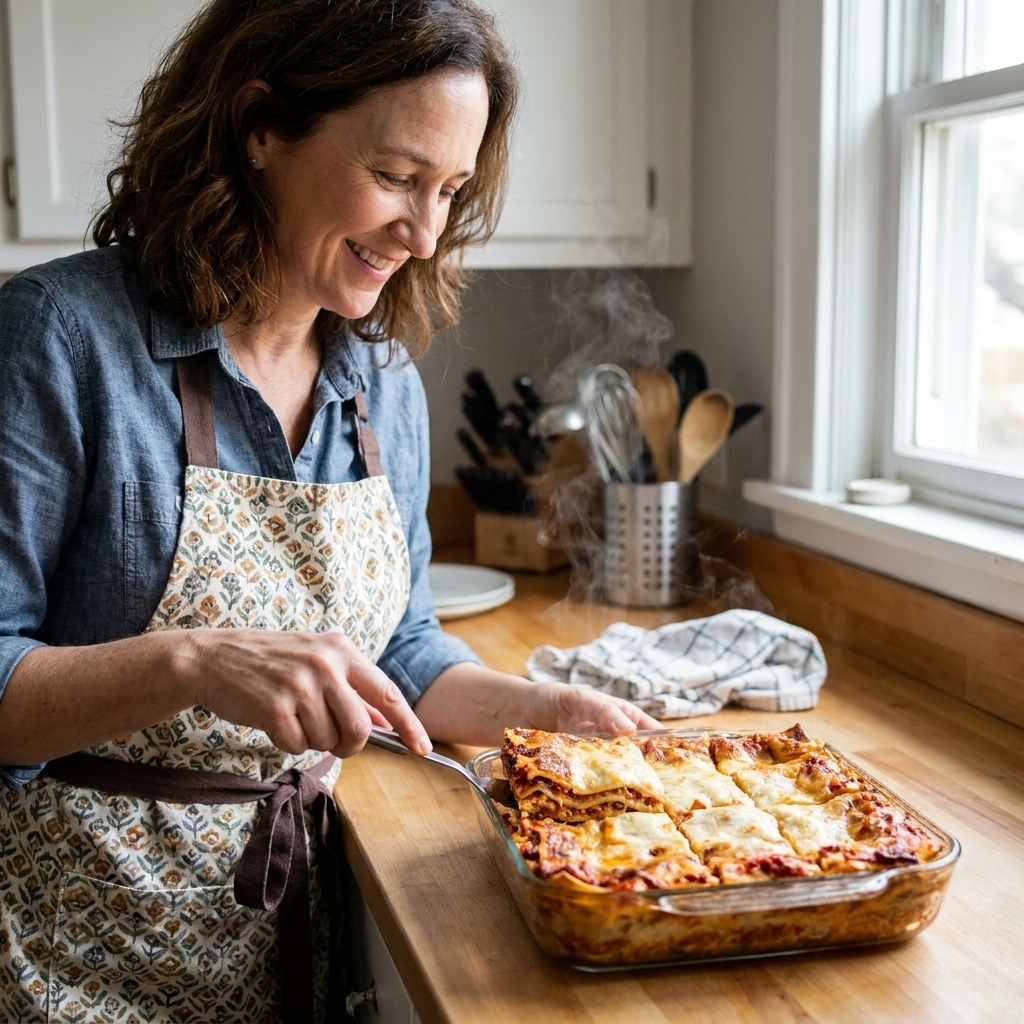
You do not need a professional kit, but you do need the right shape of tools. These are my buffet go-tos.
The best cutters
- Thin chef’s knife or slicing knife: Best for most casseroles. Thin is key so you do not drag fillings around.
- Plastic knife for nonstick pans: A surprisingly good option for clean lines without scratching.
- Bench scraper: Fantastic for straight-down cuts in firm bakes and bar-style portions. Avoid nonstick, and use cautiously in glass if you are worried about scratching.
The best servers
- Thin metal spatula: The classic for a reason. It gets under the bottom without bulldozing.
- Fish spatula: My favorite secret weapon. It is thin, slightly flexible, and slides under delicate portions.
- Wide nylon turner: Best for nonstick pans and softer casseroles.
My little clean-cut bowl
Bring a small bowl and a paper towel. Dip the knife in hot water, wipe, then make your next cut. Warm blade, clean wipe, repeat. This prevents cheese drag and keeps layers looking tidy.
How to cut straight lines
When I want portions that look uniform, I use a simple approach that works under pressure.
Step-by-step
- Decide your portion count before you cut. Common grids: 3x4 (12 servings), 4x4 (16 smaller servings), or 2x4 (8 hearty servings).
- Score lightly first so you can adjust. Once you like the spacing, cut all the way down.
- Cut rows, then columns in one direction, then the other. It keeps your lines straighter than hopping around.
- Start at a corner for the first serving. Corner pieces lift easiest and create space for cleaner lifting after that.
If your casserole has a thick cheese lid, let it cool a few extra minutes. Cheese slices cleaner when it is melted but not molten.
Buffet setup
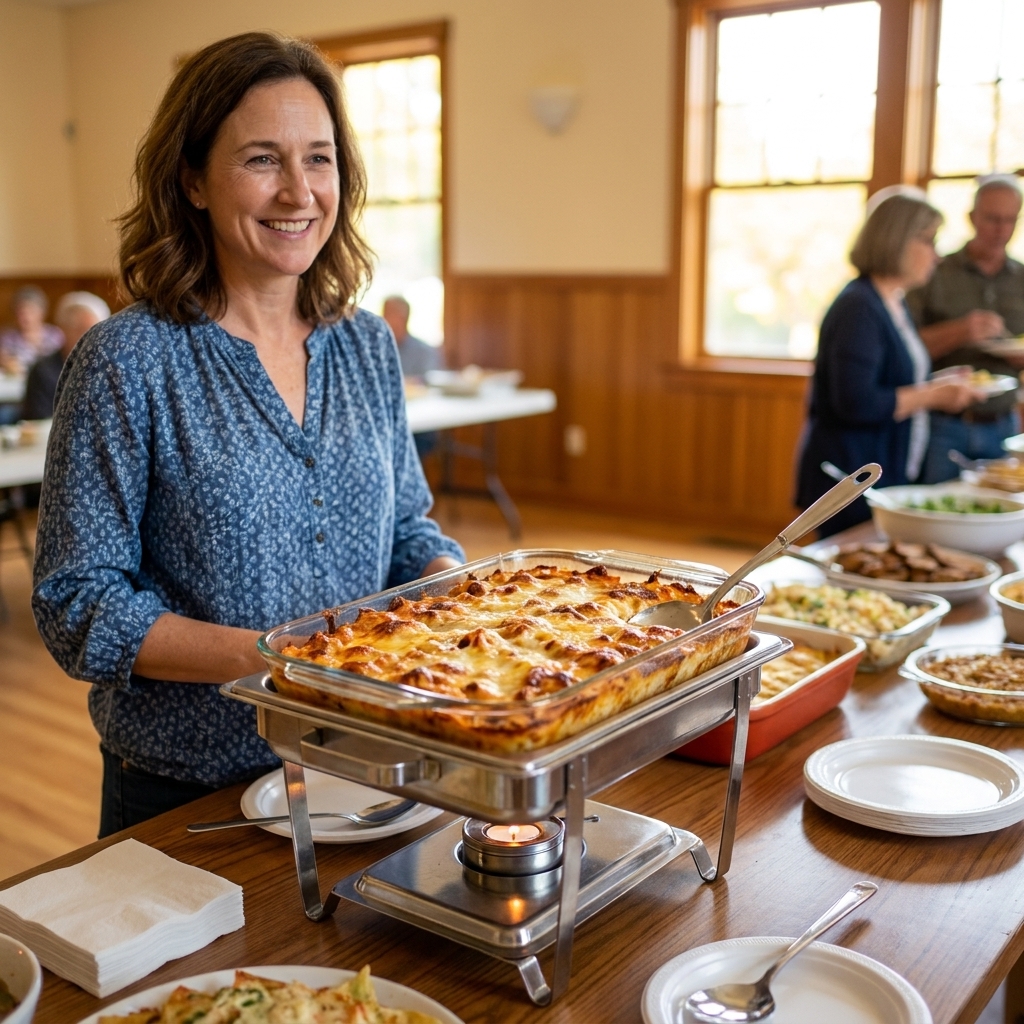
You can do everything right, then lose the battle when three people try to serve themselves at once. A little buffet strategy keeps portions neat after you walk away.
Set the pan on a stable base
- Use a non-slip trivet or a damp kitchen towel under the pan so it does not skate around.
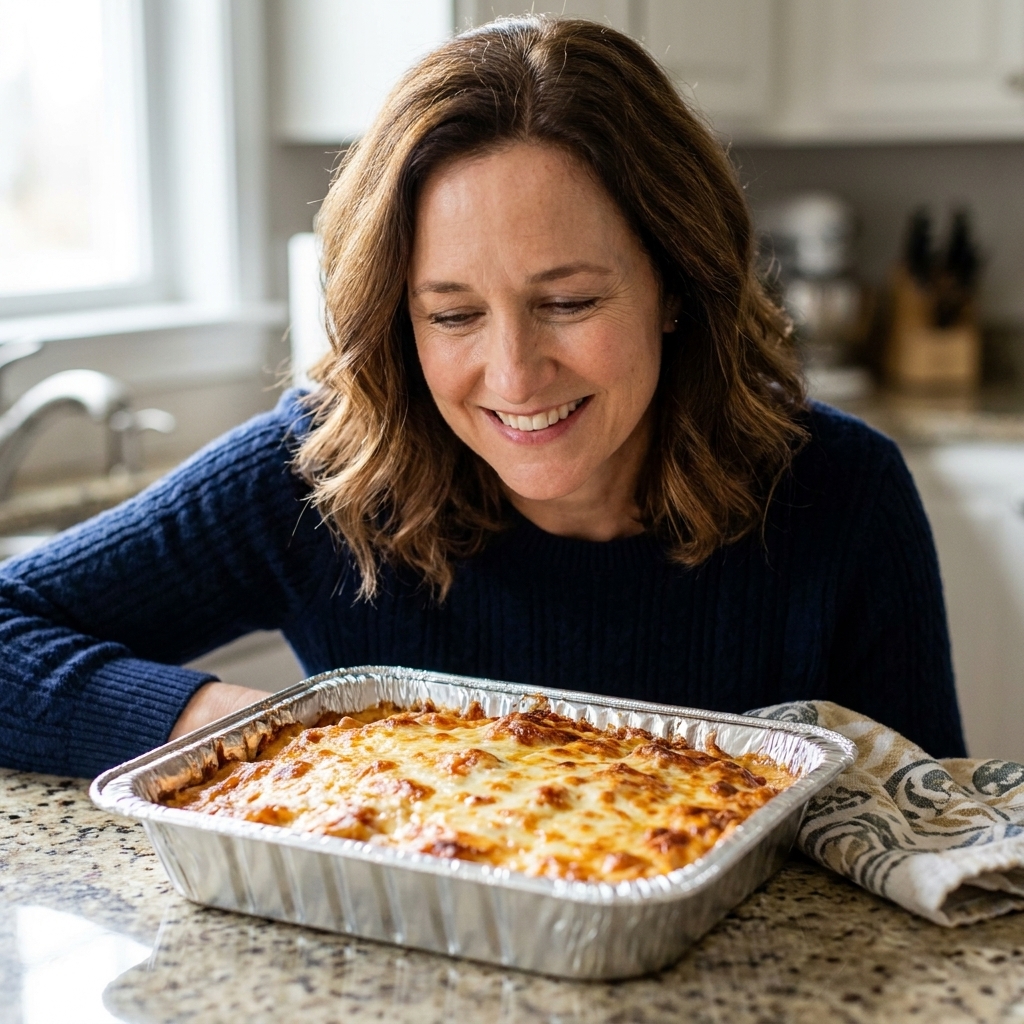
- If you brought a disposable foil pan, set it on a sheet pan or sturdy tray for rigidity.
Choose one serving tool
Two different utensils invite chaos. Put one proper spatula in the pan and skip the spoon. If you want to be extra helpful, place the spatula handle pointing outward so it is the obvious choice.
Leave space for lift-out
If you pre-cut, remove the first corner piece yourself and place it on a small plate next to the casserole as a “display portion.” It creates a clean opening so guests can slide the spatula under the next piece without gouging.
Holding and rewarming
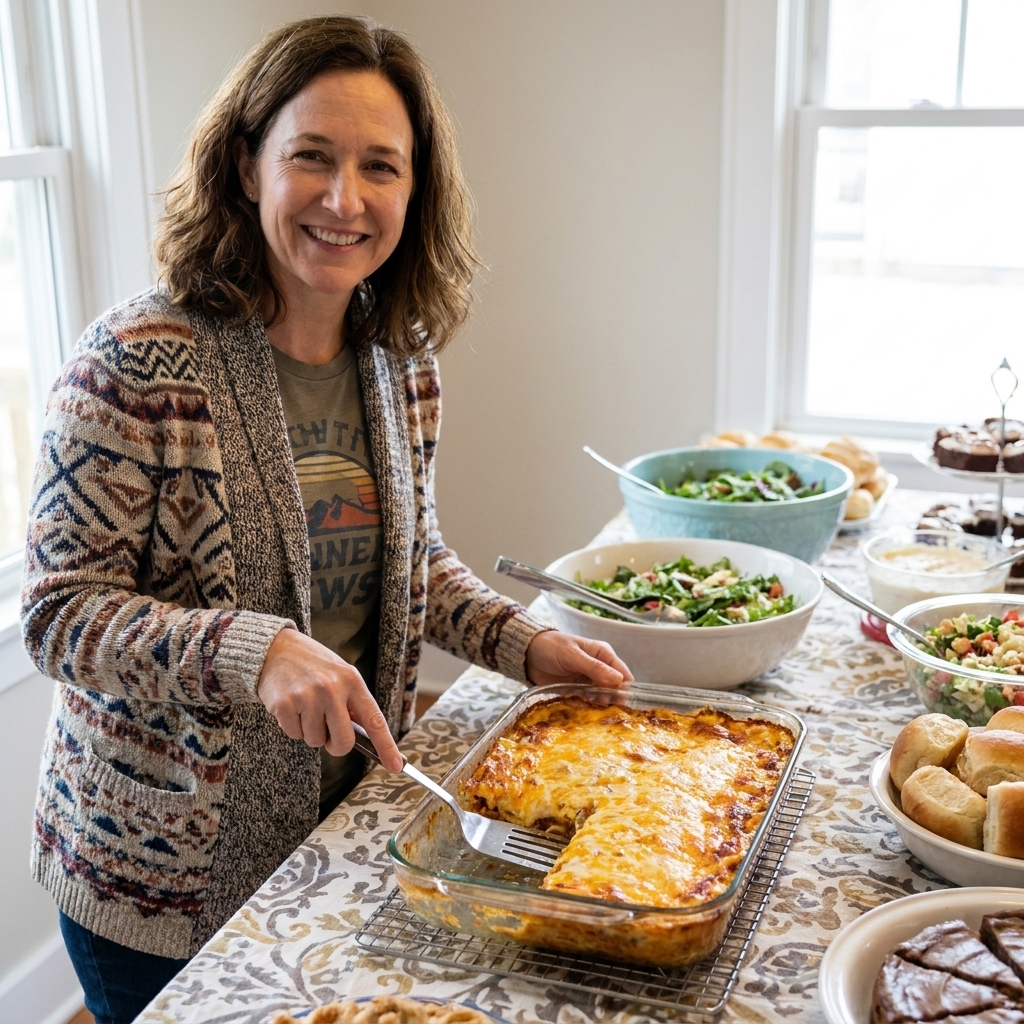
If you are serving over time, the goal is simple: keep it hot enough to be safe, and gentle enough not to dry it out.
- To hold hot: Keep the casserole at 140°F (60°C) or above in a low oven, chafing setup, or buffet warmer. Stirring is not your friend here. Just keep it covered when you can.
- To rewarm a pre-portioned casserole: Cover tightly with foil and warm at 300 to 350°F until hot throughout. If it is a casserole that tends to dry out, add a small splash of broth or sauce around the edges before reheating.
Transport tips
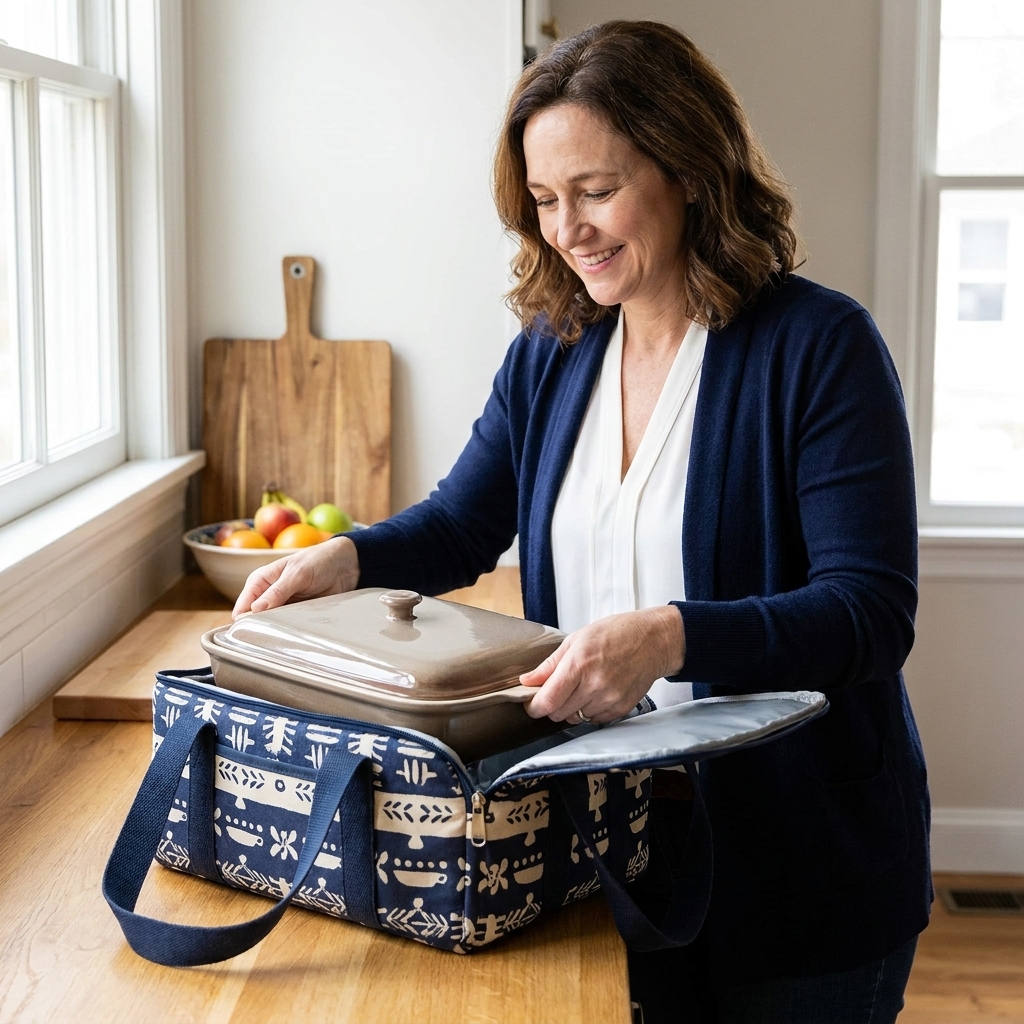
Clean portions are easier when the casserole arrives intact and not sloshed into one side of the pan.
- Cool slightly before you drive. Even 15 minutes helps the filling settle.
- Carry flat. Put the pan on a sheet pan or in a box so you are not white-knuckling a flimsy foil edge.
- Keep it level in the car. The floor behind the passenger seat is often flatter than the seat itself.
- Bring your cutting tool. Do not count on the host having a thin spatula that can actually lift a portion.
Quick fixes
My casserole is too runny to slice
Give it time. If it has only rested 5 to 10 minutes, wait another 10. If you have access to a fridge, a 20-minute chill firms most creamy bakes fast. If you need to serve now, switch to a wide spoon and call it “comfort-style.” It happens.
The first pieces fell apart
Start removing servings from a corner and use a two-spatula lift. Also, cut deeper than you think. Many messy first servings are simply not cut all the way to the bottom.
The cheese top is dragging and tearing
Dip the knife in hot water and wipe between cuts. For serving, slide the spatula straight down along a cut line first, then scoot underneath. That edge release helps a lot.
My bottom is soggy
This is usually excess moisture from add-ins or a casserole that sat covered too long while hot. Next time, vent the cover for 10 minutes after baking, and drain vegetables well. For today, serve from the corners and avoid stirring. Stirring turns soft layers into a casserole mash very quickly.
My buffet game plan
- Bake until fully set in the center.
- Rest 20 to 30 minutes.
- Cut a full grid and slightly separate the cuts.
- Remove one corner portion as the starter piece.
- Serve with one thin spatula and a stable trivet underneath.
That is it. It is not fancy. It is just organized. And when the buffet line is three-deep, organized wins.
FAQ
How long should a casserole rest before cutting?
Most casseroles need at least 15 to 25 minutes. Very saucy or layered casseroles often need 25 to 45 minutes for the cleanest slices.
Should I cut it in the pan or lift it out first?
Cut in the pan. Lifting out is risky unless you lined the pan with parchment and the casserole is quite firm. For potlucks, cutting in the pan is safer and faster.
What is the best utensil to serve lasagna-style casseroles?
A thin metal spatula or fish spatula gives the cleanest lift. Pair it with a second utensil to steady the top if the layers are soft.
Can I pre-slice and reheat without drying it out?
Yes. Cover tightly with foil and reheat gently. If your casserole tends to dry, add a small splash of broth or sauce around the edges before reheating so the cut sides do not lose moisture.